Showing posts with label Emergency Preparedness Checklist. Show all posts

Friday, June 12, 2015

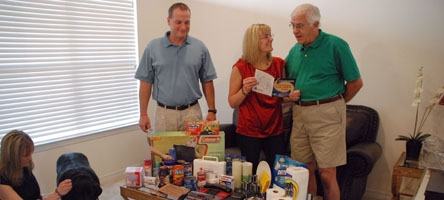
Disaster Supply Kits: Budget-Friendly and Fun

Overall emergency preparedness is a must for every individual and family.  Part of being prepared is having a disaster supply kit.
via Ready.gov website

Remember, the "disaster" can be as "simple" as a significant thunderstorm that knocks out your power for several hours or a day or two.  If you have an adequate kit, and emergency preparedness plan, you will be ready for a situation like that or, worse, something a little more significant.

The below article is from our friends at the Federal Emergency Management Agency (FEMA).  Some great tips on creating a budget friendly supply kit. We encourage you to take a look and take action once you are done!

Have a SAFE weekend!

Disaster Supply Kits: Budget-Friendly and Fun

Do you think preparing for disasters is too expensive and boring? Think again!  Being prepared doesn't have to break the bank. You can create a budget-friendly basic disaster supply kit using items you may already have at home.  You can also make preparedness enjoyable for the entire family! 
The Federal Emergency Management Agency’s (FEMA) Preparedness on a Shoestring activity guide suggests organizing a family scavenger hunt to locate items around your home such as first aid supplies and food. After you’ve built your kit, there are several ways to maintain its low-cost quality. For example:
  • Purchase items from your local dollar store or discount retailer;
  • Take advantage of  “Buy One, Get One” deals at your local supermarket; and
  • Trade extra supplies with family and friends.
FEMA advises to prepare your disaster supply kit with enough items to survive for at least three days. If you are packing a kit for more than just yourself, be sure to make necessary accommodations to fit each person’s needs. Also, remember to check your kit for expired items every six months.

Wednesday, September 17, 2014

September is National Preparedness Month! Take Action to PREPARE!

Are you and your loved ones ready for a storm that knocks power out for several days? Flash flooding that requires you to leave your home?  A tornado?  A fire in your home?

Unfortunately many are not.

Please take a moment to learn how you can take action to PREPARE by visiting the Office of Emergency Management and Homeland Security's web site.  Click on the image below to learn more from our partners in public safety.


Saturday, October 27, 2012

What's In Your Emergency Preparedness Kit?

Some items you may want to have as part of your emergency preparedness kit.

You can also go to our MCFRS YouTube site and watch HERE

Find a listing of items on our web site as well: Make a Kit

Thursday, October 25, 2012

Severe Storm Potentially On The Way…..Are You Ready?


Hopefully most of you have been paying attention the last day or so to Hurricane Sandy and her potential track over the next several days.  As of this moment, indications are Sandy will have a potentially historic impact from our area up to New England starting sometime late Sunday through as late as Tuesday.

I encourage everyone to keep a close eye on this as it is an ever changing event.  A good source of info, beside your local news coverage, is the National Hurricane Center web site.  Take a moment to look around and keep track of this storm.

Also highly encouraged is to make sure your Emergency Preparedness plans are ready and up to date.  Now is a good time to check and make sure you have all the tools needed to take care of you and loved ones – especially if your electric power service is knocked out for a few days.

Below, please find some links that I hope you might find useful.  I believe it will be well worth your time to go through each to learn more and possibly look at ways you can better prepare for this, or other like, events.


Are you prepared for a disaster?  From Montgomery County Office of Emergency Management and Homeland Security

Again, stay informed and be ready!  We will have more information on this site as appropriate.

Stay Safe,
Bill

Monday, June 25, 2012

Alert Montgomery

With some of the local storm activity over the past couple of weeks, I thought it was a good time to make all of you out there aware, or remind you, of a great FREE alerting tool that you can sign up for.  It is called Alert Montgomery and the system allows you to receive important emergency alerts, notifications and updates on any and all of your electronic devices.


You can receive notifications via the following platforms:

  • e-mail account (work, home, other)
  • cell phone
  • text pager
  • BlackBerry
  • wireless PDA
  • XM Radio Channel 214
  • Twitter: Add "Montgomery County MD" in find people
  • Facebook: Add "Montgomery County MD" in friends
  • Facebook: Add "Montgomery County MD Office of Emergency Management and Homeland Security" in friends
  • Text MONTGOMERY to 411911
To learn more and sign up, please go here: ALERT MONTGOMERY

Thursday, April 12, 2012

April 8 – 14 is Severe Storm Awareness Week; Residents Urged to Prepare for Severe Weather and Other Emergencies


During National Severe Storm Awareness Week (April 8 – 14) Montgomery County’s Office of Homeland Security is urging residents to ensure they are prepared for the next storm , whether it is tornados, hurricanes, possibility of high winds, power outages, severe lightning, hail or flooding. Last year, the state of Maryland experienced 27 tornado incidents.

Anyone who has not already signed up for the County’s Alert Montgomery notification system is encouraged to do so by going to https://alert.montgomerycountymd.gov and selecting the types of emergency alerts they are interested in receiving. Options include weather, severe traffic, schools, parks and government facilities, athletic fields and public events. Residents then specify the devices to which the messages should be sent --cell phones, text pagers, wireless PDAs, home and work emails.

“A few minutes of preparation can make all the difference in how well an individual fares during a severe storm,” said Chris Voss, director of the Montgomery County Office of Homeland Security. “Simple things like maintaining a first aid kit with essential medications for emergencies and keeping at least one gallon of water per person per day on hand can significantly improve personal safety during a severe storm.”

During a severe storm incident, be sure to heed warnings issued by the National Weather Service. A severe storm/thunderstorm watch means there is a possibility of storm activity in the area. A severe storm/thunderstorm warning means activity is occurring or will be occurring soon. Actions to protect life and property should begin immediately when a warning is issued.

Some other severe storm tips to remember:

Prior to the emergency:
• Keep enough food, water, medication (if needed) and batteries on hand in the event that power is lost during severe storms.
• Check portable radios, smoke detectors and flashlights to ensure they are properly operating and that the batteries are fresh.
• Stay tuned to local weather and news reports; if emergency officials advise residents to evacuate, do so without delay.
• Residents living in low-lying areas where flooding is anticipated, should remove furniture and valuables from those areas that are prone to water accumulation.
• If strong winds are predicted (in excess of 70 miles per hour), consider boarding up windows to prevent breakage; trash cans and other unsecured items in the yard should be taken indoors.
• Don’t drive during a severe storm, but, if you must, stay away from roads near rivers and streams and areas where flooding may occur. Never cross over a roadway that has flowing water.

During an emergency:
• Stay indoors and away from windows; if tornado or hurricane-force winds are predicted, relocate to the basement or a room that has no windows.
• If outside, seek shelter indoors immediately.
• Stay tuned to local weather and news reports for emergency information; if told to evacuate by emergency officials, do so immediately.
• If power is lost, do not use candles for lighting, use flashlights.

After the emergency:
• Do not use fresh food that has come in contact with flood waters; if refrigeration is lost due to a power outage, perishable foods such as meat and milk products may not be safe to eat and should be discarded.
• Call utility companies to report downed lines and power outages.
Severe storm information and publications are available from the National Oceanic and Atmospheric Administration’s (NOAA) website at www.nws.noaa.gov and www.education.noaa.gov.
For more information, call 3-1-1.
NOTE: The above information was taken from a County Press Release  ID: 12-090

Friday, August 26, 2011

Hurricane Irene May Impact Region in Coming Days; Residents Urged to Prepare for Hurricanes and Other Emergencies


Currently at category 3 status, Hurricane Irene may impact the region in the days ahead, and officials remind residents that they should prepare for the possibility of high winds, power outages and flooding. The hurricane season traditionally runs through November.

Anyone who has not already signed up for the County’s Alert Montgomery notification system is encouraged to do so by going to https://alert.montgomerycountymd.gov and selecting the types of emergency alerts they are interested in receiving regarding weather, severe traffic, schools, park and government facilities, athletic fields and public events; along with the devices they would like the messages sent to (cell phones, text pagers, wireless PDAs, home and work emails).

During severe weather and all other times, residents are reminded to call 9-1-1 only in emergencies that threaten life or property, which includes any type of fire or serious medical condition, when there is fear for personal safety or the safety of others, or during a crime in progress. Calling 9-1-1 for the wrong reason or calling the number inadvertently may keep someone else from getting the help they need. DO NOT call 9-1-1 to ask for directions; check on power, phone, or cable outages; inquire about road or weather conditions; check on the status of school closings; for information about public services; or to report situations that are not emergencies. If you do call by mistake, please stay on the line until the call taker can confirm that you do not require emergency assistance.

Whenever a hurricane threatens a region, within 24-36 hours a hurricane watch will be issued. A hurricane warning will be issued if hurricane conditions are expected within 24 hours or less. Hurricane conditions include winds of 74 miles per hour (64 knots) or greater, and/or dangerously high tides and waves. Actions to protect life and property should begin whenever a warning is issued.
Below are some more preparedness tips for hurricanes and other storms:

Before a Storm
• Put copies of important documents in a safe place, preferably a waterproof container. Important documents can include passports, birth certificates, insurance policies or anything else that might be needed immediately or cannot be easily replaced.
• Have enough cash for a few days – ATM’s may not work during power outages and stores might not be able to take debit and credit cards.
• Make sure vehicle gas tanks are full.
• Secure or bring inside exterior items that might become windborne, such as lawn furniture, toys and garden tools.
• Fill prescriptions that might be needed and stock up on any necessary medical supplies.
• Keep flashlights and battery-powered radios with extra batteries on hand, along with a basic first aid kit, emergency food and water, and a non-electric can opener. Have enough non-perishable food and water for at least 72 hours.
• Listen to the radio or television for hurricane progress reports.
• Clean out gutters.
• Turn the refrigerator and freezer to the coldest setting in anticipation of a power outage. Open the doors only when necessary and close quickly.
• Refrain from putting out trash cans the night before the regular pickup.

During a Storm
• Avoid using candles for lighting. Use a battery-powered flashlight.
• Never use a candle when fueling equipment such as a kerosene heater or lantern, since the candle flame can ignite fumes from the fuel.
• Try to stay in an interior room or away from windows.
• Stay calm and do not call 911 unless it is an emergency.
• If flooding occurs, turn off electricity at the main breaker.
• During a power outage, turn off major appliances. This will minimize losing power again through a power surge and protect the equipment when power returns.
• Do not go outside. Flying debris from high winds is a danger. As the eye of the storm passes, there will be a short period of calm followed by rapid wind speed increases to hurricane force that will come from the opposite direction.

After a Storm
• Do not touch fallen or low-hanging wires of any kind under any circumstances. Stay away from puddles with wires in or near them. Do not touch trees or other objects in contact with power lines.
• USE PHONES ONLY FOR EMERGENCIES. Call 911 only for life-threatening situations.
• Call police or your utility companies immediately to report hazards such as downed power lines, broken gas or water mains or overturned gas tanks.
• Avoid areas subject to flooding, including low spots, canals and streams. Do not attempt to drive on a flooded road –you can be stranded or trapped. The depth of the water and the condition of the road is not always obvious.
• Be especially cautious at night when it is harder to recognize flood dangers, downed wires and other hazards.
• For downed trees on public property, call 3-1-1 between 7 a.m. and 5 p.m. weekdays (or 240-777-0311 from outside the County or from a cell phone) or go tohttp://www.montgomerycountymd.gov/311 at any time to report the problem. If live wires are involved, the tree is blocking a roadway, the tree is on a structure, or if persons are trapped under the fallen tree, call 9-1-1.
• Trees that have fallen on private property are the responsibility of the property owner. The County’s Office of Consumer Protection advises homeowners to deal with established businesses only, and to call Consumer Protection first to check a business’ complaint record. Consumer Protection can be reached at 240-777-3636.
• For non-emergency police assistance, call the police non-emergency number, 301-279-8000.
• If case of a power outage, residents are urged to take steps to ensure that food left in the refrigerator and freezer is safe. According to the United States Department of Agriculture’s (USDA) Food Safety and Inspection Service, meat, poultry, fish and eggs should be refrigerated at 40° F and frozen food at or below 0° F, which may be difficult with a prolonged power outage. Keep the refrigerator and freezer doors closed as much as possible to maintain the cold temperature. A refrigerator will only keep food safely cold for about four hours if it is unopened. Food such as meat, poultry, fish, eggs, milk, soft cheeses, butter and leftover cooked meats, casseroles and pizza should be thrown out if they have been held above 40° F for over two hours. A full freezer will hold the temperature for approximately 48 hours (24 hours if it is half full) if the door remains closed. To be sure a particular food is cold enough; take its temperature with a food thermometer. Never taste food to determine its safety.
• Do not operate charcoal grills, propane camping stoves or generators indoors.

Important Utility Numbers:
o Pepco: 1-877-737-2662
o BG&E: 1-877-778-2222 or 1-800-685-0123
o Potomac Edison (Allegheny Power): 1-800-255-3443
o Washington Gas: 800-752-7520
o WSSC: 1-800-828-4002

Friday, August 5, 2011

As Tropical Storm Emily Approaches East Coast This Weekend, FEMA Encourages Residents to Be Prepared


In advance of Tropical Storm Emily moving toward parts of southern Florida this weekend, FEMA is encouraging residents along the Florida and the East Coast to monitor the storm's developing track and get ready for potential heavy rains, wind and other severe weather. While Emily's track over the next few days is still fairly uncertain, according to current forecasts from the National Hurricane Center, Emily could pass near Florida as a tropical storm this weekend.

Read on: As Tropical Storm Emily Approaches East Coast This Weekend, FEMA Encourages Residents to Be Prepared

Wednesday, July 6, 2011

The Key To Disaster Survival? Friends And Neighbors

Thanks to one of our Facebook friends, I was made aware of a very interesting article that appeared on the NPR web site. It relates to community preparedness and what might help to assist you and your loved ones to survive a large scale disaster. Understand that if a county wide disaster hits MCFRS, despite our best efforts will be stretched thin and will be unable to be every where to help in the aftermath of a large scale, county wide disaster.


Of course, you should always make sure you have an Emergency Preparedness Kit on hand to ensure you have your own water, food, and other important supplies in sufficient quantity to last for at least three days.

It also does not hurt to have a Family Emergency Plan in place as well. Your family may not be together when disaster strikes so you will need a plan to contact each another and figure out how you will get back together with your loved ones.

One of the keys to surviving any disaster is being PREPARED! Take a moment to review all of the above links and make sure you and your loved ones are ready!

Best Regards,

Bill Delaney
Program Manager - Community Safety Education & Social Media
Office of the Fire Chief
Montgomery County Fire & Rescue

Tuesday, August 31, 2010

Better Safe and Ready, Than Sorry and Unprepared!

Hopefully by now all of you are aware of Hurricane Earl which is fast approaching the eastern sea board. Current projections indicate our immediate area will receive a brushing with very little impact on our community.

However hurricanes are very unpredictable and can alter course for better, or for worse, at a moments notice. With this in mind, the leadership of MCFRS are preparing as though Earl will alter course and head straight for us. Better safe, and ready, than sorry and unprepared!

The big question in my mind: will our resident’s adopt the same attitude? I certainly hope so as a large scale disaster will tax our department to the point of only being able to do so much for so many. The better prepared and able to help yourself during an emergency, such as a hurricane, the better off you and your loved ones will be and will allow us to focus on those who are experiencing true life threatening emergencies during and after a significant storm.

Please take a moment to learn more about being prepared for emergencies. Use this opportunity to prepare a Family Disaster Supply Kit if you do not have one. You may not need it now but you could at a moment’s notice in the future!

Follow the track and updates on the storm: Hurricane Earl

See below links that you might find helpful:

Preparing for Emergencies: A Checklist for People with Mobility Problems

Emergency Preparedness Checklist

Disaster Preparedness

Disaster Preparedness for the Disabled and Elderly (pdf - 1.34mb)
(American Red Cross)

Disaster Preparedness for Pets

Stay Safe!

Bill Delaney