Showing posts with label PEDESTRIAN SAFETY. Show all posts

Friday, June 21, 2019

Let summer begin!

For Spanish click here


It’s finally here … the official first day of SUMMER! Fire Chief Scott Goldstein is kicking off the department’s 2019 “Summer of Safety” campaign and inviting you to follow along. Each week throughout the summer MCFRS will be highlighting a different safety topic.

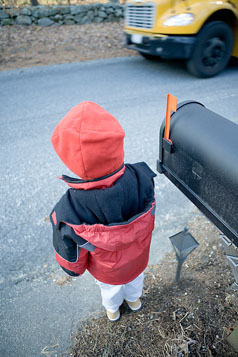
 DYK that summer is commonly referred to as “trauma season” among public health and medical professionals because unintentional deaths and serious injuries increase dramatically among children? With children out of school and crossing streets without the help of crossing guards or adults, it is no surprise that they are at higher risk of being injured by motor vehicles in the summer months. That 
bike helmet somewhere in the garage? Not optional equipment. It can keep a fall from causing a fatal brain injury. A four-sided fence can help prevent a toddler from entering a pool and drowning. And a correctly installed car seat can help keep a child alive during a car crash. 

At MCFRS, it's simple. Nothing is more important than your safety. Whatever your plans are this summer we’re here to help keep your adventures as safe as they are fun. Stick with us all summer and see what you learn. It might just save a life!


Monday, October 30, 2017

Countdown to Halloween - Tips for a Safe and Fun Night

With Halloween quickly approaching, the Montgomery County Fire and Rescue Service offers some important tips for a safe Halloween. "Recent research shows that children are four times more likely to be hit by a car on Halloween than any other night of the year, said Fire Chief Scott Goldstein. “Fatal collisions between motor vehicles and young pedestrians occur most frequently between the hours of 4 and 8 p.m. It’s a dangerous night because so many kids are on the streets, many without their parents or an adult, and in their excitement often forget important pedestrian safety rules.”

Plan a safe route.

1. Accompany children and remind them to stop at all street corners, cross only at intersections and crosswalks. Teach them to look left, right and left before crossing the street and to continue looking both ways as they cross. If you’re a motorist, please slow down and be prepared to give trick or treaters a brake.

2. Stay in familiar neighborhoods and have a parent or responsible adult accompany trick or treaters. Visit only those houses where the lights are on. Accept treats only in the doorway and NEVER go inside a house or apartment.

3. Secure emergency identification (name, address, phone number) discreetly within Halloween attire or on a bracelet.

4. Safety in numbers. If they’re old enough to trick-or-treat without an adult, designate a route before the kids go trick or treating, tell your kids to stay in a group, avoid taking short cuts through backyards and alleys and ask them to check in regularly.

5. Ensure trick-or-treaters stay away from open flames or jack-o-lanterns with candles burning.

6. Children should avoid busy streets, always use sidewalks, and follow all traffic rules and regulations. Motorists should drive slowly and be alert to small children crossing streets. Many accidents occur when motorists are backing vehicles out of driveways, unaware of the presence of small children.

Be a good neighbor.
 
1. Keep your porch lights on and eliminate tripping hazards on your porch and walkway.  Remove outdoor safety hazards such as toys, bicycles, garden hoses and lawn ornaments. Make sure the driveway and steps are cleared of leaves, which can be a slipping and falling hazard. Make sure that the driveway and walks are well lit for incoming trick-or-treaters. Replace burned-out or broken light bulbs.

2. Pets get frightened on Halloween. Confine your pets for their safety and for that of trick or treaters.

Be Safe – Be Seen.

1. Don't assume the right-of-way. Motorists may have trouble seeing trick-or-treaters in the dark. Just because one car stops doesn't mean others will. 

2. Encourage kids to follow all the rules for pedestrian safety. That includes obeying all traffic laws, looking both ways before crossing, using crosswalks, crossing at intersections and corners and never darting between parked cars.

All Dressed Up.

1. Plan costumes that are bright and have reflective qualities. Consider adding reflective tape or decals to costumes and trick or treat bags. Be sure kids carry a flashlight and use glow sticks for extra visibility.

2. When shopping for costumes, wigs and accessories purchase only those with a label indicating they are flame resistant.

3. Have an adult inspect treats BEFORE eating anything. Do not eat any unwrapped, partially wrapped, or homemade-looking treats.

4. Shorter IS safer. Make sure that shoes fit well and that costumes are short enough to prevent tripping, entanglement or contact with flame.

5. Because masks can limit or block eyesight, consider non-toxic makeup as a safer alternative.

6. If a sword, cane or stick is part of your child’s costume, make sure it is not sharp or too long. A child may be easily hurt by these accessories if they trip or fall.

Decorate Safely.

1. Illuminate your jack-o’-lanterns with flashlights or battery-operated candles instead of real ones. You won’t have the worries of an open flame coming in contact with anything or anyone.

2. If you do use candles, keep them well away from where trick or treaters will be walking or standing. Review with your children the principle of “stop, drop and roll” should their clothing catch fire.

Lastly, teach children how to call 9-1-1 if they have an emergency or become lost.

Thursday, June 30, 2016

Heads Up in Parking Lots

yellow bag with safety message to look out for each other on it
Look for this bag at a parking lot near you soon!
Did You Know: 30% of pedestrian collisions in Montgomery County occurred in parking lots last year – and many of them resulted in severe injuries.

Today's MCFRS 101 Days of Summer Safety focus is on pedestrian safety in parking lots. County Executive Leggett held a press event today highlighting additional efforts in the County’s ongoing campaign to improve pedestrian safety in parking lots.

Please take a moment to view the short video below to increase your awareness. As well, please also go to the Department of Transportation's Pedestrian Safety web site to find educational resources that you can share with friends and family.

Help us to spread this important safety message to friends and family! Help us help you to prevent having to make the 911 call.

Friday, January 29, 2016

Find the Pedestrian! Where?

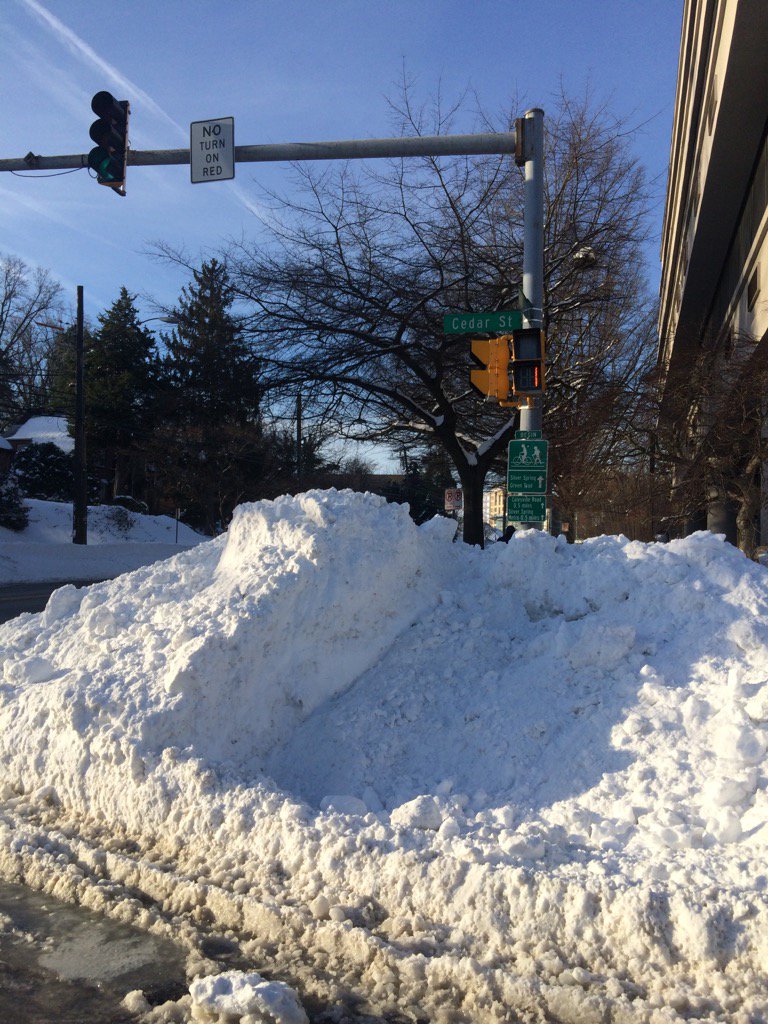
Exactly! It's almost rush hour and it's going to especially be challenging for pedestrians. Snow piles can make navigating streets and intersections dangerous for both pedestrians and drivers. Many pedestrians may be difficult to see and crosswalks challenging to navigate. Drivers should take extra care when turning corners with snow piles that may limit visibility.  

Be especially careful around bus stops and transit centers where there is increased pedestrian traffic. 

Post blizzard conditions can mean increased risk for pedestrians. Hats, hoods, earmuffs and scarves can interfere with the ability to see and hear traffic. Make sure your peripheral vision is clear and pay attention and don't be distracted by cell phones. 

Pedestrians should wear brightly colored clothing so drivers can see you, especially in times of poor visibility, and use reflective clothing or stickers for maximum visibility.

While many sidewalks are still not cleared, we remind all pedestrians to do their best to stay off plowed roadways.

If you must walk in the street, walk against the flow of traffic and as close to the curb as you can. Before you step off the curb, make sure oncoming cars and trucks have come to a complete stop. Due to poor road conditions, motorists may have difficulty stopping at traffic signals or slowing down for pedestrians who have the right of way. 


Always be on the lookout for vehicles that may have lost traction and are slipping toward you. Be aware that approaching vehicles may not be able to stop at crosswalks or traffic signals. Streets and parking lots may be temporarily blocked for snow removal operations. Drivers and pedestrians need to yield to snow removal equipment and staying off your phone and focused on the roads could just save your life. 

We made it this far --- let's all work together and make sure everyone gets where they are going safely! 

Thursday, January 28, 2016

Find the Pedestrian! Where?

Exactly! It's almost rush hour and it's going to especially challenging for pedestrians. Snow piles can make navigating streets and intersections dangerous for both pedestrians and drivers. Many pedestrians may be difficult to see and crosswalks challenging to navigate. Drivers should take extra care when turning corners with snow piles that may limit visibility.  

Be especially careful around bus stops and transit centers where there is increased pedestrian traffic. 

Post blizzard conditions can mean increased risk for pedestrians. Hats, hoods, earmuffs and scarves can interfere with the ability to see and hear traffic. Make sure your peripheral vision is clear and pay attention and don't be distracted by cell phones. 

Pedestrians should wear brightly colored clothing so drivers can see you, especially in times of poor visibility, and use reflective clothing or stickers for maximum visibility.

While many sidewalks are still not cleared, we remind all pedestrians to do their best to stay off plowed roadways.

We made it this far --- let's all work together and make sure everyone gets where they are going safely! 

Tuesday, January 26, 2016

Be visible! Snow Piles Dangerous for Pedestrians and Drivers

Snow piles can make navigating streets and intersections dangerous for pedestrians and drivers. This was highlighted last night when MCFRS personnel responded to a call for a pedestrian struck by a snow plow on Georgia Ave. The pedestrian sustained injuries though, fortunately, not life threatening.

Drivers should take extra care when turning corners with snow piles that may limit visibility. As well, and highlighted in some of the photos below, drivers should take care approaching intersections and attempting turns as the piles of snow can all but eliminate visibility.

Post blizzard conditions can mean increased risk for pedestrians. Hats, hoods, earmuffs and scarves can interfere with the ability to see and hear traffic. Make sure your peripheral vision is clear and pay attention.
Do not be distracted by cell phones. Pedestrians should wear brightly colored clothing so drivers can see you, especially in times of poor visibility, and use reflective clothing or stickers for maximum visibility.

While many sidewalks are still not cleared, we ask all pedestrians to do their best to stay off plowed roadways.

Be SAFE out there!

picture of snow piles
picture of snow at intersection

pic of snow in front of home

Tuesday, November 3, 2015

Pedestrian and Cyclist Safety Tips

Unfortunately, over the last several days, we have seen an increase in the number of pedestrians struck - including a hit and run early this morning. Below are very timely safety tips from the Montgomery County Department of Transportation.  Please review and feel free to share with friends and family.

For Drivers…

  • Stop for pedestrians at crosswalks and intersections- it's the law.
  • Don't block crosswalks when stopping at intersections.
  • Slow down and obey the posted speed limit.
  • Take extra care around schools, playgrounds, and neighborhoods. Pedestrians are hit every 7 minutes each day.
  • Always look out for pedestrians, especially before turning at a green light or making a "right turn on red."
  • Obey speed limits, signs, signals and markings--and never run red lights.
  • Be careful when passing stopped vehicles. They might be stopping for pedestrians.
  • Allow 3 feet when passing bicyclists.
  • Share the road. It's your responsibility to look out for others.

For Pedestrians…

  • Cross the street at marked crosswalks whenever possible.
  • Stop and look every time before crossing streets, even when you have the right-of-way, and especially at intersections with "right turn on red."
  • Before crossing, look left, right, then left again, and over your shoulder for turning vehicles.
  • Begin crossing the street on "Walk" signals-never on a solid or flashing "Don't Walk."
  • Use pedestrian pushbuttons to activate/extend the walk signal.
  • Use sidewalks. If none, walk facing traffic so you see vehicles, and drivers see you.
  • Make eye contact with drivers so they see you. Never assume they do.
  • Stay visible after dark and in bad weather with reflectors or retroreflective clothing.

For Cyclists…

  • Wear a properly fitted helmet. It can save your life.
  • As a vehicle, you have the same rights and responsibilities as a motorist. Obey all traffic signals, signs and lane markings.
  • Ride on the right side of the road with the flow of traffic-never against it.
  • Pass slower moving or stopped vehicles on the left.
  • Ride predictably and defensively. Use hand signals before turning.
  • Stay visible, and use lights, reflectors and retro-reflective clothing when riding at night.
  • Make eye contact with motorists and pedestrians before crossing paths with them.
  • Always yield to pedestrians, even when turning, and especially at a "right turn on red" intersection.
  • When cycling on sidewalks, always yield to pedestrians and give verbal warning when passing. Pass on left.

Thursday, August 27, 2015

Teaching Kids How to Walk Safely

Hard to believe but school starts next week!

If your child walks to school, now would be a good time to review with her/him how to safely walk to school.  The below tips are provided by our partners in safety SafeKids.
  • Teach kids at an early age to look left, right and left again before crossing the street. Then remind them to continue looking around until safely across.

  • It’s always best to walk on sidewalks or paths and cross at street corners, using traffic signals and crosswalks. If there are no sidewalks, walk facing traffic as far to the left as possible.

  • Teach kids to make eye contact with drivers before crossing the street.

  • Children under 10 need to cross the street with an adult. Every child is different, but developmentally, most kids are unable to judge the speed and distance of oncoming cars until age 10.

  • Encourage kids to be especially alert for cars that are turning or backing up.

  • Teach kids not to run or dart out into the street or cross between parked cars.

  • If kids are walking when it’s dark out, teach them to be especially alert and make sure they are visible to drivers. Have them wear light- or brightly-colored clothing and reflective gear.

Tuesday, August 26, 2014

Preventing Injuries to Child Pedestrians

Parents are the most important models of proper pedestrian behavior for children.
  • Children under the age of ten should not be allowed to cross the street by themselves.
  • Cross streets safely. Cross at a corner, using traffic signals and crosswalks. Try to make eye contact with drivers before crossing in front of them. Don't assume that because you can see the driver, the driver can see you. Look left, right and left again when crossing, and keep looking as you cross.Child Pedestrian Safety
  • Teach children to recognize pedestrian crossing signals but not to rely on them. Before crossing, children should also be sure the traffic has stopped. Remind them to continue across if the light changes to "Don't Walk" while they are in the crosswalk.
  • Walk on sidewalks or paths. If there are no sidewalks, walk facing traffic as far to the left as possible.
  • Be a safe pedestrian around cars. Watch for cars that are turning or backing up. Parents and children should hold hands in parking lots.
  • Remind your children to be extra alert in bad weather. Visibility might be poor and motorists might not be able to see them or to stop quickly enough.
  • At dawn and dusk, children should wear reflective clothing and carry flashlights.
  • Children should wait for adults on the same side of the street where the school bus loads and unloads students.
  • Teach children to cross the street at least 10 feet in front of a school bus.
Set pedestrian safety rules for your children.
  • Never allow children under age 10 to cross streets alone. Adult supervision is essential until you are sure a child has good traffic skills and judgment.
  • Children should walk on direct routes with the fewest street crossings.
  • Make sure children know to cross 10 feet in front of a school bus, never behind, and to wait for adults on the same side of the street as the school bus loading or unloading zone.
  • Teach your child never to run out into a street for a ball, a pet or any other reason.
Help create an environment that's safe for pedestrians.
  • Make sure your child plays in safe places away from motor vehicles, such as yards, parks and playgrounds - never in the street. Fence off play areas from driveways and streets.
  • Buy clothing and accessories incorporating reflective materials for your family to wear at dawn and dusk, in the evening and during other low-light situations, such as rainy or foggy weather.
  • Check frequently for children when backing out of a driveway or a parking space.
Follow the same rules that you want your child to follow. Be a good "road" model by obeying traffic signals and markings. Even if your children aren't with you, someone else's children may follow your example.

Monday, August 25, 2014

Slow Down, Watch Out. Kids Ahead! Back to School Safety Tips

Children across the region are heading back to school and Fire Chief Steve Lohr is asking all drivers to exercise extra caution and be alert as the school year begins. “Safety is our top priority. With schools back in session, drivers should allow extra time and be on the look-out for children at intersections and in neighborhoods,” said Chief Lohr. “Additionally, as a matter of safety and compliance with laws, drivers are reminded to put their cell phones down and refrain from talking or texting while behind the wheel.”

For Drivers:
·         Be alert and slow down. Eliminate any distractions inside your car so you can concentrate on the road and your surroundings. Put down your phone and never text while driving.  Looking away from the roadway for just two seconds doubles the chance of being involved in a crash.
·         Passengers should wear a seat belt and/or ride in an age and size-appropriate car safety seat or booster seat. Children of all ages are safest when properly restrained in the backseat of a vehicle.
·         Exercise extra caution as you head out to work and be on the lookout for school buses. Many bus routes or schedules change each year and you may encounter a school bus or stop where you may have never seen one before.
·         Scan between parked cars. Nearly 40 percent of child pedestrian fatalities occurred between the hours of 4 p.m. and 8 p.m., mostly at non-intersection locations, according to National Highway Traffic Safety Administration. Children can quickly dart out between parked cars or other objects along the roadway. Motorists should pay close attention not only at intersections, but along any residential roadways where children could be present.
·         Take extra time when making a right turn on a red light and be on the lookout for pedestrians.
·         School Zones: Slow down and be especially alert in residential neighborhoods and around schools. Be alert to children as you back your vehicle out of your driveway or exit your garage.
·         Expect delays near schools, plan ahead and allow extra time to reach your destination.
·         Safety on the road is especially important for “new” drivers that may be driving to high school for the first time.

Reminders for Parents and Children:
·         Be realistic about your child’s pedestrian skills. Children are not always aware of their surroundings and may dart into traffic assuming drivers will see and stop for them. Carefully consider whether your child is ready to walk to school or wait for the bus without adult supervision and walk the route with your child beforehand.
·         Teach children to always cross the street at corners, using traffic signals and crosswalks and look left, right and left again before crossing. Children may have difficulty gauging the distance and speed of an approaching car, and may not recognize and react to potentially hazardous situations.
·         If traveling to school by bike, obey the rules of the road and wear a helmet. Not only is it the smart thing to do, it is also the law in Maryland.
·         Be sure that your child knows his or her phone number and address, your work number and when to call 911 for emergencies.
·         Only drive or park in authorized areas when picking up or dropping off students at school.
·         Be a good neighbor. Respect private property and always be on your best behavior while waiting for the bus.

School Bus Safety – What Motorists Should Know:

All motorists are required by law to stop when the red lights on buses are flashing. Passing a school bus when the red lights are flashing is not only illegal it is also one of the biggest threats to student safety. Motorists should be aware that the red flashing lights and the stop sign may be engaged shortly after the amber lights are on. Vehicles traveling in the same direction as the bus are always required to stop. In Maryland, the law states that vehicles must come to a complete stop on both sides of the roadway if there is no physical divider or barrier. Violations can result in a citation and fine.

Home Alone

Parents need to carefully consider the pros and cons of having a child stay home alone before/after school. Be familiar with laws and child protective policies in your jurisdiction and, because children mature at different rates, your decision should not be based on age alone. Children should master important safety skills before staying home alone. Be sure to make and practice a home fire escape plan that includes a designated “safe” area outside where everyone will meet if the smoke alarm sounds and ensure they know when and how to call 9-1-1 in an emergency. Unattended cooking continues to be the leading cause of home fires in Montgomery County and firefighters strongly recommend having after school snacks on hand that do not require cooking. Children should only use kitchen appliances while under close adult supervision. Additional safety tips can be found on our website at mcfrs.org/mcsafe.

For the law in Maryland
Section 5-801 provides:
(a) A person who is charged with the care of a child under the age of 8 years may not allow the child to be locked or confirmed in a dwelling, building, enclosure or motor vehicle while the person charged is absent and the dwelling, building, enclosure or motor vehicle is out of the sight of the person charged unless the person charged provides a reliable person at least 13 years old to remain with the child to protect the child.

If you need assistance with fire escape planning or obtaining smoke alarms, call 311 to schedule a free check-up by fire and rescue service representatives. To learn more about what you and your family can do to be safe year-round, visit the Montgomery County Fire and Rescue Service website at www.mcfrs.org/mcsafe.

Thursday, November 21, 2013

Video, Audio and Photos From Today's Pedestrian Safety Press Conference

From today's pedestrian safety press event.  Please feel free to use/forward/pass along the video, audio and photos.  Just credit MCFRS.

Original Press Release


Firefighters from Rockville Fire Station #3 handing
out pedestrian safety shopping bags.
Chief Lohr and Firefighters from Fire Station #3 

Friday, April 19, 2013

MCFRS Helps With Pedestrian Safety Education and Enforcement Efforts at Seneca Valley High School


Later on this morning, MCFRS Firefighters will again be at Seneca Valley High School to participate in a pedestrian safety initiative that includes handing out reflective materials to students.  Firefighters also stopped by the school yesterday.

The photo below shows MCFRS personnel handing out reflective materials to SVHS students yesterday.

The initiative kicked off last week in an effort to remind students to practice safe pedestrian behaviors and follows the tragic death of a 15 year old student killed while crossing Germantown Road this past October.


Thursday, April 18, 2013

Street Smart Safety Tips


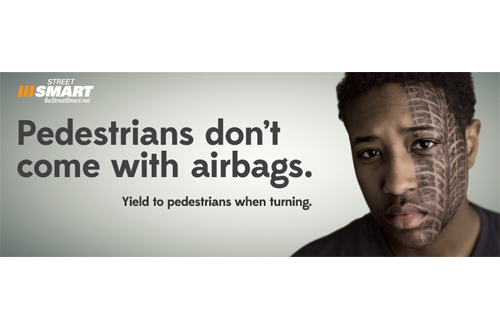
During the Street Smart campaign, which runs through May 13, law enforcement officers in Maryland, the District of Columbia and northern Virginia will be watching for motorists, pedestrians and bicyclists who violate traffic safety laws. Drivers and cyclists who fail to stop for pedestrians in crosswalks, as well as pedestrians who jaywalk, can face fines that range from $40 to $500. Drivers also are subject to getting points on their driver records.  Information on the new campaign and the Street Smart public education program may be found at www.bestreetsmart.net
Safety Tips:

If you’re driving…
• Slow down and obey the speed limit
• Look twice for people in crosswalks and yield to pedestrians and bicyclists
• Be careful when passing stopped vehicles
• Yield to pedestrians and cyclists at intersections when you're turning
• Allow three feet when passing bicyclists
• Look for cyclists and cars before you open your door
• Avoid using your cell phone and never text while driving

If you’re walking…
• Cross the street at the corner and use marked crosswalks when they’re available
• Wait for the “Walk” signal to cross the street
• Watch for turning vehicles. Before crossing look left, right, and left again
• Be seen! If you’re walking after dark or in bad weather, make it easier for drivers to see you by wearing light clothing or something reflective
• Don’t text while you’re crossing the street
• If you’re on an off-street trail, obey all posted signage and approach intersections with caution

If you’re biking…
• Obey all traffic signs and traffic signals
• Ride in the direction of traffic, at least a car door width away from parked cars
• Use hand signals so drivers, cyclists, and pedestrians know what you’re going to do
• Always wear a helmet
• Use lights if you’re riding at times of darkness
• If you’re on an off-street trail, obey all posted signage and approach intersections with caution
• Slow down and watch for pedestrians on sidewalks, trails and in crosswalks

Wednesday, October 3, 2012

Montgomery County Firefighters to Join Area Students in Annual Walk to School Day Events on October 3, 2012


Montgomery County, MD - - -  Montgomery County Fire and Rescue personnel will be joining students around the County to celebrate Walk to School Day to raise awareness and promote pedestrian safety. Thousands of students from schools in Montgomery County will be participating in this year’s event. Walk to School Day events raise awareness and create safer routes for walking and bicycling while emphasizing the importance of increasing physical activity among children and promoting pedestrian safety.

While many schools in the area will be participating in Walk to School programs, a number of local and elected officials will be joining students at Piney Branch Elementary School in Takoma Park and Dr. Charles Drew Elementary School in Silver Spring, Maryland. U.S. Deputy Secretary of Transportation John Porcari and other national, state and local guests will join a group of Piney Branch Elementary students in Takoma Park, Md., on Wednesday morning as a part of Montgomery County's Walk to School Day celebration. Media are invited to join in the programs on Wednesday, October 3, 2012:

         Where: Piney Branch Elementary School
                       7510 Maple Avenue, Takoma Park


         Time:    8:45 a.m. – Walkers will meet at 7620 Maple Avenue       
                       9:05 a.m. – Walk along Maple Avenue to Piney Branch Elementary School
                       9:20 a.m. – School-wide assembly and award presentation


         Where:  Dr. Charles Drew Elementary School
                        1200 Swingingdale Drive, Silver Spring

         Time:     8:40 a.m. – Walkers will meet at the Good Hope Community Center
                        9:05 a.m. – Walk to Dr. Charles Drew Elementary School
                        9:25 a.m. -   School-wide assembly

Sponsors of this year’s event include Safe Kids Montgomery County, Federal Express, AAA Mid-Atlantic’s Foundation for Safety and Education, Montgomery County Department of Transportation, Montgomery County Fire and Rescue Service, Montgomery County Police, Maryland Safe Routes Network, Maryland Highway Safety Office and Safe Routes to School National Partnership. Event will be held rain or shine. The assembly portion of the program will be moved indoors if the weather is inclement.   

Below was shot today, October 3rd, by Battalion Chief Charles Bailey as Station 24's crew participated in Walk to School Day at Dr. Charles Drew Elementary School.                                                    

Wednesday, August 22, 2012

Back to School Safety Tips

Cell Phones and Driving DON’T Mix

Rockville - - - Children across the region are heading back to school and Fire Chief Richie Bowers is asking drivers to exercise extra caution as the school year begins. “With schools back in session, drivers should take extra time to be on the look-out for kids at intersections and in roadways,”said Chief Bowers. “Additionally, as a matter of safety and compliance with laws, drivers are reminded to put their cell phones down and refrain from talking or texting while driving.”

For Drivers
  • Reduce any distractions inside your car so you can concentrate on the road and your surroundings. Put down your phone and don’t talk or text while driving.
  • Each passenger should wear a seat belt and/or ride in an age and size-appropriate car safety seat or booster seat.
  • All children younger than 13 years of age should ride in the back seat of vehicles. If you must drive more children than can fit in the back seat (i.e., for example, when carpooling) move the front-seat passenger’s seat as far back as possible.
  • Be watchful for bus riders. For many children this may be the first time they have ridden a bus.
  • Exercise extra caution as you head out to work and be on the watch for school buses. Many bus routes or schedules change each year and you may encounter a school bus or stop where you may have never seen one before.
  • School Zones: Slow down and be especially alert in residential neighborhoods and around schools. Be alert to children as you back out of your driveway or exit your garage.  
  • Safety on the road is especially important for “new” drivers that may be driving to school for the first time.
     

Reminders for Parents and Children

  • Be realistic about your child’s pedestrian skills. Children are not always aware of their surroundings and may dart into traffic assuming drivers will see and stop for them. Carefully consider whether your child is ready to walk to school or wait for the bus without adult supervision.
  • Children should cross the street with an adult until they are at least 10 years old.
  • Always cross the street at corners, using traffic signals and crosswalks.
  • Bus riders need to make sure they always walk in front of the bus where the driver can see them.
  • Always look both ways before crossing the street and never enter streets from between parked cars or from behind shrubbery.
  • If traveling to school by bike, obey the rules of the road and wear a helmet! Not only is it the smart thing to do, it is also the law in Maryland.
  • Be a good neighbor. Respect private property and always be on your best behavior while waiting for the bus.

School Bus Safety – What Motorists Should Know 

All drivers need to stop when the lights on school buses are flashing. Drivers should be aware Maryland law states that vehicles must come to a complete stop on both sides of the street if there is no physical divider or barrier. Drivers who pass the bus before all lights have ceased flashing may face the following consequences:

     - Drivers who pass school buses while the lights are flashing will receive a citation that carries a maximum fine of $570 and a 3-point penalty.
     - Drivers who stop but then proceed while the lights are flashing will receive a citation that carries a maximum fine of $570 and a 2-point penalty.

Home Alone

Parents need to carefully consider the pros and cons of having a child stay home alone before/after school. Be
familiar with laws and child protective policies in your jurisdiction and, because children mature at different rates, your decision should not be based on age alone. Children should master important safety skills before staying home alone. Be sure to make and practice a home fire escape plan that includes a designated “safe” area outside where everyone will meet if the smoke alarm sounds, ensure they know when and how to call 9-1-1 in an emergency and unattended cooking continues to be the leading cause of home fires in Montgomery County. Firefighters strongly recommend having after school snacks on hand that do not require cooking and that children only use kitchen appliances while under close adult supervision. Additional safety tips can be found on our website at mcfrs.org/mcsafe. For the law in Maryland:

Section 5-801 provides:
(a) A person who is charged with the care of a child under the age of 8 years may not allow the child to be locked or confirmed in a dwelling, building, enclosure or motor vehicle while the person charged is absent and the dwelling, building, enclosure or motor vehicle is out of the sight of the person charged unless the person charged provides a reliable person at least 13 years old to remain with the child to protect the child.


Wednesday, April 11, 2012

Walk With Care & Drive With Caution! Pedestrian & Driver Safety Tips

Safety tips - http://walkinginfo.org/laurasandt
Safety Tips

Children are at increased risk for pedestrian injuries. To learn why and to see pedestrian safety tips for parents and children, check out the National Center for Injury Prevention and Control.
Drivers
  • Stop for pedestrians at crosswalks and intersections- it's the law.
  • Don't block crosswalks when stopping at intersections.
  • Slow down and obey the posted speed limit.
  • Take extra care around schools, playgrounds, and neighborhoods. Pedestrians are hit every 7 minutes each day.
  • Always look out for pedestrians, especially before turning at a green light or making a "right turn on red."
  • Obey speed limits, signs, signals and markings--and never run red lights.
  • Be careful when passing stopped vehicles. They might be stopping for pedestrians.
  • Allow 3 feet when passing bicyclists.
  • Share the road. It's your responsibility to look out for others.

Pedestrians
  • Cross the street at marked crosswalks and intersections whenever possible.
  • Stop and look every time before crossing streets, even when you have the right-of-way, and especially at intersections with "right turn on red."
  • Before crossing, look left, right, then left again, and over your shoulder for turning vehicles.
  • Begin crossing the street on "Walk" signals-never on a solid or flashing "Don't Walk."
  • Use pedestrian pushbuttons to activate/extend the walk signal.
  • Use sidewalks. If none, walk facing traffic so you see vehicles, and drivers see you.
  • Make eye contact with drivers so they see you. Never assume they do.
  • Stay visible after dark and in bad weather with reflectors or retroreflective clothing.
From Montgomery County DOT web site http://www.montgomerycountymd.gov/dirtmpl.asp?url=/content/DOT/Dir/pedsafety/tips.asp

Tuesday, October 4, 2011

Montgomery County Firefighters to Join Area Students in Annual Walk to School Day Events Around the County


IMMEDIATE RELEASE:  October 4, 2011

 
Rockville - - -  Montgomery County Fire and Rescue personnel will be joining students around the County to celebrate International Walk to School Day to raise awareness and promote pedestrian safety. Thousands of students from 36 schools in Montgomery County will be participating in this year’s annual event. Walk to School events raise awareness and create safer routes for walking and bicycling while emphasizing the importance of increasing physical activity among children and promoting pedestrian safety.  

County Executive Ike Leggett, MCPS Superintendent Joshua Starr and other officials will be joining students at Captain James E. Daly, Jr. Elementary School in Germantown, Maryland for the event. Media are invited to join in the program. 

When:  Wednesday, October 5, 2011

Where: Captain James E. Daly, Jr. Elementary School  
              20301 Brandermill Drive, Germantown, Maryland

Time:   8:30 a.m. – Walkers will meet at Clear Spring Park to walk to the school           
             9:00 a.m. – Assembly behind the school on the blacktop
           10:00 a.m. – School-wide pedestrian and traffic safety assembly

* Event will be held rain or shine. The assembly portion of the program will be moved indoors if the weather is inclement.
 
                                                              # # # 

Monday, February 28, 2011

Hear Us, See Us, Clear for Us!

“Please Abide – Pull Aside”

Do you know what to do when approached by an emergency vehicle?  The metropolitan area is often crowded and congested with traffic conditions caused by commuters, collisions, work zones and sometimes just “normal” traffic.
Emergency vehicles are impacted by these conditions, as well. When somebody calls 911 for help – the men and women of the Montgomery County Fire and Rescue Service respond. How can everyday drivers help us to help you? – Normally drivers will HEAR us first, next they will SEE us, and then we need drivers to CLEAR for us.

HEAR US - SEE US - CLEAR FOR US

C – L – E – A – R for emergency vehicles.

C – Calmly pull to and as close to the edge of the roadway as possible and stop.

L – Leave room. Keep intersections clear and never try to follow emergency vehicles.

E – Enter into traffic with caution after the emergency vehicle has passed. Remember to use signals.

A – Aware (be). Be aware of your surroundings. Keep radio volume low and check rear view mirrors frequently.

R – Remain stopped until the emergency vehicle ha passed. Be mindful that there may be additional emergency vehicles approaching.

When approached by an emergency vehicle – the law says to pull over to the closest parallel edge of the roadway and yield the right of way to the emergency vehicle. An emergency vehicle is one with an audible siren and/or siren and emergency flashing lights. When driving and approaching an emergency scene – slow down and move over. In other words - “Give us a brake!”

Reduce the risk of an accident near an emergency scene and around emergency equipment.

Stay alert – expect anything to occur when approaching emergency vehicles.

Pay close attention – watch for police or fire direction.

Turn on your headlights – let on scene workers and other motorists see you.

Don’t tailgate – unexpected stops frequently occur near emergency scenes.

Don’t speed – slow down.

Keep up with the traffic flow – dedicate your full attention to the roadway and those traveling around you.

Minimize distractions – avoid changing radio stations and using mobile cell phones while approaching these areas.

Expect the unexpected – keep an eye out for emergency workers and their equipment.

Be patient – remember, firefighters and EMT’s have been called to the scene and are working to help someone.

In Montgomery County pedestrian and traffic safety issues are front and center. If you travel by car or are a pedestrian, please place extra emphasis on safety. Simply looking both ways before crossing a street, crossing in a crosswalk, spending a few extra seconds to cinch the belt on your child's safety seat, or delaying departure to ensure you get enough rest before a long trip can make all the difference. Preventative safety, while measured in seconds or minutes, can save you from months or years of anguish, grief, and "what if". Be smart. Be safe.

Tuesday, December 28, 2010

Ice & Cold Weather Safety Tips

Each year, many residents are injured during the winter months as a result of pedestrian accidents and from exposure in cold water incidents. Skaters fall through the ice; boaters and canoeists overturn their crafts and pedestrians are struck walking in roadways because sidewalks are snow covered.

Here are a few general guidelines for use by winter recreation enthusiasts to lessen their chances for an icy dip or worse. It's impossible to judge the strength of ice by its appearance, thickness, daily temperature, or snow cover alone. Ice strength is also dependent on water depth under the ice, the size of the water and water chemistry, currents, and distribution of the load on the ice.

THE ONLY "SAFE" ICE IS AT A SKATING ARENA!

WHAT DO YOU DO IF SOMEONE FALLS THROUGH THE ICE?

Act quickly and call 9-1-1 for help immediately. Make sure properly trained and equipped rescue personnel are alerted to respond.

DO NOT go out onto the ice. Many times would-be rescuers become victims themselves.

Reach, Throw, or Row. Extend a branch, pole or ladder to the victim. Throw them a buoyant object such as a life ring or float tied to a rope. If a boat is nearby row out to the victim or push it toward them.

HOW COLD IS COLD WATER?

Any water that is cooler than normal body temperature (98.6 degrees F) is by definition "cold water"

Cold water drains away body heat 25 to 30 times faster than air!

The lower the temperature of the water, the faster the onset of hypothermia.

WHAT IS HYPOTHERMIA?

Hypothermia is the excessive lowering of body temperature. A drop n core temperature below 95 degrees F., causes shivering, confusion, loss of muscle strength, and if not treated and reversed leads to unconsciousness and death.

Safety experts estimate that half of all drowning victims die from the fatal effects of hypothermia and cold water, not the fatal effects from water filled lungs.

PEDESTRIAN SAFETY

Slippery driveways and sidewalks can be particularly hazardous in the winter. Keep them well shoveled, and apply materials such as rock salt or sand to improve traction.

Be especially careful crossing the street and wear appropriate shoes and brightly colored (not white) clothing while walking in snowy conditions.

Use reflective clothing or stickers for maximum protection, especially at dawn and dusk.