Showing posts with label pedestrians. Show all posts

Thursday, June 30, 2016

Heads Up in Parking Lots

yellow bag with safety message to look out for each other on it
Look for this bag at a parking lot near you soon!
Did You Know: 30% of pedestrian collisions in Montgomery County occurred in parking lots last year – and many of them resulted in severe injuries.

Today's MCFRS 101 Days of Summer Safety focus is on pedestrian safety in parking lots. County Executive Leggett held a press event today highlighting additional efforts in the County’s ongoing campaign to improve pedestrian safety in parking lots.

Please take a moment to view the short video below to increase your awareness. As well, please also go to the Department of Transportation's Pedestrian Safety web site to find educational resources that you can share with friends and family.

Help us to spread this important safety message to friends and family! Help us help you to prevent having to make the 911 call.

Tuesday, January 26, 2016

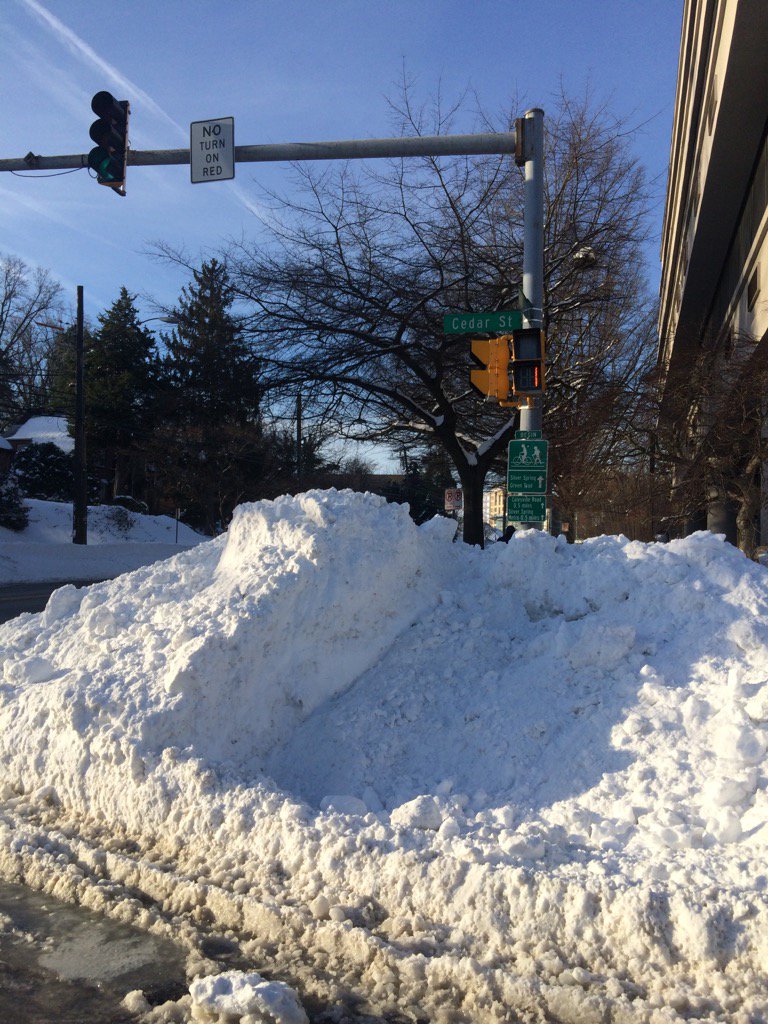
Be visible! Snow Piles Dangerous for Pedestrians and Drivers

Snow piles can make navigating streets and intersections dangerous for pedestrians and drivers. This was highlighted last night when MCFRS personnel responded to a call for a pedestrian struck by a snow plow on Georgia Ave. The pedestrian sustained injuries though, fortunately, not life threatening.

Drivers should take extra care when turning corners with snow piles that may limit visibility. As well, and highlighted in some of the photos below, drivers should take care approaching intersections and attempting turns as the piles of snow can all but eliminate visibility.

Post blizzard conditions can mean increased risk for pedestrians. Hats, hoods, earmuffs and scarves can interfere with the ability to see and hear traffic. Make sure your peripheral vision is clear and pay attention.
Do not be distracted by cell phones. Pedestrians should wear brightly colored clothing so drivers can see you, especially in times of poor visibility, and use reflective clothing or stickers for maximum visibility.

While many sidewalks are still not cleared, we ask all pedestrians to do their best to stay off plowed roadways.

Be SAFE out there!

picture of snow piles
picture of snow at intersection

pic of snow in front of home

Tuesday, August 26, 2014

Preventing Injuries to Child Pedestrians

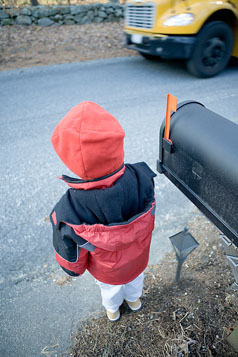
Parents are the most important models of proper pedestrian behavior for children.
  • Children under the age of ten should not be allowed to cross the street by themselves.
  • Cross streets safely. Cross at a corner, using traffic signals and crosswalks. Try to make eye contact with drivers before crossing in front of them. Don't assume that because you can see the driver, the driver can see you. Look left, right and left again when crossing, and keep looking as you cross.Child Pedestrian Safety
  • Teach children to recognize pedestrian crossing signals but not to rely on them. Before crossing, children should also be sure the traffic has stopped. Remind them to continue across if the light changes to "Don't Walk" while they are in the crosswalk.
  • Walk on sidewalks or paths. If there are no sidewalks, walk facing traffic as far to the left as possible.
  • Be a safe pedestrian around cars. Watch for cars that are turning or backing up. Parents and children should hold hands in parking lots.
  • Remind your children to be extra alert in bad weather. Visibility might be poor and motorists might not be able to see them or to stop quickly enough.
  • At dawn and dusk, children should wear reflective clothing and carry flashlights.
  • Children should wait for adults on the same side of the street where the school bus loads and unloads students.
  • Teach children to cross the street at least 10 feet in front of a school bus.
Set pedestrian safety rules for your children.
  • Never allow children under age 10 to cross streets alone. Adult supervision is essential until you are sure a child has good traffic skills and judgment.
  • Children should walk on direct routes with the fewest street crossings.
  • Make sure children know to cross 10 feet in front of a school bus, never behind, and to wait for adults on the same side of the street as the school bus loading or unloading zone.
  • Teach your child never to run out into a street for a ball, a pet or any other reason.
Help create an environment that's safe for pedestrians.
  • Make sure your child plays in safe places away from motor vehicles, such as yards, parks and playgrounds - never in the street. Fence off play areas from driveways and streets.
  • Buy clothing and accessories incorporating reflective materials for your family to wear at dawn and dusk, in the evening and during other low-light situations, such as rainy or foggy weather.
  • Check frequently for children when backing out of a driveway or a parking space.
Follow the same rules that you want your child to follow. Be a good "road" model by obeying traffic signals and markings. Even if your children aren't with you, someone else's children may follow your example.

Friday, April 19, 2013

MCFRS Helps With Pedestrian Safety Education and Enforcement Efforts at Seneca Valley High School


Later on this morning, MCFRS Firefighters will again be at Seneca Valley High School to participate in a pedestrian safety initiative that includes handing out reflective materials to students.  Firefighters also stopped by the school yesterday.

The photo below shows MCFRS personnel handing out reflective materials to SVHS students yesterday.

The initiative kicked off last week in an effort to remind students to practice safe pedestrian behaviors and follows the tragic death of a 15 year old student killed while crossing Germantown Road this past October.


Thursday, April 18, 2013

Street Smart Safety Tips


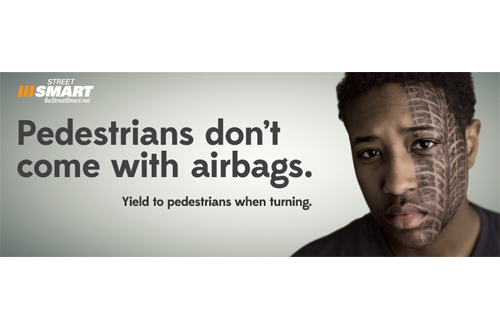
During the Street Smart campaign, which runs through May 13, law enforcement officers in Maryland, the District of Columbia and northern Virginia will be watching for motorists, pedestrians and bicyclists who violate traffic safety laws. Drivers and cyclists who fail to stop for pedestrians in crosswalks, as well as pedestrians who jaywalk, can face fines that range from $40 to $500. Drivers also are subject to getting points on their driver records.  Information on the new campaign and the Street Smart public education program may be found at www.bestreetsmart.net
Safety Tips:

If you’re driving…
• Slow down and obey the speed limit
• Look twice for people in crosswalks and yield to pedestrians and bicyclists
• Be careful when passing stopped vehicles
• Yield to pedestrians and cyclists at intersections when you're turning
• Allow three feet when passing bicyclists
• Look for cyclists and cars before you open your door
• Avoid using your cell phone and never text while driving

If you’re walking…
• Cross the street at the corner and use marked crosswalks when they’re available
• Wait for the “Walk” signal to cross the street
• Watch for turning vehicles. Before crossing look left, right, and left again
• Be seen! If you’re walking after dark or in bad weather, make it easier for drivers to see you by wearing light clothing or something reflective
• Don’t text while you’re crossing the street
• If you’re on an off-street trail, obey all posted signage and approach intersections with caution

If you’re biking…
• Obey all traffic signs and traffic signals
• Ride in the direction of traffic, at least a car door width away from parked cars
• Use hand signals so drivers, cyclists, and pedestrians know what you’re going to do
• Always wear a helmet
• Use lights if you’re riding at times of darkness
• If you’re on an off-street trail, obey all posted signage and approach intersections with caution
• Slow down and watch for pedestrians on sidewalks, trails and in crosswalks

Wednesday, April 11, 2012

Walk With Care & Drive With Caution! Pedestrian & Driver Safety Tips

Safety tips - http://walkinginfo.org/laurasandt
Safety Tips

Children are at increased risk for pedestrian injuries. To learn why and to see pedestrian safety tips for parents and children, check out the National Center for Injury Prevention and Control.
Drivers
  • Stop for pedestrians at crosswalks and intersections- it's the law.
  • Don't block crosswalks when stopping at intersections.
  • Slow down and obey the posted speed limit.
  • Take extra care around schools, playgrounds, and neighborhoods. Pedestrians are hit every 7 minutes each day.
  • Always look out for pedestrians, especially before turning at a green light or making a "right turn on red."
  • Obey speed limits, signs, signals and markings--and never run red lights.
  • Be careful when passing stopped vehicles. They might be stopping for pedestrians.
  • Allow 3 feet when passing bicyclists.
  • Share the road. It's your responsibility to look out for others.

Pedestrians
  • Cross the street at marked crosswalks and intersections whenever possible.
  • Stop and look every time before crossing streets, even when you have the right-of-way, and especially at intersections with "right turn on red."
  • Before crossing, look left, right, then left again, and over your shoulder for turning vehicles.
  • Begin crossing the street on "Walk" signals-never on a solid or flashing "Don't Walk."
  • Use pedestrian pushbuttons to activate/extend the walk signal.
  • Use sidewalks. If none, walk facing traffic so you see vehicles, and drivers see you.
  • Make eye contact with drivers so they see you. Never assume they do.
  • Stay visible after dark and in bad weather with reflectors or retroreflective clothing.
From Montgomery County DOT web site http://www.montgomerycountymd.gov/dirtmpl.asp?url=/content/DOT/Dir/pedsafety/tips.asp

Monday, February 28, 2011

Hear Us, See Us, Clear for Us!

“Please Abide – Pull Aside”

Do you know what to do when approached by an emergency vehicle?  The metropolitan area is often crowded and congested with traffic conditions caused by commuters, collisions, work zones and sometimes just “normal” traffic.
Emergency vehicles are impacted by these conditions, as well. When somebody calls 911 for help – the men and women of the Montgomery County Fire and Rescue Service respond. How can everyday drivers help us to help you? – Normally drivers will HEAR us first, next they will SEE us, and then we need drivers to CLEAR for us.

HEAR US - SEE US - CLEAR FOR US

C – L – E – A – R for emergency vehicles.

C – Calmly pull to and as close to the edge of the roadway as possible and stop.

L – Leave room. Keep intersections clear and never try to follow emergency vehicles.

E – Enter into traffic with caution after the emergency vehicle has passed. Remember to use signals.

A – Aware (be). Be aware of your surroundings. Keep radio volume low and check rear view mirrors frequently.

R – Remain stopped until the emergency vehicle ha passed. Be mindful that there may be additional emergency vehicles approaching.

When approached by an emergency vehicle – the law says to pull over to the closest parallel edge of the roadway and yield the right of way to the emergency vehicle. An emergency vehicle is one with an audible siren and/or siren and emergency flashing lights. When driving and approaching an emergency scene – slow down and move over. In other words - “Give us a brake!”

Reduce the risk of an accident near an emergency scene and around emergency equipment.

Stay alert – expect anything to occur when approaching emergency vehicles.

Pay close attention – watch for police or fire direction.

Turn on your headlights – let on scene workers and other motorists see you.

Don’t tailgate – unexpected stops frequently occur near emergency scenes.

Don’t speed – slow down.

Keep up with the traffic flow – dedicate your full attention to the roadway and those traveling around you.

Minimize distractions – avoid changing radio stations and using mobile cell phones while approaching these areas.

Expect the unexpected – keep an eye out for emergency workers and their equipment.

Be patient – remember, firefighters and EMT’s have been called to the scene and are working to help someone.

In Montgomery County pedestrian and traffic safety issues are front and center. If you travel by car or are a pedestrian, please place extra emphasis on safety. Simply looking both ways before crossing a street, crossing in a crosswalk, spending a few extra seconds to cinch the belt on your child's safety seat, or delaying departure to ensure you get enough rest before a long trip can make all the difference. Preventative safety, while measured in seconds or minutes, can save you from months or years of anguish, grief, and "what if". Be smart. Be safe.