Thursday, December 22, 2022

A Special "Opera-Tunity!" Local resident sends memorable "Thank You" to First Responders


On the evening of Sunday, April 24th a crew from MCFRS Fire Station 23 in Rockville were dispatched to the Strathmore Hall for a report of people trapped in an elevator.

MCFRS responders located and rescued Dr. Marc Hertzman and his wife from a malfunctioning elevator. The rescue included a rather prolonged rescue and harrowing climb up ladders and out the roof for the couple.

Dr. Hertzman, a talented opera performer, has something to say... sing ... to the first responders to  express his gratitude for their service, kindness and going above and beyond to help them. He rallied colleagues from across the Country to produce an Opera Tribute to express his gratitude to the MCFRS personnel that responded  that evening. MCFRS first responders included Lt. Joseph King, Lt. James Riddle and Firefighter II Oscar Monzon.

Thank you to Dr. Hertzman and your talented performers for this first-ever (for MCFRS) Opera tribute! Our responders couldn't be more grateful for your gift of music and unique thank you. And let the show begin . . . 

Link to watch video tribute: Click here to view


Thursday, November 3, 2022

Time to Fall Back - Some SOUND Advice

For Spanish click here

Fire Chief Scott Goldstein is urging all residents to check smoke and carbon monoxide alarms when they change their clocks this weekend and to also practice a home fire drill. "The busiest time for home fires is during the fall and winter months. A working smoke alarm  provides critical early warning of a fire resulting in more time to react and put a fire escape plan into action. We're asking all residents to take a few minutes to check smoke and carbon monoxide alarms this weekend and conduct a home fire drill. It could just be a life-saver." 

Two minutes? Experts say you may have less than 2 minutes to escape a fire. Did you know the peak time for home fire fatalities is between 11 pm and 6 am when most families are sleeping? Help keep your family safe by following these fire safety tips:

1. Install smoke alarms on every level of your home, including the basement (finished or unfinished) and in all sleeping areas. If you have a larger home you'll want to consider adding more alarms and interconnected alarms will alert you to an emergency sooner. Be sure to check out all the "smart" features available -- alarms don't just sound the alarm, they can also alert your phone and more!   

2. Three words: Smoke Alarms Expire. Retire old smoke alarms and replace with new ones EVERY 10 years from the date of manufacture printed on the back or as recommended by the manufacturer. Be sure to follow County Code requirements for the type of smoke alarms required for your home.

3. Plan and practice home fire drills. Decide in advance who will help family members that may need assistance escaping (young children, older adults or people with disabilities) and establish an outside "meeting place" where everyone will meet.     

4. Make sure children recognize the sound of your smoke alarm and how to respond to its signal. 

5. Know your battery type. Maryland’s Smoke Alarm Law (effective 1/2018) requires battery-only smoke alarms to have sealed in, 10-year long-life batteries which last the life of the alarm. The updates to the law emphasize the use of sealed, 10-year battery-powered smoke alarms however it is important to understand that battery-only smoke alarms are only appropriate where battery-operated smoke alarms are permitted by Code (generally in homes built b/f 1975) before hard-wired smoke alarm technology was developed. Remember: it is never acceptable to remove required hard-wired smoke alarms and replace with any type of battery-only smoke alarm.   

Questions? Montgomery County Fire and Rescue Service is here to help! Call 311 or visit us on line to schedule your free VIRTUAL home safety check. Bookmark our website for year-round safety information and to learn more about virtual home safety checks at: mcfrs.org/mcsafe


Tuesday, November 1, 2022

Do I need Carbon Monoxide Alarms? Probably!

For Spanish click here

Carbon Monoxide Alarms are a must for homes. When seconds count, you need an alarm that notifies you of potential danger so you can quickly take action. In 2019, a new law in Montgomery County went into effect requiring many existing single-unit, two-unit and townhouse dwellings to have Carbon Monoxide (CO) Alarms which alert occupants to the presence of potentially deadly gas.

The Law requires all single, two-unit, and townhouse dwellings built before 2008 that have a fuel-burning appliance, fireplace or attached garage to install and maintain CO Alarms on every level of the home and outside sleeping areas. Maryland State Law has required CO Alarms in newly-constructed homes since 2008 and in all rental occupancies.

Why are Carbon Monoxide Alarms important? 

Carbon Monoxide is often called the "silent killer" because it is odorless, tasteless and invisible making this toxic gas one of the most overlooked, and potentially deadly, dangers in homes. CO Alarms monitor your home 24/7 and are designed to emit an alarm when high levels of CO are detected but before they reach life-threatening levels ... and only cost about $20.

Does the law apply to me?

Homes in Montgomery County built before 2008 that are powered by electricity and do not have a fuel-burning appliance, fireplace or attached garage are not required to install Carbon Monoxide Alarms however fire officials recommend CO Alarms in all homes.

What if my Carbon Monoxide Alarm sounds?

Immediately have everyone in the home get outdoors to fresh air and call 911 from outside the building. Because CO Alarms can detect low levels of carbon monoxide, your alarm may activate before anyone feels ill. Signs of CO poisoning don't always happen right away. CO poisoning can happen gradually over a period of days or even weeks, depending on the levels of CO in your home. Re-enter your home only after it has been deemed safe by emergency responders.

Where should Carbon Monoxide Alarms be installed?

Proper placement of CO Alarms is important and you want protection on every level of your home. For homes built before 2008, Montgomery County law requires that CO Alarms be installed:
  • On every occupiable level of the residence including basements, excluding attics and crawl spaces.
  • Outside sleeping areas.
For homes built after January 1, 2008 CO Alarms should be installed in accordance with the applicable building codes at the time of construction or alteration/modification. Always follow the manufacturer’s instructions when installing CO Alarms.

What type of Carbon Monoxide Alarms are available?

There are a wide variety of CO Alarms on the market and include battery-powered, plug-in and hard-wired CO Alarms and meet the requirements of the new law. Some newer alarms feature visual and verbal cues, instructions on what to do if the alarm activates and can be set to English or Spanish alerts.

What about Combination Smoke and Carbon Monoxide Alarms?

For years Smoke Alarms and CO Alarms were separate units. Recently, alarms have been manufactured that have the technology to detect both smoke and carbon monoxide. These "combination alarms" need to match the power source for the home's smoke alarms.

Are battery operated or hard wired Carbon Monoxide Alarms required by the new law?

For properties built before 2008, the power source for your CO Alarms can be battery operated, hard wired with a battery back-up or plug-in with a battery back-up. For combination Smoke and CO Alarms, the power supply must match the existing Code requirements for your home's smoke alarms.

At what height should Carbon Monoxide Alarms be installed?

Unlike smoke which rises to the ceiling, CO mixes with air. CO Alarms may be installed at any height. However, if a combination smoke/CO alarm is used it must be installed on or near the ceiling, per manufacturer’s instructions, to ensure that it can detect smoke effectively.

What are the symptoms of Carbon Monoxide poisoning?

The most common symptoms of CO poisoning are headache, dizziness, weakness, shortness of breath, upset stomach, chest pain and confusion. CO symptoms are often described as “flu-like.” Knowing the symptoms of carbon monoxide poisoning can help you respond quickly in the event of an emergency.

What do the different beeps mean?

A CO Alarm has different beep patterns to communicate whether there is an emergency or simply a service or maintenance issue. It is important to know the difference between the different beep patterns. Be sure to read the manufacturer’s instructions and information is often printed on the back of the alarm.

When should Carbon Monoxide Alarms be replaced?

Replace CO Alarms when the manufacturer’s replacement date is reached when the alarm fails to respond to an operability test, or the end-of-life signal is active. CO Alarms typically have a service life of 7 – 10 years.

Where can I get Carbon Monoxide Alarms?

CO Alarms are available for purchase at many stores and online. Only purchase alarms that are approved by UL (Underwriters Laboratories) in order to ensure that your alarms meet their strict testing and safety requirements. If you need assistance and live in Montgomery County, call 311 and a department representative will be in touch. 


Friday, May 13, 2022

Investigators Ask Public for Help in 2021 Arson Fire

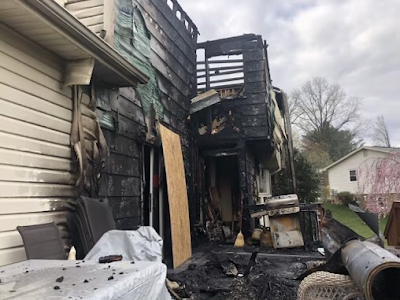
Gaithersburg, MD – The Montgomery County Fire and Explosive Investigations unit continues to investigate a 2021 arson fire on Marquis Drive in Gaithersburg and are asking the public for help.

At approximately 1 a.m. on Thursday, April 1, 2021, Montgomery County Fire and Rescue units responded to a reported house fire in the area of Marquis Drive and Cullinan Drive. Units arrived on the scene and found a single-family dwelling located on Marquis Drive with heavy fire conditions throughout the residence. Montgomery County Fire and Explosive Investigators were dispatched to the scene and determined that the cause of the fire was incendiary in nature.

The department is asking anyone who may have  information about this arson to call the Fire and Explosive arson tip line at 240-777-2263.

Anonymous tipsters can call Crime Solvers of Montgomery County toll-free at 1-866-411-TIPS (8477). A reward of up to $10,000 is being offered for information that leads to the arrest of the suspect(s).


Wednesday, April 27, 2022

You look like a great Car Seat Tech!


For over two decades, the Car Seat Program has educated thousands of caregivers on how to properly use and install car seats. Thousands of children have been properly secured in their car seats or seat belts thanks to the efforts of the many amazing child passenger safety technicians who make up MCFRS’ Car Seat Program. These technicians all have one thing in common: they care deeply about kids and want to make sure kids are safe on every ride.

The Car Seat Program is always looking for passionate, dedicated, and community-oriented individuals to become part of our team. If this description fits you, please consider becoming a nationally certified Child Passenger Safety (CPS) Technician. This year, we are hosting two certification trainings in Montgomery County and invite you to sign up. The first training will be held in May and another in October. Information on the trainings and how to sign-up is at the link below. Both trainings will be held in Gaithersburg.

CPS technicians use their considerable knowledge and expertise at a variety of community-based activities, such as child safety seat checks, where parents and caregivers receive education and hands-on assistance. Here in Montgomery County, we host car seat check on a weekly basis in Germantown, Aspen Hill, and Takoma Park with occasional events in Rockville and Wheaton. In addition to the checks, technicians educate the community on child passenger safety at community events, festivals, schools, and non-profit organizations.

Our program is highly rated and nationally recognized. We strive to provide a fun, friendly, and welcoming environment to caregivers. If you have questions or are interested in becoming a car seat technician, you can click on the link below or contact Anthony Ramirez, Program Manager, at anthony.ramirez@montgomerycountymd.gov or 240-777-2467.

         __________________________________________________________________

🔷 May 9th through 12th (Monday - Thursday) with final seat check on Saturday the 14th:

Click for Class Information 
Course ID: MD202112211131

🔷 October 13th and 14th (Thursday and Friday) and then October 18 -20 (Tuesday, Wednesday, and seat check on Thursday the 20th):

Click for Class Information
Course ID:  MD202112211134            

         __________________________________________________________________

There are other trainings occurring throughout Maryland in 2022 and people can attend any of these trainings too. They are at the following locations/dates.

6/7 – 6/11 in Middletown

7/12 – 7/16 in Edgewood

11/1 – 11/4 in Pikesville