Showing posts with label en. Show all posts

Wednesday, November 1, 2023

Change Your Clocks - CHECK Your Smoke Alarms This Weekend

It's that time of year again when we "Fall Back" and change clocks (unless your clocks do it automatically)! Here are our Top Eight Tips to remember when it comes to smoke alarms and fire safety this weekend:

1. It is indisputable that smoke alarms save lives. Smoke alarms are the best and least expensive way to provide an early warning system to alert you and your family to a potential fire emergency. Smoke alarms are designed to detect a fire in its early stages and alert people so they have time to safely escape.

2. Smoke alarms should be installed in every bedroom, outside each sleeping area, and on every level of the home.

3. For the best protection, smoke alarms should be interconnected. What does that mean? When one sounds they all sound alerting you to an emergency early on and giving you critical time to escape. New construction requirements have included hard- wired smoke alarms with battery back-ups since the 1980's. 

4. Nothing lasts forever - including smoke alarms. Smoke alarms become less reliable with time, primarily due to aging of their electronic components making them more susceptible to nuisance false alarms. Replace entire smoke alarm units every 10 years or sooner if they don't respond properly when tested. Why? The sensor wears out and may not activate in an emergency putting your family at risk. Always read the manufacturer’s recommendations as some models recommend replacement every 5-7 years.

5. Never (ever) paint over a smoke alarm. It will affect the operation of the smoke alarm, potentially disabling it.

6. Test your alarms once a month by pressing the test button.

7. Clean your smoke alarm once a month when you test it. Smoke alarms get clogged with dust build-up which may affect performance.

8. If your alarm “chirps” it may be time to change the back-up battery in your hard-wired alarm. Since 2018, Maryland law has required all battery-only smoke alarms (permitted in homes built b/f 1975) to have a sealed,10-year long-life battery in the unit so any "chirping" in these units is likely signaling that you need to replace the smoke alarm with a new one. 

Today's home safety and security technology has evolved beyond smoke and carbon monoxide alarms. Many families rely on household devices connected to the internet or smartphones to enhance safety and security. New technology can even notify you when the alarm is activated or if the battery is low. Take time this weekend to ensure your family has a fire safety plan. Practice it with a Home Fire Drill to ensure everyone knows what to do in an emergency. 

Wednesday, February 20, 2019

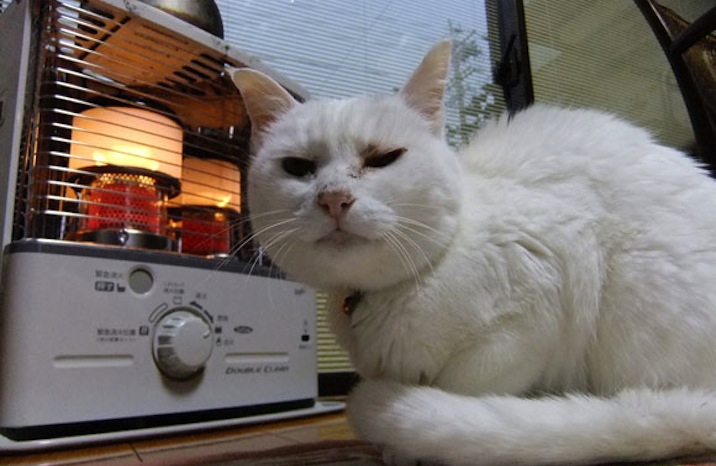
Why are space heaters dangerous? What you need to know.


December through March are peak months for home fire deaths. While space heaters can be a quick way to heat up a chilly room, that warmth comes with a BIG warning label.

Each year, space heaters are involved in 79% of fatal home heating fires. As temperatures drop, here are 10 things you need to know:

  1. Give the heater some space. Keep your space heater at least THREE feet away from anything flammable. That means clothes and blankets, stacks of newspapers, furniture, rugs and even walls. Allow at least three feet of open space on each side of the unit.


  2. Never (ever) use an extension cord with a space heater. To prevent a fire, never plug a high-wattage space heater into an extension cord or multi-outlet strip.

  3. Opt for quality. When shopping for a space heater, select a unit that has all the latest safety features and the Underwriter’s Laboratory (UL) label of approval. Look for cool-to-the-touch housings and automatic shutoff features that turn the unit off if it’s tipped over or overheating. Some units will automatically shut off if their infrared sensors detect a person or object that is too close to the heater panel—making them desirable choices for households with kids or pets.


  4. Never leave a space heater “on” in an unoccupied room. Always turn off a space heater when you leave the room and before going to bed. Throw on some extra blankets and unplug the unit as an extra precaution.

  5. Size matters. Before purchasing a space heater, check the label to see if it is the appropriate size for the area you want to heat.
  6. Make sure your house can handle it. Space heaters use a lot of electricity --- as much as fifteen 100-watt light bulbs. This can be too much for older houses with old wires and electrical circuits. When wires get overheated, fires can also start inside the walls where they are hard to spot. If the circuit breaker trips, don’t plug it back in.
  7. Keep space heaters away from water. Like any electrical device, they pose a shock hazard. To help prevent shocks, avoid using space heaters in rooms where spills and moisture build-ups are likely such at bathrooms and kitchens.
  8. Safety first. Check your heaters regularly – look for frayed wires and remove dust accumulation on grates, grills, coils and other elements of the heater.

  9. Hot, hot, hot. Some parts of the heater can become really hot. Children, seniors and pets are especially vulnerable to getting burned.


  10. Finally, don’t rely on space heaters to heat your home. They’re designed to supplement a central heating strategy – NOT replace it. Make sure every room in which you plan to use a space heater has working smoke alarms and that your house has a carbon monoxide alarm.


Sunday, February 10, 2019

Best Valentine's Gift EVER


Last minute shoppers, still looking for a  Valentine’s gift? 


Montgomery County Fire and Rescue officials are recommending smoke alarms as the perfect Valentine’s gift for loved ones. Nothing says you mean everything to me like the 24-hour protection that comes with a smoke alarm. And while you are busy planning the perfect evening, make it memorable for all the right reasons. A few tips to keep in mind:
  • Cooking up a great meal? Stand by your pan. Too many meals are ruined when cooks get distracted or forgetful and leave cooking unattended. As much as Fire/Rescue loves your cooking, you really don’t want us to have to extinguish that perfect meal. Cooking fires are the number one cause of home fires so keep anything that can catch fire – potholders, paper or plastic bags, dish towels, newspapers and curtains – away from your stovetop, oven and appliances that generate heat.
  • Candles may look festive and set the mood however unattended candles account for thousands of fires annually. The National Fire Protection Association reports that, on average, a candle fire in the home is reported to a US Fire Department every 30 minutes. Consider battery-operated, flameless candles instead. You really can’t tell the difference!
  • Lighting up the fireplace? Make sure that’s all you light up. Believe it or not, every year people dispose of fireplace ashes before they have sufficiently cooled. Keep your ash out of the trash and only dispose of fireplace ashes in a sealed, metal container located far from anything combustible. Never dispose of fireplace ashes in your recycling bin, trash can, paper or plastic bags or in a garage, carport or on a deck or porch. 
Montgomery County Fire and Rescue wants you to have a great Valentine’s Day. Remember, smoke alarms save lives. They make great gifts, one-size-fits-all and MCFRS will even come out and check your alarms for free! Just call 311 or visit www.mcfrs.org/mcsafe for info.

Sunday, December 9, 2018

Smoke Alarm Alerts Residents of Independent Senior Living Facility & Sprinkler Activates to Control Fire


Occupants Safely Escape & Credit Fire Sprinkler System


On December 5, 2018 tragedy was averted because of working smoke alarms and a residential sprinkler in an independent senior living facility in the Fairland/Calverton area.  Around 6:45 p.m., units from the Montgomery County Fire and Rescue Service responded to 12801 Old Columbia Pike, Arbor Crest, a two-story, senior independent living facility, for an 'automatic' medical alarm for an unknown emergency.  Paramedic Engine 724 responded to the scene and encountered moderate smoke on the second floor, at which additional fire and rescue units were dispatched. upon further investigation, moments later Firefighters located a small fire in a bedroom. The fire which involved a mattress and some other nearby combustibles was controlled by a residential sprinkler system.  The fire was mostly out. In the meantime, some of the building had been evacuated and other portions were shelter and protect in place. Firefighters located and rescued/relocated a feline (cat) from the apartment of origin.

Fire and Explosive Investigators believe one of the residents of the apartment of origin had been consumed alcohol and was smoking cigarettes in the bedroom and at some point fell asleep. Another resident was in another room and heard the smoke alarm activate. Upon investigation and in an effort to check on his wife, he discovered a fire on the mattress by the pillows with his wife still on the bed. He was able to rouse her and then attempted to extinguish the fire, to no avail.  After numerous attempts of trying to put out the fire, both occupants evacuated the apartment. In the commotion of those efforts a medical alarm was somehow activated, automatically alerting 911 for an unknown medical emergency. An ambulance and Paramedic Engine were dispatched. The residential sprinkler activated after the occupants had left the area & prior to arrival of emergency personnel.  The sprinkler essentially controlled and extinguished the fire. There were no injuries associated with the fire.  Damage was estimated to $30,000.

It should be noted, none of the occupants called 911 to report the fire.

The Community Outreach Senior Program Manager and crews from the area fire/rescue crews (First Battalion) are scheduled to revisit the facility to meet with residents, review best practices and talk about fire safety and reminding residents of the importance of calling 911 in an emergency.