Showing posts with label Barbeque Grills. Show all posts

Tuesday, April 26, 2016

Working Smoke Alarm Alerts Germantown Family To Fire

At approximately 3:23 a.m. this morning, MCFRS units responded for a reported house fire in the 13400 block of Tilford Court in Germantown. Units arrived on scene with fire showing from the rear of a two-story single family home.

Six occupants of the home, two adults and four children, were awakened by a working smoke alarm and observed the deck on fire. The family then exited the structure and called 911 once safely outside.

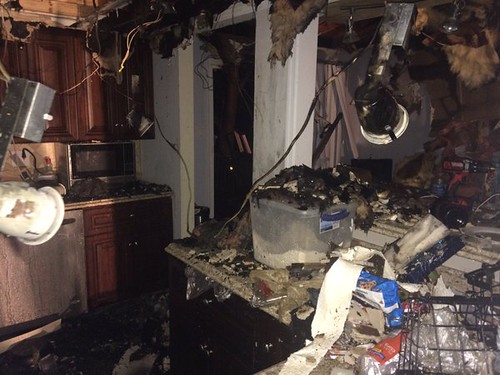
Firefighters quickly extinguished the fire which appeared to have started on the deck and then extended inside the house.

Fire Investigators arrived on scene and conducted an origin and cause investigation. Family members indicated that a charcoal cooker on the deck was used earlier in the day. Upon further examination, investigators determined that the cause of the fire was accidental, the result of a charcoal cooker.

A total of approximately 75 firefighters were on the scene. There were no injuries to civilians or firefighters. As a result of the damage, the family of six was displaced. Total fire loss was determined to be $100,000 to the structure and $50,000 for contents.

MCFRS would like to remind everyone that working smoke alarms save lives! Please make sure the alarms in your home work and ensure that you have a home fire escape plan. MCFRS offers free home safety evaluations and smoke alarms for those in need.

We would also like to remind all residents about Outdoor Grilling Safety.

photos from Tilford Court House Fire showing damage to home

Thursday, July 2, 2015

July Is The Peak Month For Grill Fires

Getting ready to "fire up" the grill this holiday weekend?

Did you know that July is the peak month for grill fires?  Below, please find a safety tip sheet highlighting ways to grill safely as you and your loved ones celebrate Independance Day.

Do not let your Independance Day weekend go up in flames!  Take a moment to review the below safety tips and enjoy a safely grilled meal!

Tuesday, April 14, 2015

Outdoor Cooking and Recreational Fires near Multi-Family Buildings

Montgomery County Fire and Rescue Services would like to share with you the criteria for cooking outdoors and recreational fires near multi-family dwellings to ensure a safe and enjoyable summer. “Multi-family” is any building that has three or more separate living units. This includes garden-style apartments, mid and high-rise apartments, and some condos.

Fire Attendant: 
All outdoor cooking or recreational fires must be constantly attended by a responsible person at least 18 years of age until the fire is extinguished. A garden hose or other extinguishing equipment has to be nearby and readily available for use. Grills or recreational fires cannot be used to burn trash or other combustible waste. If the fire department is contacted and determines your situation to be hazardous, the fire department can require you to extinguish your fire.

Outdoor Cooking: 
Outdoor cooking includes any gas-fired, charcoal, or electric grill. All outdoor cooking must be done at least 20 feet away from any building. It is not permitted on balconies, under overhanging portions of buildings, or on roofs. Gas-fired, charcoal, and electric grills cannot be stored on balconies.

Recreational Fires: 
Recreational fires include campfires, fire bowls, chimineas, and fire pits. Please notify the Office of Fire Code Compliance at 240-777-2457 prior to initiating a recreational fire. Permits from the Office of Fire Code Compliance and the Department of Environmental Protection are required. Recreational fires must be kept at least 25 feet away from any building. Fires are not permitted on Code Orange or Code Red Air Quality days.

After the fire: 
Dispose of all ashes in a safe manner. After 24 hours have passed, all left over hot ashes should be thoroughly dampened, cooled and stored in a metal can that is solely used for ash storage. Do not discard hot ashes in a compost pile, paper bag, cardboard box, or anything that is combustible. Be careful handling partially burned wood that may still be smoldering as it can cause serious burns

Friday, July 11, 2014

Firing up the Grill This Weekend? Keep these Safety Tips in Mind

It looks like we are going to have another beautiful weekend and there is no doubt people will be firing up their grills and the last thing on many minds is probably safety, right? Well, it shouldn’t be according to Fire Chief Steve Lohr. Every year, thousands of homes catch fire because of inproper use of grills and the Fire Chief wants to remind residents that preparation is the key to staying safe when using grills this season. 

Before you plan your next outdoor cookout, please review these safety tips:

 If you haven’t used your grill in a while, give it a good spring cleaning. Scour the grate with a wire brush. Save future cleaning time by using a nonstick cooking spray to prevent food from sticking to the grill.

 Before using your grill for the first time this season, go online to check whether your grill has been recalled due to any dangerous defects.

 Position the grill in a well-ventilated, flat and level surface away from your house, overhangs, deck railings, tree branches, shrubbery and anything that can burn. Never use a grill indoors or in a garage.

 Never leave a grill unattended – even for a minute – and supervise children and pets around the grill: declare three-foot “kid-free zone” around the grilling area. 

 Wear short, close-fitting or tightly rolled-up sleeves when cooking. Loose clothing can dangle over the grill and catch fire. 

 Use long-handled tongs and brushes while grilling. 

 Never move a lit barbeque.

 Make sure the barbeque is turned off, and completey cooled, before covering.

For Gas Grills

Before grilling, follow the manufacturer’s instructions for checking the connection to the cylinder. An easy way to do this is to tighten the connection, turn on the cylinder and then apply a soapy water solution around the connection. If bubbles appear, the connection is leaking. Turn the cylinder off, reconnect the cylinder and check again. 

 Check grill hoses for cracking, corrosion, brittleness, holes and leaks. Make sure there are no sharp bends in the hose or tubing. 

 If repairs are needed, do not attempt to do them yourself. Enlist a professional. 

 Always keep propane gas containers upright. 

 Always open the lid of a grill before igniting it.

 Regularly remove grease and fat buildup in trays below the grill so it cannot be ignited by a hot grill. 

 If you smell gas, turn the grill off immediately and do not use it until it is repaired.

 Do not store tanks or other flammable materials near a grill, indoors or in a heated area such as a vehicle trunk. Propane tanks need to be stored in well-ventilated areas. 

For Charcoal Grills:

 Use the proper starter fluid and store the can out of reach of children and away from heat sources. 

 Never use any type of grill inside. Don't barbeque in the garage, even with the door open. Barbecues produce carbon monoxide, which can build up in an enclosed area. Carbon monoxide is invisible, colorless and tasteless -- but extremely dangerous. Instead, set up your grill in a corner of your deck or patio. Avoid grilling on a covered or enclosed porch or on top of anything that can catch on fire.

 Since charcoal produces CO fumes until the charcoal is completely extinguished, do not store the grill indoors with freshly used coals. 

In Montgomery County, unless you live in a house, it is illegal to:

• Kindle or maintain charcoal burners and/or gas-fired grills on balconies or within 20 feet of any structure. 

• Store liquid propane (LP) gas cylinders, within 20 feet of a multi-family residential building. 

Remember, when cooking outside - ALWAYS open the hood before lighting the grill. ALWAYS keep the grill in a safe area away from children, pets and heavy people traffic where someone could bump into it. NEVER try to grill inside and remember, it is best to grill 20 feet away from anything that can burn. Have a safe summer! 

Sources: NFPA, CPSC and the USFA

Tuesday, July 8, 2014

Backyard Grill Explosion

As many of you are aware, this week is Grill Safety Week as part of our overall Summer of Safety program. Below is a very powerful interview with Hannah Storm of ESPN who experienced a horrific incident with a propane grill approximately a year and a half ago.  Please pay close attention to what she mentions occurred.

Please enjoy your grill safely and make sure you are aware of all precautions you should take so that something like this does not happen to you.  We applaud Ms. Storm for her continued efforts to make people aware of what occurred in an effort to prevent others from suffering as well.


ABC US News | ABC Sports News

Monday, July 7, 2014

Grilling Safety

We are just starting Week #3 of our Summer of Safety outreach efforts.  This weeks theme is Grilling Safety.

Did you know that July is the peak month for grill fires?  Below, please find a safety tip sheet we will be handing out in various areas of the County highlighting ways to grill safely.

Do not let your summer go up in flames!  Take a moment to review the below safety tips and enjoy a safely grilled meal!

Saturday, May 24, 2014

Outdoor Grilling Safety

Thinking of starting/firing up the grill during this holiday weekend?  Fire Chief Steve Lohr of the Montgomery County Fire & Rescue Service wants you and your loved ones to enjoy this weekend SAFELY! Below are some tips from the National Fire Protection Association that he hopes will help:
Safe GrillingAlways supervise a barbecue grill when in use.
  • Position the grill well away from siding, deck railings and out from under eaves and overhanging branches.
  • Keep children and pets far away from grills: declare a three-foot "safe zone" around the grill.
  • With charcoal grills, only use charcoal starter fluids designed for barbecue grills and do not add fluid after coals have been lit. NEVER use gasoline!
  • With gas grills, be sure that the hose connection is tight and check hoses carefully for leaks. Applying soapy water to the hoses will easily and safely reveal any leaks.
  • All propane cylinders manufactured after April 2002 must have overfill protection devices (OPD). OPDs shut off the flow off propane before capacity is reached. OPDS are easily identified by their triangle-shaped hand wheel.
  • Always follow the manufacturer's instructions and have the grill. repaired by a professional, if necessary.
  • Remember to keep your grill clean! Periodically remove grease or fat buildup in trays below grill so it cannot be ignited by a hot grill.
  • Wear short, close fitting or tightly rolled sleeves when cooking. Loose clothing can dangle onto grill and catch fire.
  • REMEMBER! Propane and charcoal BBQ grills must only be used outdoors. If used indoors, or in any enclosed spaces, such as tents, they pose both a fire hazard and the risk of exposing occupants to toxic gases and potential asphyxiation.

Grilling Safety

According to the Barbecue Industry Association, three out of four households in the United States own a barbecue grill. From making a quick dinner to barbequing a feast for family and friends, when lighting a charcoal or gas grill, it's important to remember that a savory barbeque is a safe barbecue.
  • According to the National Fire Protection Association (NFPA), gas and charcoal grills cause an annual average of 1,500 structure fires and 4,200 outdoor fires in or on residential properties, resulting in a combined direct property loss of $29.8 million.

Make Fire Safety a Priority

Protection can be relatively simple and inexpensive. To help prevent fire fatalities and injuries at your home this summer:
Safe GrillingOnly use your barbecue grill outside. Grills are not designed to be used in a trailer, tent, garage, or house. Carbon monoxide can build-up and poison you.
  • Set-up a grill in an open area away from buildings, overhead combustible surfaces, dry leaves or brush. Be sure to avoid high traffic areas and always barbecue in a well-ventilated area. Be aware of wind blown sparks.
  • Always read the owners manual before using the grill.
  • Never use a grill indoors. Use the grill at least 20 feet away from your house or any building. Do not use the grill in a garage, breezeway, carport, porch, or under a surface that can catch fire.
  • Keep a multipurpose fire extinguisher within easy reach.
  • When purchasing a fire extinguisher, choose the largest size that can be handled comfortably.
  • Wear clothing that does not have hanging sleeves or apron strings, and use flame retardant mitts when adjusting hot vents.
  • Never leave a grill unattended once it is lit.
  • Use long-handled utensils to avoid burns and splatters.
  • Never attempt to move a hot grill.
  • If using a charcoal grill, gasoline should never be used in place of charcoal lighter fluid. And never reapply charcoal lighter fluid after the fire has started; the flames can ignite the vapors, and travel up to the can causing an explosion.
Consumers should use caution when storing LP gas containers. Always keep containers upright. Never store a spare gas container under or near the grill or indoors. Never store or use flammable liquids, like gasoline, near the grill.
To avoid accidents while transporting LP gas containers, consumers should transport the container in a secure, upright position. Never keep a filled container in a hot car or car trunk. Heat will cause the gas pressure to increase, which may open the relief valve and allow gas to escape.
Consumers should use extreme caution and always follow manufacturer's instructions when connecting or disconnecting LP gas containers.
Grills manufactured after October 1, 1995, are required to have three additional safety features to eliminate leak hazards: a device to limit the flow of gas in the event of hose rupture; a mechanism to shut-off the grill; and a feature to prevent the flow of gas if the connection between the tank and the grill is not leak proof. Consumers should consider purchasing grills that have these safety features. Sources: U.S. Consumer Product Safety Commission and NFPA

Sunday, June 23, 2013

Outdoor Grilling Safety

The onset of warm weather signals the beginning of Barbecue Season! Fire Chief Steve Lohr of the Montgomery County Fire & Rescue Service wants you and your loved ones to enjoy this season SAFELY! Below are some tips from the National Fire Protection Association that he hopes will help:
Safe Grilling
  • Always supervise a barbecue grill when in use.
  • Position the grill well away from siding, deck railings and out from under eaves and overhanging branches.
  • Keep children and pets far away from grills: declare a three-foot "safe zone" around the grill.
  • With charcoal grills, only use charcoal starter fluids designed for barbecue grills and do not add fluid after coals have been lit. NEVER use gasoline!
  • With gas grills, be sure that the hose connection is tight and check hoses carefully for leaks. Applying soapy water to the hoses will easily and safely reveal any leaks.
  • All propane cylinders manufactured after April 2002 must have overfill protection devices (OPD). OPDs shut off the flow off propane before capacity is reached. OPDS are easily identified by their triangle-shaped hand wheel.
  • Always follow the manufacturer's instructions and have the grill. repaired by a professional, if necessary.
  • Remember to keep your grill clean! Periodically remove grease or fat buildup in trays below grill so it cannot be ignited by a hot grill.
  • Wear short, close fitting or tightly rolled sleeves when cooking. Loose clothing can dangle onto grill and catch fire.
  • REMEMBER! Propane and charcoal BBQ grills must only be used outdoors. If used indoors, or in any enclosed spaces, such as tents, they pose both a fire hazard and the risk of exposing occupants to toxic gases and potential asphyxiation.

Grilling Safety

According to the Barbeque Industry Association, three out of four households in the United States own a barbeque grill. From making a quick dinner to barbequing a feast for family and friends, when lighting a charcoal or gas grill, it's important to remember that a savory barbeque is a safe barbeque.
  • According to the National Fire Protection Association (NFPA), gas and charcoal grills cause an annual average of 1,500 structure fires and 4,200 outdoor fires in or on residential properties, resulting in a combined direct property loss of $29.8 million.

Make Fire Safety a Priority

Protection can be relatively simple and inexpensive. To help prevent fire fatalities and injuries at your home this summer:
Safe Grilling
  • Only use your barbeque grill outside. Grills are not designed to be used in a trailer, tent, garage, or house. Carbon monoxide can build-up and poison you.
  • Set-up a grill in an open area away from buildings, overhead combustible surfaces, dry leaves or brush. Be sure to avoid high traffic areas and always barbeque in a well-ventilated area. Be aware of wind blown sparks.
  • Always read the owners manual before using the grill.
  • Never use a grill indoors. Use the grill at least 10 20 feet away from your house or any building. Do not use the grill in a garage, breezeway, carport, porch, or under a surface that can catch fire.
  • Keep a multipurpose fire extinguisher within easy reach.
  • When purchasing a fire extinguisher, choose the largest size that can be handled comfortably.
  • Wear clothing that does not have hanging sleeves or apron strings, and use flame retardant mitts when adjusting hot vents.
  • Never leave a grill unattended once it is lit.
  • Use long-handled utensils to avoid burns and splatters.
  • Never attempt to move a hot grill.
  • If using a charcoal grill, gasoline should never be used in place of charcoal lighter fluid. And never reapply charcoal lighter fluid after the fire has started; the flames can ignite the vapors, and travel up to the can causing an explosion.
Consumers should use caution when storing LP gas containers. Always keep containers upright. Never store a spare gas container under or near the grill or indoors. Never store or use flammable liquids, like gasoline, near the grill.
To avoid accidents while transporting LP gas containers, consumers should transport the container in a secure, upright position. Never keep a filled container in a hot car or car trunk. Heat will cause the gas pressure to increase, which may open the relief valve and allow gas to escape.
Consumers should use extreme caution and always follow manufacturer's instructions when connecting or disconnecting LP gas containers.
Grills manufactured after October 1, 1995, are required to have three additional safety features to eliminate leak hazards: a device to limit the flow of gas in the event of hose rupture; a mechanism to shut-off the grill; and a feature to prevent the flow of gas if the connection between the tank and the grill is not leak proof. Consumers should consider purchasing grills that have these safety features. Sources: U.S. Consumer Product Safety Commission and NFPA

Wednesday, October 10, 2012

The 2nd Annual High Point BBQ Battle To Benefit The Muscular Dystrophy Association


Please plan on coming out to High Point Farm on October 12 - 13 for the 2nd Annual High Point BBQ Battle to help raise funds for the Muscular Dystrophy Association.

High Point Cateringin cooperation with the Montgomery County Career Firefighters Associationthe Montgomery County Career Officers Association, and the Muscular Dystrophy Association, is sponsoring this fun filled two-day fundraising event. 

For more information, please go here: 2nd Annual High Point Farm BBQ Battle

Event Flyer for Kids 2012-10-04

Friday, July 27, 2012

Chief Bowers Talks About Safety Tips For Grilling Season

Fire Chief Bowers talks about grilling safety below.  Have a safe weekend and please follow these tips if you will be pulling out the BBQ grill!


Wednesday, June 27, 2012

Reminders, Tips for Safe Disposal of Ash from Grills Provided by Division of Solid Waste Services, Fire & Rescue Service


With grilling season in full swing, Montgomery County’s Division of Solid Waste Services (DSWS/Dept. of Environmental Protection) and the Montgomery County Fire and Rescue Service are issuing reminders and tips about the importance of safely disposing of the ash generated when using outdoor grills. 

Residents are reminded to never put out ashes from outdoor barbecues (and fireplaces) for collection with their regular household trash unless they have been thoroughly soaked with water or held for at least a week to ensure there are no residual embers.

Cooled ashes may be brought to the Solid Waste Transfer Station, for disposal in specifically-designated ash containers. The Transfer Station is located at 16101 Frederick Rd., Derwood (off Rt. 355 at Shady Grove Rd.). 

If delivering ash by car, residents are asked to use the Frederick Rd. (Rt. 355) entrance just south of Shady Grove Rd. The Transfer Station's Public Unloading Facility (PUF) -- also called the "Car Ramp" -- has several steel drums marked specifically for ash disposal. The drums are located between trash drop-off bays. DSWS staff verifies that the ash has cooled off before taking it to the rubble drop-off area for disposal. 

If delivering ash by truck, residents should use the Shady Grove Rd. entrance and speak to the scale house staff for further instructions. 

“Many residents are enjoying the summer weather, spending more time outdoors, and having barbecues. It’s extremely important that they allow the ashes from their grills – as well as any fireplaces or fire pits – to cool down completely before they properly dispose of them,” said Dan Locke, chief of the Division of Solid Waste Services. 

“Hot ashes that are not properly cooled and disposed are significant fire hazards, capable of starting fires while mixed in loads of waste in refuse collection trucks, on rail cars on their way to waste disposal facilities, or while waste is actually being processed at the County’s Transfer Station or Resource Recovery Facility,” Locke said. 

“The risk of fire becomes even greater due to the hot, dry weather conditions during the summertime.” 
Fire Chief Richard Bowers added, “Improper disposal of ashes or hot coals from fireplaces, grills or mobile fireplaces designed for decks or patios has become a common cause of many recent fires. 

“Embers often concealed in what appears to be cold ashes, can remain hot enough to rekindle a fire for several days,” he explained. “We want residents to enjoy their fireplaces and grills but to always dispose of the ashes wisely.” 

Fire Department officials remind residents to:
• Allow ashes and coals to cool in place for several days, if possible.
• When it’s time to dispose of the ashes, transfer them to a metal container and wet them down. Only use an approved metal ash bucket that has a tight fitting metal lid.
• Store the container outside, away from structures, decks, fences, wood piles or other combustible materials.
• Never use a vacuum cleaner to pick up ashes.
• Never dump ashes into a plastic container, cardboard box, bag, or anything or in any place where combustible fluids of fumes are present.
• Don't dump ashes outside on a windy day. The wind can whip up what may have seemed like cool embers, making them fiery hot and sending them traveling to ignite nearby combustibles.
• And lastly, always have working smoke alarms on every level of your home and test them monthly.

Tuesday, October 11, 2011

High Point BBQ Battle to Benefit MDA

On Friday evening and Saturday October 14th and 15th, the Montgomery County Career Firefighters and the Montgomery County Career Officers will sponsor a BBQ competition and festival to benefit the Muscular Dystrophy Association. Friday evening's activity will begin at 5 p.m. and the Jay Henley and the Stonebroke Band will perform live from 7:30 p.m. until 10. There will be plenty of food and fun!

On Saturday October 15th from 9 a.m. until 4 p.m., there will be food vendors, moon bounces, rock walls, and much more for the entire family.

We would like to invite any BBQ enthusiasts to sign up to compete. If you have ever wanted to, but never entered a competition, this is a great low stress opportunity. There is $1400 in prize money and a great time to hang out with friends around the grill. Please share this with all of your list friends.

Here is a link to the event and hope to see you there to help raise much needed funds for our family at MDA: http://www.highpointcatering.com/bbq-battle/index.html

Assistant Chief Scott Graham

Wednesday, May 25, 2011

NEWS ADVISORY: Firing up the Grill? Keep these Safety Tips in Mind

IMMEDIATE RELEASE: May 25, 2011


Firing up the Grill?
Keep these Safety Tips in Mind

With Memorial Day fast approaching, people will be firing up their grills for the first time this year and the last thing on many minds is probably safety, right? Well, it shouldn’t be according to Fire Chief Richie Bowers. Every year, thousands of homes catch fire because of inproper use of grills and the Fire Chief wants to remind residents that preparation is the key to staying safe when using grills this season.

Before you plan your next outdoor cookout, please review these safety tips:

 If you haven’t used your grill in a while, give it a good spring cleaning. Scour the grate with a wire brush. Save future cleaning time by using a nonstick cooking spray to prevent food from sticking to the grill.

 Before using your grill for the first time this season, go online to check whether your grill has been recalled due to any dangerous defects.

 Position the grill in a well-ventilated, flat and level surface away from your house, overhangs, deck railings, tree branches, shrubbery and anything that can burn. Never use a grill indoors or in a garage.

 Never leave a grill unattended – even for a minute – and supervise children and pets around the grill: declare three-foot “kid-free zone” around the grilling area.

 Wear short, close-fitting or tightly rolled-up sleeves when cooking. Loose clothing can dangle over the grill and catch fire.

 Use long-handled tongs and brushes while grilling.

 Never move a lit barbeque.

 Make sure the barbeque is turned off, and completey cooled, before covering.

For Gas Grills:

Before grilling, follow the manufacturer’s instructions for checking the connection to the cylinder. An easy way to do this is to tighten the connection, turn on the cylinder and then apply a soapy water solution around the connection. If bubbles appear, the connection is leaking. Turn the cylinder off, reconnect the cylinder and check again.

 Check grill hoses for cracking, corrosion, brittleness, holes and leaks. Make sure there are no sharp bends in the hose or tubing.

 If repairs are needed, do not attempt to do them yourself. Enlist a professional.

 Always keep propane gas containers upright.

 Always open the lid of a grill before igniting it.

 Regularly remove grease and fat buildup in trays below the grill so it cannot be ignited by a hot grill.

 If you smell gas, turn the grill off immediately and do not use it until it is repaired.

 Do not store tanks or other flammable materials near a grill, indoors or in a heated area such as a vehicle trunk. Propane tanks need to be stored in well-ventilated areas.

For Charcoal Grills:

 Use the proper starter fluid and store the can out of reach of children and away from heat sources.

 Never use any type of grill inside. Don't barbeque in the garage, even with the door open. Barbecues produce carbon monoxide, which can build up in an enclosed area. Carbon monoxide is invisible, colorless and tasteless -- but extremely dangerous. Instead, set up your grill in a corner of your deck or patio. Avoid grilling on a covered or enclosed porch or on top of anything that can catch on fire.

 Since charcoal produces CO fumes until the charcoal is completely extinguished, do not store the grill indoors with freshly used coals.

In Montgomery County, unless you live in a house, it is illegal to:

• Kindle or maintain charcoal burners and/or gas-fired grills on balconies or within 20 feet of any structure.

• Store liquid propane (LP) gas cylinders, within 20 feet of a multi-family residential building.

Remember, when cooking outside - ALWAYS open the hood before lighting the grill. ALWAYS keep the grill in a safe area away from children, pets and heavy people traffic where someone could bump into it. NEVER try to grill inside and remember, it is best to grill 20 feet away from anything that can burn. Have a safe summer!

Sources: NFPA, CPSC and the USFA

# # #

Thursday, May 27, 2010

Firing up the Grill? Keep these Safety Tips in Mind

It’s that time of year again -- with summer fast approaching, residents will be firing up their grills and the last thing on many minds is probably safety, right? Well, it shouldn’t be according to Fire Chief Richie Bowers. Firefighters responded to a serious grill fire this past weekend (photos above and below) that remains under investigation with the homeowner was transported to a local hospital and currently recovering from 1st and 2nd degree burns sustained in the fire. Every year, thousands of homes catch fire because of inproper use of grills and the Chief wants to remind residents that preparation is the key to staying safe when using grills this season.

Before you plan your next outdoor cookout, please review these safety tips:

 If you haven’t used your grill in a while, give it a good spring cleaning. Scour the grate with a wire brush. Save future cleaning time by using a nonstick cooking spray to prevent food from sticking to the grill.

 Before using your grill for the first time this season, go online to check whether your grill has been recalled due to any dangerous defects.

 Position the grill in a well-ventilated, flat and level surface away from your house, overhangs, deck railings, tree branches, shrubbery and anything that can burn. Never use a grill indoors.

 Never leave a grill unattended – even for a minute – and supervise children and pets around the grill: declare three-foot “kid-free zone” around the grilling area.

 Wear short, close fitting or tightly rolled-up sleeves when cooking. Loose clothing can dangle over the grill and catch fire.

For Gas Grills:

Before grilling, follow the manufacturer’s instructions for checking the connection to the cylinder. An easy way to do this is to tighten the connection, turn on the cylinder and then apply a soapy water solution around the connection. If bubbles appear, the connection is leaking. Turn the cylinder off, reconnect the cylinder and check again.

 Check grill hoses for cracking, corrosion, brittleness, holes and leaks. Make sure there are no sharp bends in the hose or tubing.

 If repairs are needed, do not attempt to do them yourself. Enlist a professional.

 Always keep propane gas containers upright.

 Always open the lid of a grill before igniting it.

 Regularly remove grease and fat buildup in trays below the grill so it cannot be ignited by a hot grill.

 If you smell gas, turn the grill off immediately and do not use it until it is repaired.

 Do not store tanks or other flammable materials near a grill, indoors or in a heated area such as a vehicle trunk. Propane tanks need to be stored in well-ventilated areas.

For Charcoal Grills:

 Use the proper starter fluid and store the can out of reach of children and away from heat sources.

 Never use any type of grill inside. Don't barbeque in the garage, even with the door open. Barbecues produce carbon monoxide, which can build up in an enclosed area. Carbon monoxide is invisible, colorless and tasteless -- but extremely dangerous. Instead, set up your grill in a corner of your deck or patio. Avoid grilling on a covered or enclosed porch or on top of anything that can catch on fire.

 Since charcoal produces CO fumes until the charcoal is completely extinguished, do not store the grill indoors with freshly used coals.

In Montgomery County, unless you live in a house, townhouse, row house or other multi-family dwelling where all dwelling units are side by side and none are superimposed above another it is illegal to:

• Kindle or maintain charcoal burners and/or gas-fired grills on balconies or within 20 feet of any structure.
• Store liquid propane (LP) gas cylinders, within 20 feet of a multi-family residential building.

Remember, when cooking outside - ALWAYS open the hood before lighting the grill. ALWAYS keep the grill in a safe area away from children, pets and heavy people traffic where someone could bump into it. NEVER try to grill inside and remember, it is best to grill 20 feet away from anything that can burn. Have a safe summer!

Sources: NFPA, CPSC and the USFA

# # #
UPDATE June, 4 2010:  Montgomery County Code Sec. 22-81. Use of certain cooking equipment adjacent to multi-family dwellings.

The use of charcoal burning, other fuel burning or electric cooking equipment outside of any multi-family dwelling shall be prohibited unless such cooking equipment is at least twenty (20) feet from every part of the building. The provisions of this section shall not apply to townhouses, row houses or other multi-family dwellings where all dwelling units are side by side and none are superimposed above another. (1975 L.M.C., ch. 23, § 1.)

Thursday, April 8, 2010

Home Fires Can Start Outdoors!

With warm weather upon us, many people are taking an opportunity to enjoy various outdoor activities after a cold and snowy winter. Unfortunately, some of these outdoor activities can lead to serious fires in and around your home if you are not careful. Yesterday, Montgomery County experienced several fires that started outside but next to houses/buildings that placed people and property in danger. In the recent past the County experienced a fire in an Alzheimer care facility that was severely damaged by a fire started outside of the building by a cigarette!

To help people enjoy outdoor activities around your home in a safe manner, the women and men of Montgomery County Fire and Rescue ask that you please take a moment to review the below safety tips from some of our safety partners (listed below). Also take a moment to review the video above from our safety partners at the National Fire Protection Association on grilling safety.

Plants, Mulch, Potted Plants

 Clean – Remove all dead plant material from around your home; this includes dead leaves, dry grass and even stacked firewood

 Although mulch helps retain soil moisture, when dry, it can become flammable. Mulch as well as all landscaping should be kept well watered to prevent them from becoming fire fuel.

 Do not use old planter pots that contain potting soil as an ashtray. Many mixtures include different types of fertilizers that are oxidizers which will make a fire that does start, grow at an even faster rate.

 Keep an ashtray in areas where someone might be smoking around potted plants.

 If you have dead plants in pots in and around your home, discard them properly by throwing them out in the trash or spreading the soil from the pots in your yard or garden.

 Keep your potted plants well watered and maintained.

 If you keep potting soil in your garage or on your deck, do not leave it near any combustible material.

Barbeque Grills

 In 2003-2006, one-third (33%) of the home structure fires involving grills started on an exterior balcony or unenclosed porch, 18% started on a courtyard, terrace or patio, and 11% started on an exterior wall surface.

 The grill should be placed well away from the home, deck railings and out from under eaves and overhanging branches.

 Keep children and pets away from the grill area.

 Keep your grill clean by removing grease or fat buildup from the grills and in trays below the grill.

 Never leave your grill unattended when in use.

Propane grills

Check the gas tank hose for leaks before using it for the first time each year. Apply a light soap and water solution to the hose. A propane leak will release bubbles. If your grill has a gas leak, by smell or the soapy bubble test, and there is no flame, turn off the gas tank and grill. If the leak stops, get the grill serviced by a professional before using it again. If the leak does not stop, call the fire department. If you smell gas while cooking, immediately get away from the grill and call the fire department. Do not move the grill.

Charcoal grills

If you use a starter fluid, use only charcoal starter fluid. Never add charcoal fluid or any other flammable liquids to the fire. Always keep charcoal fluid out of the reach of children and away from heat sources. There are also electric charcoal starters, which do not use fire. Be sure to use a UL approved extension cord for outdoor use. When you are finished grilling, let the coals completely cool before disposing in a metal container.

Smoking materials

 Smoking materials (i.e., cigarettes, cigars, pipes, etc.) are the leading cause of fire deaths in the United States.

 If you smoke outside, use deep, wide ashtrays on a sturdy table or surface

 Before you throw out butts and ashes, make sure they are out, and dousing in water or sand is the best way to do that.

 Check under outdoor furniture cushions and in other places people smoke for cigarette butts that may have fallen out of sight.

 If you smoke, choose fire-safe cigarettes. They are less likely to cause fires.

 Keep matches and lighters up high, out of children's sight and reach.

Several tips gathered from the NFPA and USFA.