Showing posts with label montgomery county fire and rescue. Show all posts

Thursday, July 21, 2016

Candle Safety

Yet another important 101 Days of Summer Safety topic - Candles.

Candles may look festive and smell pretty but understand that unattended candles account for thousands of fires annually. The National Fire Protection Association (NFPA) reports that, on average, 25 home candle fires are reported across the United States each day. Back in May, a candle caused a house fire in Bethesda.

photo of several lit tea candles on a surface

In addition, the NFPA reports that from 2009-2013, U.S. fire departments responded to an estimated 9,300 home structure fires that were started by candles. These fires caused 86 deaths, 827 injuries and $374 million in direct property damage.

MCFRS asks that all residents consider battery-operated, flameless candles instead. Many look and smell like real candles - you really can’t tell the difference!

If you still wish to use open flame candles, MCFRS would like to remind all residents to check your smoke alarms regularly and please follow these safety tips while using candles in the home:

  • Extinguish all candles when leaving the room or going to sleep.
  • If power is out please use flashlights for emergency lighting. Never use candles.
  • Keep candles away from items that can catch fire (e.g., clothing, books, paper, curtains, Christmas trees, flammable decorations, etc.).
  • Use candle holders that are sturdy, won't tip over easily, are made from a material that can't burn and are large enough to collect dripping wax.
  • Don't place lit candles in windows. Blinds and curtains can easily ignite.
  • Place candle holders on a sturdy, uncluttered surface and do not use candles in places where they could be knocked over by children or pets.
  • Keep candles and all open flames away from flammable liquids.
  • Keep candle wicks trimmed to one-quarter inch and extinguish candles when they get to within two inches of the holder or decorative material. Votive and containers should be extinguished before the last half-inch of wax starts to melt.
  • Avoid candles with decorative items embedded in them.

For more tips go here: Candle Safety

Thursday, July 14, 2016

Stealing Water From A Fire Hydrant Is A Crime

photo graphic saying Stealing water is a crimeDid you know that stealing water from a fire hydrant is a crime? Well, it is.

Of particular concern to fire departments is the potential for collateral damage that can occur to the fire hydrant as a result of this illegal act. Damage that could negatively impact our firefighters ability to get enough water to fight a fire.

Yesterday, MCFRS Fire Chief Scott Goldstein along with the Washington Suburban Sanitary Commission (WSSC) Police Chief Harvey Baker and Deputy Fire Chief Jim McClelland from the Prince George’s County Fire/EMS Department joined together to raise awareness about water theft and highlight the potential public safety consequences as a result.

Below, please find a video from the press event originally broadcast live on our Periscope and Facebook pages. As well, some photos from the event.

You can also learn more from WSSC on how you can help: WSSC Kicks Off Water Theft Prevention Program


photos from WSSC Press Conference

Wednesday, July 13, 2016

Adopt A Hydrant

Help us to help YOU!
Example of a hidden fire hydrant behind trees and brush
Example of a hidden fire hydrant

If you have a fire hydrant on or near your property please do not plant flowers, shrubs or anything that will block the view from the fire department. Consider planting ground cover instead.

Make sure to keep weeds or vegetation from blocking access or sight. Trim vegetation to maintain a minimum of a 3 foot clearance around the fire hydrant.

Firefighters look for fire hydrants in an emergency situation and every second counts.

Thursday, July 7, 2016

Safety Alert: How to Avoid a Disaster in Your Home

photo of oily rags all piled togetherSpontaneous combustion happens more often than you think and results in major fire losses each year. Spontaneous combustion of oily rags occurs when rag or cloth is slowly heated to its ignition point through oxidation. A substance will begin to release heat as it oxidizes. If this heat has no way to escape, like in a pile of rags, the temperature will raise to a level high enough to ignite the oil and ignite the rag or cloth causing major fire damage and loss. One of the most common scenarios occurs when floors, fences or decking are being refinished and stain-soaked and oily rags are left in a pile on the floor, deck or garage.

Common Products:

• Linseed oil and other drying oils
• Wood Stain
• Alkyd Enamel Resins
• Motor Fuels
• Oil-based products such as primer, sealer, paint, White-Pigmented Shellac, paint thinner, turpentine, mineral spirits and denatured alcohol.

Prevention of spontaneous combustion fires begins with good housekeeping. A clean work area can prevent a fire from spreading and getting bigger by not allowing the fire fuel to burn. Also understanding the potential for self-heating of rags soiled with oils such as linseed oil and turpentine is a key step in eliminating these preventable fires. Be sure to educate contractors that may be working in your home and “DIY” friends and family members.  Always read and follow the safety precautions listed on the container of any solvent-based material.

Tips for Storing and Disposing of oil-soaked rags:

1. DO NOT ball up, pile, stack or fold any wiping cloth, rag, towel, drop cloth, steel wool or piece of work clothing that becomes moistened or wet due to contact with a solvent-based material.

2. DO NOT toss used rags into a trash can or plastic bucket or even consider putting them in the dryer!

3. DO store used rags in a metal container with water in it and a lid firmly on top away from the house.

4. SAFELY STORE any garage/workshop supplies. Paints and solvents should not be kept near heat generating equipment such as cars, furnaces or water heaters.

Please take a moment to view this informative report on the subject from NBC4.

Wednesday, July 6, 2016

MCFRS Significant Incident Map - June 2016

Click on the icons and learn more about significant incidents that occurred in June. You may even find videos and photos embedded within the icon. You will also find links to more information in many as well.

This is another layer in the significant incident map since March. Once you go into the map, you can click the March, April and/or May box which will then layer those incidents in with the June map below.


Tuesday, July 5, 2016

Attic Fire In Rockville Home

At approximately 12:26 p.m. on Monday, July 4, MCFRS units were dispatched to the 1000 block of Julian Place in the City of Rockville for a report of an odor of smoke. While en route to the call, it was upgraded to a full assignment for a house fire.

Units arrived on scene to find a one story single family dwelling with smoke coming from the attic. Upon investigation, firefighters found a small fire in a bathroom fan that had extended into the attic near the fan. The fire was quickly extinguished.

All occupants of the home had safely exited. No civilian or firefighter injuries were reported. Approximately 35 firefighters were on scene. Damages were estimated at $10,000.00 total.


Fire In Abandoned House

At approximately 1:40 a.m. this morning, MCFRS units were dispatched for the reported house fire in the 400 block of Norwood Road in the Colesville area of the county. Firefighters arrived on scene to find an abandoned, two-story single family home well involved in heavy fire.

An exterior fire attack was initiated to quickly bring the fire under control.

The cause of the fire is currently under investigation. A total of 50 firefighters were on-scene. There were no reported civilian or firefighter injuries. Damages were estimated to be $250,000.00.


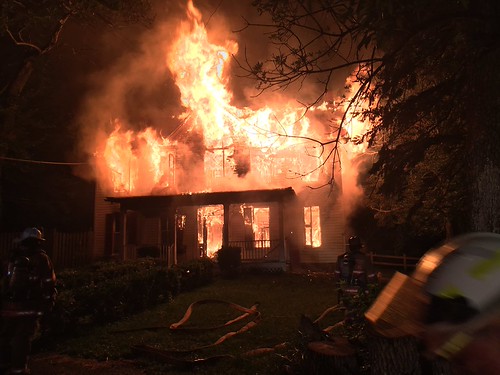
2 photos of fire engulfing abandoned house

Wednesday, June 29, 2016

Helicopter Training

By: Lieutenant Rob Tobin
      Fire Station 10 B-Shift

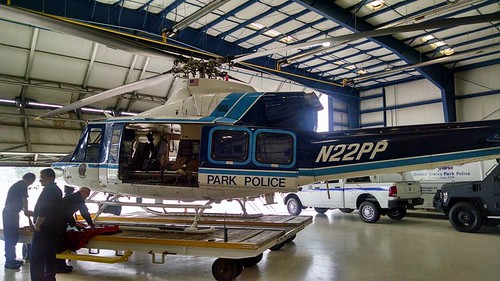
Throughout the year, the United States Park Police (USPP) and Montgomery County Fire and Rescue work very closely together all along the Potomac River. As a result, each year, the personnel from Fire Station's 10 and 30 have to recertify in helicopter tactics and safety with the USPP.

Yesterday, personnel reported to the Headquarters of USPP in Washington DC. to recertify. The training varies from 4-6 hours depending on the size of the group.

All personnel were provided a review of the different pieces of equipment that we may utilize throughout the year. The equipment is not just for injured residents visiting Great Falls Park, but also distressed individuals who may have fallen into the Potomac River. Also we, as rescuers, can be placed in dangerous situations that may require immediate removal from the river.

That's why it is important that we recertify with this equipment each year. It's also an excellent opportunity to get know one another from each agency. As the relationships strengthens, the safety for both the residents and rescuers grows.


photos of Helicopter Training

Wednesday, June 22, 2016

Check Your Deck

Summer is here and your deck is the perfect place to entertain! Your deck is exposed to the elements 365 days a year and over time wood may begin to crack, splinter and rot increasing the risk of injury or structural failure. To ensure the safety of your guests and family, please keep these tips in mind:
  • Avoid grilling on the deck.
  • Know the Code. Codes are established to ensure your safety. 
  • Light it up! Prevent trips and falls by incorporating lighting on your deck.
  • Take time each year to check your deck. 
  • Check not only the stairs/steps of your deck, but also all railings. Repair any area that is unstable. Also look for any trip hazards, such as loose wood. Lean from side to side on each stair to see if the stair wobbles. Look carefully at the points of connection between the stairs and the deck and replace anything that looks old or compromised.
Proper deck maintenance will help keep your deck strong. However, it can’t protect against a fire caused by grilling on your deck. Take a few minutes and ensure your deck is ready for summer gatherings. For more information:

Montgomery County Department of Permitting Services provided deck safety info for a segment on WRC TV 4.

Tuesday, June 14, 2016

Potomac House Fire Displaces Family Of Four

At approximately 2:02 p.m. on Monday, June 13 MCFRS units were dispatched for a house fire initially reported to be in the 12700 block of Maidens Bower Drive in Potomac.

Battalion Chief 703 arrived on the scene, with a corrected address of 14001 Gorky Drive, and reported a large two story single family house with heavy fire showing in an attached two car garage that was rapidly spreading to the rest of the home.

It was quickly determined that none of the occupants were home thus there was no life safety issue. Due to the large volume of fire, firefighters initiated an aggressive exterior attack to extinguish the fire. Large amounts of water were required for firefighting operations which necessitated several nearby hydrants being utilized. While the fire was brought under control quickly, the extensive damage resulted in most of the house collapsing.

Fire Investigators were called to the scene and have initially determined the fire appears to have started in the garage and appears accidental in nature. Due to the extensive damage, Fire Investigators will need to bring in heavy equipment to remove debris to assist in making a final determination as to the origin and cause of the fire.

Approximately 65 firefighters were on the scene with no injuries to personnel reported. The family of four was unharmed though, sadly, two family dogs perished in the fire. As a result of the extensive damage, the family has been displaced.

Damages were estimated to be approximately $1.1 Million.

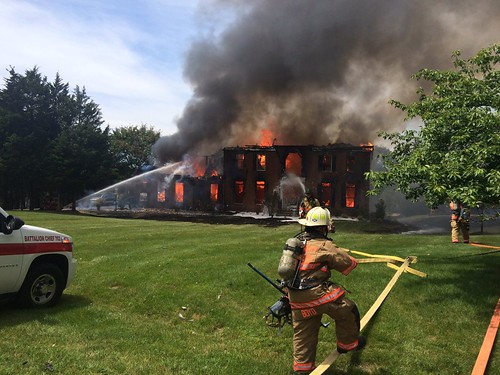
variety of photos showing fire and damage while firefighters fight house fire in Potomac, MD


Keep Medications Cool this Summer

A 101 Days of Summer Safety topic most people do not think about.

photo of pills spilling out of tipped over pill bottleStoring medications in high temperatures can decrease effectiveness and some medications can cause increased sensitivity to the sun. Some prescriptions, over-the-counter medications and supplements can be less effective and lose potency if they are exposed to higher temperatures if left out in the sun or in a hot place for too long. Take time to look over your medications and talk to your doctor about any concerns or questions you have. Your medications help keep you healthy; keeping them out of the heat is a smart way to stay safe all summer.

Tips:

  • Do not put medications in an area of direct sunlight (avoid storing medications on windowsills or taking with you for a day at the pool or beach). 
  • Do not store medications in areas of high humidity (avoid storing medications in a bathroom which has a shower or bathtub or in the kitchen near the dishwasher or oven)
  • Look at your medications before you take them. If they are stuck together in the bottle, if they have any changes in the shape or to the coating of pills — the integrity of the medication may have been compromised. (Important: you cannot always tell there is a problem just by looking. If you can visually see a change, the integrity is likely to be compromised, but the opposite isn’t true. There can still be a decrease in potency/effectiveness even if you can’t see any difference to the medication).
  • And remember: never store medications in your car. Car interiors can rise to over 160°, which can be especially harmful to your medications.


Thursday, June 9, 2016

Tick Talk

Tick season is here and prevention is one of the simplest ways to protect yourself. Ticks are responsible for a variety of illnesses including Lyme disease and Rocky Mountain Spotted Fever. Lyme disease, the most common tick-borne infectious disease in the United States, can cause symptoms of fever, headaches, body aches and fatigue. If left untreated, it can cause more severe health problems and in some cases can even be fatal.

Learn ways to protect your family. Some suggestions include:

  • Protective clothing (long sleeves, long pants, tucking pants into socks to prevent ticks from accessing skin)
  • Wear light-colored clothing that will make it easier to spot and remove ticks
  • Tick/bug repellant
  • Insect repellant for pets
  • Staying in the center of paths, keeping out of overgrown areas and not sitting directly on the ground
  • Showering or take a bath as soon as possible after spending time outdoors
  • Performing tick checks on all family members every day
  • Be aware of signs/symptoms of tick-related illnesses
  • Call your doctor with any concerns

Remember: Ticks start LOW and crawl UP; ticks do not jump, fly or drop from trees, they are down on the ground and crawl up until they find a good spot to attach. Tucking pant legs into socks is a good way to keep ticks on the outside where they may be seen or get brushed off.

graphic showing areas where ticks may be on your body

Wednesday, June 8, 2016

MCFRS Significant Incident Map - May 2016

Click on the icons and learn more about significant incidents that occurred in May. You may even find videos and photos embedded within the icon. You will also find links to more information in many as well.

This is another layer in the significant incident map since March. Once you go into the map, you can click the March and/or April box which will then layer those incidents in with the May map below.

Monday, June 6, 2016

Can We Find You In An EMERGENCY?

can we find you in an emergency? making sure your home address is visible.Today's topic in our 101 Days of Summer Safety is an important one that we often do not think about - making sure you house numbers are visible. Why is that important to us?

In an emergency, police, fire and rescue workers depend on house numbers to find YOU as quickly as possible. Finding your home - especially at night - can be challenging if address numbers are unreadable, hidden, unlighted or have missing numbers and may delay emergency responders from getting to you as quickly as possible.

Are your house numbers visible from the street? Are they set on a background of contrasting color? If your house is hidden from the street, are your numbers attached to a visible fence, mailbox or gate? Is your mobile home identified with your house number? If you live on a corner, does your house number face the street named in your address?

If you've answered "no" to any of these questions, please follow the guidelines below to make sure your house number is easy to read:

1. Numbers must be visible from the street. Existing residential home numbering can be 3 1/2 inches high, however new residential homes must be at least 5 inches high and if you replace existing numbers they must be at least 5 inches high.

2. Numbers should be placed on a contrasting background, with a reflective coating on the numbers for easy visibility at night.

3. Repair or replace aging address number placards, especially on mailboxes that are a distance from the front of the residence.

4. Prune any bushes, tree limbs or other growth that has covered your house numbers.

5. Numbers should be placed on or beside the front door. If your door is not easily seen from the street, put the numbers on a post, fence or tree at the driveway entrance so they can be clearly seen from the street. In addition to numbers on the front door of your house, if you have a rural-style mailbox, reflective and contrasting numbers should be placed on both sides of the box so they can be seen by an emergency vehicle approaching from either direction.

Montgomery County Code on Addresses
a.The owner of any structure presently existing or constructed in the future must display Arabic numbers designating the address assigned to the structure by the Maryland-National Capital Park and Planning Commission, or by the municipality in which the structure is located. Numbers must be at least five (5) inches high for single-family detached and attached residences and at least six (6) inches high for commercial, industrial or multifamily structures. However, if the numbers designating the address of a single-family residence on April 5, 1988, were at least three (3) inches high, those numbers comply with the size requirement of this section as long as they remain in place. Address displays must be posted on a contrasting background displayed in a conspicuous place that is unobstructed and clearly readable from the street named in the official address of the structure. Where a structure has more than one (1) address or where more than one (1) structure shares a common entry or driveway, numbers must designate the addresses in sequence.

b. An agency of the county must not require a permit for a sign containing only the address of a residence if the sign is smaller than a maximum size set by the county executive by regulation.

Sunday, June 5, 2016

June 1-7 is National CPR-AED Awareness Week

Your quick actions could save a life. Mouth-to-Mouth is out. Hands-only is in! 

survival charts from EMS treated out of hospital cardiac arrestSudden Cardiac Arrest (SCA) is the third leading cause of death in the U.S., affecting about 1,000 people every day in the U.S. On average, only 10% of sudden cardiac arrest victims survive. However when victims are treated quickly with CPR and defibrillators, the chance of survival significantly improves. Montgomery County Fire and Rescue has responded to numerous incidents where by-stander CPR has saved lives and encourages all residents to learn this important, lifesaving skill.  

Why don’t more people know and use CPR? Seven common myths that may be barriers to bystander action.
  • Myth No. 1: SCA is rare. Fact: The number of people who die from SCA each day is equivalent to the number who would die if two jet planes crashed every single day killing nearly everyone on board.
  • Myth: No. 2: SCA is the same as a heart attack. Fact: When people have heart attacks, they are awake and their hearts are beating. When people have SCA, they are not awake and their hearts are not beating. Heart attack can lead to SCA, but there are also many other causes.
  • Myth No. 3: SCA only happens to the elderly. Fact: SCA happens to people of all ages, including more than 6,000 youth under the age of 18 each year.
  • Myth No. 4: SCA only happens to people with a history of heart problems. Fact: SCA is often the first indication of a heart problem.
  • Myth No. 5: Victims are better off waiting for professional help to arrive. Fact: Time is of the essence. Immediate bystander intervention can mean the difference between life and death.
  • Myth No. 6: Only trained personnel are allowed to use AEDs. Fact: AEDs can be used effectively by anyone who can follow visual and voice prompts.
  • Myth No. 7: AEDs can hurt people by shocking them inappropriately. Fact: People in cardiac arrest are clinically dead. Your actions can only help. AEDs are safe and effective and will not shock the heart unless shocks are needed to restore a healthy heartbeat.
  • (Source:  Mary Newman, Sudden Cardiac Arrest Foundation)
Need a refresher? Here’s what to do if you witness a possible sudden cardiac arrest:
  • Recognize that the person is in trouble and decide to make a difference. Remember, the victim’s heart has stopped beating and without treatment, he or she will die within minutes. Your actions can only help.
  • Call 911 and ask someone to bring the nearest AED to the victim’s side if one is available.
  • Press hard and fast on the center of the chest at a rate of 100-120 times a minute. What? How do I do that? Imagine compressing to the tune of “Stayin’ Alive” by the Bee Gees. That’s it! Mouth-to- mouth is no longer required.

Tuesday, May 31, 2016

A Purr-fect Rescue on Hudson Avenue By Truck 716's Crew

By: BC Mark Davis and Lt. Rob Furst

Captain David Barcenas and Tillerman Kyle Holder were able to save two cats that were trapped in an apartment fire on Saturday evening on Hudson Avenue in Takoma Park Fire Station 2's area. After 10 or so minutes of oxygen, via a non-rebreather mask, the four-legged creatures were turned over to their owner - who was elated to see the furry little faces. A job well done by Truck 716! Next up...a trip to the vet's office.

We are also pleased to report that all humans escaped the fire without injury!

photo of firefighter holding cat who he just rescued from fire

Monday, May 30, 2016

Look Before You Lock

an average of 38 children die in hot cars every year in USWhen temperatures rise, so does the risk of an unimaginable tragedy – children accidentally left in hot cars.

Nationally, nine children have died in cars as a result of the heat which is a 350 percent INCREASE from this time last year. Montgomery County Fire and Rescue is teaming up with Safe Kids Worldwide to prevent child deaths and injuries in hot cars.

When outside temperatures are in the low 80s, the temperature inside a vehicle can reach deadly levels in only minutes even with a window rolled down two inches. With sustained and record-breaking temperatures predicted in the region, families are reminded that one of the greatest dangers is leaving a child in a car unattended on a hot day. Children’s bodies do not acclimate to the heat as well as adults and can overheat easily. Infants and children under four years old are at the greatest risk for heat-related illness.

Hard Facts
Heatstroke is the leading cause of non-crash, vehicle-related deaths for children. On average, every 10 days a child dies from heatstroke in a vehicle. Children can also sustain injuries from hot cars that can include permanent brain injury, blindness, loss of hearing and kidney failure. Heatstroke tragedies often occur when there has been a change in a family’s daily routine, a parent leaves a child in the car “for just a minute” unaware how quickly the temperature in a car can rise to dangerous levels or after a child gets into an unlocked vehicle to play unbeknownst to the parent or caregiver and can’t get out.

Top Tips
These tragedies are preventable. Avert and reduce the number of deaths from heatstroke by remembering to ACT:

A: Avoid heatstroke-related injury and death by never leaving your child unattended in a car, not even for a minute. Make a habit of looking in the vehicle – front and back – and keep keys stored out of a child’s reach and car doors locked when the vehicle is not in use to prevent children from getting in on their own.
C: Create reminders by putting something in the back of your car next to your child such as a briefcase, a purse or a cell phone that is needed at your final destination. This is especially important if you’re not following your normal routine.
T: Take action. If you see a child alone in a car, call 911. Emergency personnel want you to call. They are trained to respond to these situations. One call could save a life.

Saturday, May 28, 2016

MCFRS Kicks Off Annual Summer of Safety Campaign


This weekend, Fire Chief Scott E. Goldstein will launch the “101 Days of Summer of Safety” campaign. On a daily basis and through Labor Day, the Montgomery County Fire and Rescue Service (MCFRS) will provide critical tips which, if practiced, will enhance the safety and welfare of our residents. Follow us and we will lead you toward safer habits to help protect you, your children, and your pets from the dangers which may come from sun exposure, leaving unattended pets and children in motor vehicles, recreational water activities, barbeque grilling and outdoor eating, heat-related emergencies, traveling the roads, and much, much more.

Fire Chief Goldstein’s campaign goal is to raise the collective awareness of our community in a fun, interactive and engaging format. Stick with us all summer and see what you may learn! It just might save your life. Are you in?

Follow us here and on our Social Media platforms using #mcfrsSOS all summer long!

Saturday, May 21, 2016

Congratulations To Our College Graduates

This past week was one of excitement and satisfaction for four of our own, and their families, as they earned degrees from the University of Maryland system. All of this coursework done while balancing family life and a fire service career.

Congratulations to:
  • Lieutenant Kirk Ney earned a BS in Fire Science with a minor in Emergency Management

  • Captain Mike Porter earned a BA in History

  • Captain Robert Hornbacher earned a BS in Public Safety Administration

  • Assistant Chief John Van Gieson earned a Masters, Professional Studies in Industrial Organizational Psychology
Well done all! A tremendous accomplishment! Congratulations!

photo of assistant chief van Gieson and his wife
Asst Chief Van Gieson & wife Dr. Ajija Van Gieson

photo of graduates Capt Hornbacher and Lt Ney
Capt. Hornbacher (L) & Lt. Ney

Wednesday, May 18, 2016

Update On Two New Aerial Tower Trucks

Currently, MCFRS has two new aerial tower trucks that are in the process of being built. These will replace units in the MCFRS fleet that are due to be replaced.

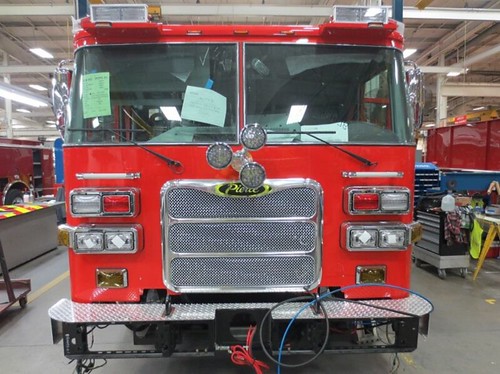
In the photos below, you can see there has been fantastic progress on the new Pierce towers with the installation of wiring, shelving, trim and other components. Next week, it is expected that similar type of installation work will continue and the aerial ladder sections are to be scheduled for assembly.

The units aerial ladder will be 100 feet in length and it is anticipated that the units could be delivered by late summer.


Update On Two New Tower Trucks with photos of work in progress