Please take a minute to watch the powerful video below from FEMA. Then make time to sit down with your loved ones to talk about (and develop a plan) how to prepare for a variety of emergencies that could occur right here in Montgomery County.

Showing posts with label disaster preparedness. Show all posts
Showing posts with label disaster preparedness. Show all posts
Tuesday, September 22, 2015
Don't Wait. Communicate. Make Your Emergency Plan Today.
Just a reminder that September is National Preparedness Month. This years theme is: Don't Wait. Communicate. Make Your Emergency Plan Today.
Please take a minute to watch the powerful video below from FEMA. Then make time to sit down with your loved ones to talk about (and develop a plan) how to prepare for a variety of emergencies that could occur right here in Montgomery County.
Please take a minute to watch the powerful video below from FEMA. Then make time to sit down with your loved ones to talk about (and develop a plan) how to prepare for a variety of emergencies that could occur right here in Montgomery County.


Friday, June 12, 2015
Disaster Supply Kits: Budget-Friendly and Fun
Overall emergency preparedness is a must for every individual and family. Part of being prepared is having a disaster supply kit.
Remember, the "disaster" can be as "simple" as a significant thunderstorm that knocks out your power for several hours or a day or two. If you have an adequate kit, and emergency preparedness plan, you will be ready for a situation like that or, worse, something a little more significant.
The below article is from our friends at the Federal Emergency Management Agency (FEMA). Some great tips on creating a budget friendly supply kit. We encourage you to take a look and take action once you are done!
Have a SAFE weekend!
Disaster Supply Kits: Budget-Friendly and Fun
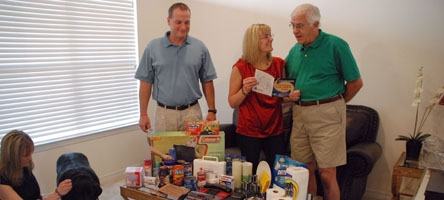
FEMA advises to prepare your disaster supply kit with enough items to survive for at least three days. If you are packing a kit for more than just yourself, be sure to make necessary accommodations to fit each person’s needs. Also, remember to check your kit for expired items every six months.
 |
| via Ready.gov website |
Remember, the "disaster" can be as "simple" as a significant thunderstorm that knocks out your power for several hours or a day or two. If you have an adequate kit, and emergency preparedness plan, you will be ready for a situation like that or, worse, something a little more significant.
The below article is from our friends at the Federal Emergency Management Agency (FEMA). Some great tips on creating a budget friendly supply kit. We encourage you to take a look and take action once you are done!
Have a SAFE weekend!
Disaster Supply Kits: Budget-Friendly and Fun
Do you think preparing for disasters is too expensive and boring? Think again! Being prepared doesn't have to break the bank. You can create a budget-friendly basic disaster supply kit using items you may already have at home. You can also make preparedness enjoyable for the entire family!
The Federal Emergency Management Agency’s (FEMA) Preparedness on a Shoestring activity guide suggests organizing a family scavenger hunt to locate items around your home such as first aid supplies and food. After you’ve built your kit, there are several ways to maintain its low-cost quality. For example:
- Purchase items from your local dollar store or discount retailer;
- Take advantage of “Buy One, Get One” deals at your local supermarket; and
- Trade extra supplies with family and friends.
Wednesday, April 29, 2015
Thursday Is National PrepareAthon! Day
Would you and your loved ones know what to do if you heard a loud roar that sounded like a train; looked out the window and saw a tornado in the distance heading your way?
Know what to do if another Derecho hit the area and you were without power, food or water for several days?
Or would you know what actions to take if another earthquake hit the region that was stronger than the last two "minor" quakes we have experienced over the last several years?
If the above questions have caused you to think and/or left you unsure as to what you would do, please consider participating in National PrepareAthon! Day tomorrow, Thursday, April 30. The initiative, sponsored by FEMA, will revolve around taking actions to prepare for six specific hazards:
Know what to do if another Derecho hit the area and you were without power, food or water for several days?
Or would you know what actions to take if another earthquake hit the region that was stronger than the last two "minor" quakes we have experienced over the last several years?
If the above questions have caused you to think and/or left you unsure as to what you would do, please consider participating in National PrepareAthon! Day tomorrow, Thursday, April 30. The initiative, sponsored by FEMA, will revolve around taking actions to prepare for six specific hazards:
Help us to help you when disaster strikes! Please take time to review the information and PREPARE! Also please take a couple of minutes to watch the powerful video below. If that does not inspire you and your loved ones to prepare than nothing will:
Thursday, February 23, 2012
Registration is Open For Spring 2012 Basic Community Emergency Response Training Class
By: Greg St. James, Montgomery County CERT
 Montgomery County Fire Rescue Service is happy to announce
registration is open for our Spring 2012 Basic Community Emergency Response
Training (CERT) class. CERT helps you
prepare your family, your neighborhood, and your workplace for emergencies and
disasters. Topics include CPR/First Aid, Fire Safety, Search and Rescue, Pet
Preparedness, Family Disaster Kits, Incident Management, and Terrorism
Awareness. Montgomery County CERT stresses hands on practical training taught
by professional EMT’s, Firefighters, Educators, and International Disaster
Responders.
Montgomery County Fire Rescue Service is happy to announce
registration is open for our Spring 2012 Basic Community Emergency Response
Training (CERT) class. CERT helps you
prepare your family, your neighborhood, and your workplace for emergencies and
disasters. Topics include CPR/First Aid, Fire Safety, Search and Rescue, Pet
Preparedness, Family Disaster Kits, Incident Management, and Terrorism
Awareness. Montgomery County CERT stresses hands on practical training taught
by professional EMT’s, Firefighters, Educators, and International Disaster
Responders.
CERT training is free to county residents 18 and older, and
takes place twice a week over the course of month. Students are required to
attend all sessions to receive a FEMA
certificate of completion.. The Spring 2012 class will take place in
Gaithersburg on Wednesday evenings and Saturday mornings from March 14, through
April 28, 2012 with a break included for the spring Holidays. CERT
operates on a first come basis for a limited number of seats. To learn
more please click HERE.
Thursday, August 25, 2011
Preparing for Irene
NOTE: Mr. Lopes, a life long Montgomery County resident, is an emergency management professional and has published numerous articles and information on disaster safety for some 25 years. I am grateful he is sharing his knowledge with all of us. Bill Delaney, MCFRS
byRocky Lopes
Emergency Manager and Disaster Preparedness Guy
It's all over the news, Hurricane Irene is making its way up the East Coast. We haven't had a visit from a tropical system inMontgomery County
 However, we have to be realistic. We don't live on the ocean here in
 Montgomery County
Here are some realistic preparation tips for a visit from what we may call a "brush-by" of a tropical system. These preparation tips have been adjusted to apply to an inland area such as Montgomery County
Wind
Rain and localized flooding
Power Outages
by
Emergency Manager and Disaster Preparedness Guy
It's all over the news, Hurricane Irene is making its way up the East Coast. We haven't had a visit from a tropical system in
 However, we have to be realistic. We don't live on the ocean here in
 Wind
Rain and localized flooding
Power Outages
Keep Informed
Make sure that you arrange to get storm alerts in real-time. A NOAA Weather Radio provides location-specific information in real-time, and will sound an alert for events like floods, tornadoes, high winds, tropical storms, and much more. You can get one of these radios at any local electronics specialty store. Also consider signing up for Alert Montgomery if you haven't already done so. It's a great way to get localized and personalized information from our County's Department of Homeland Security and Emergency Management.
Be aware that tropical systems are variable and may change direction and intensity quickly. Continue to watch local TV and listen to local radio for updated information. Also, do NOT pay attention to the projected "center" of the storm. The storm will affect large areas over hundreds of miles. Areas where the eye of the storm are not the only places where damage and destruction can happen -- tropical systems can wreak devastation in a path over 400 miles wide.
Get Ready
Discuss with your loved-ones what plans you have made. If a problem happens like localized flooding from heavy rain, what will you do? Where will you go if advised to leave for a while? Choose a family or friend's place that is located on higher ground. Call them in advance to see if you can come stay with them for a while. It's always best to have these arrangements made in advance.
Bring things inside that could blow around and cause damage to your or a neighbor's home. Trash cans, lawn furniture, picnic table umbrellas, outdoor decorations, wind chimes, hanging baskets, and so forth -- anything that could be blown by gusts of winds should be brought indoors, such as into a garage, basement, or shed. We have to remember that even if we don't get a full-frontal assault of a major hurricane, it's the winds that cause a lot of damage where we live away from the coast. Get ready for wind.
Be a leader: advise your neighbors why you are bringing things inside and ask them to do the same. Do it for elderly, disabled, or neighbors who are out of town who may not be able to take the precautions themselves.
In case the power may go out for a prolonged period of time, take time now to fill voids in your refrigerator and freezer. That is, fill plastic bags with ice and fill your entire freezer. Foods will keep frozen longer if there is less empty space in the freezer. The same is true for the fridge. Rinse out and fill empty plastic bottles with water, and put them in the fridge. Do it days in advance of the storm so the water can chill. Turn the fridge to a colder setting, but not so low as to cause things to freeze.
Be realistic when stocking up on perishables. You don't really need five gallons of milk, 10 pounds of butter, and 19 dozen eggs. Streets may be impassable due to debris in the road or stores may be closed, but only for a relatively short time. Sure, stock up, but buy things that you and your family ordinarily will consume within a week's time.
Get out the old-fashioned time-passers to keep kids (and adults) occupied. Amazing how technology-dependent we all are these days, and kids become agitated if their favorite things to do don't work because the power is out. Get some good books, and plan to read together as a family if the power is out. (What a novel idea!) Also, card games, Parcheesi, Monopoly, or other board games can be a lot of fun, especially because you probably haven't played these games together in a long time.
It is a good idea to have canned foods and a manual can opener handy. If the power goes out, you may have to live on canned fish, soup, and vegetables for a while. A sterno portable stove is useful to heat things like soup in a power outage.
If you take prescription medications and your supply is low, consider requesting a refill now so you don't run out if roads are blocked by downed tree limbs or flood waters.
Get out the flashlights and abandon the candles. (Candle fires are common during power outages and candles have not been recommended as emergency supplies for decades.) Make sure you have fresh batteries for flashlights. Here's a tip: keep batteries out of flashlights until needed. When batteries are kept in flashlights, they incur a slow drain and may not last as long.
Also, have a battery-powered radio so you can listen to local news if the power is out.
Do not anticipate that a smart phone will continue to work or have ongoing service during a storm or a prolonged power outage. However, plan for a battery-charging backup and have a car charger handy. You can recharge a mobile device from your car if the power is out in your home.
During the Storm
Continue listening to local TV and radio for updated information.
If advised of a Flash Flood Watch or Warning, take heed. There are many local roadways that become inundated by rainwater. If you must drive during or after the storm and you come upon a roadway covered with water, think. Think about those who love you. How would they feel if you were washed away by quick-moving floodwaters? As little as a foot of water can sweep a vehicle off the road. And here's a little-known fact: the tires of SUVs are larger and thus have more buoyancy, so SUVs are more likely to be displaced from a road than a car with smaller tires. Turn around, don't drown!
Be aware that tornadoes sometimes spin off of a tropical system. That is: there is a real threat that a tornado could be generated from this storm and affect our area. If a tornado warning is issued, then grab your radio and flashlight, and move everyone to the lowest level of the building or home that you are in. Get inside a room without windows -- a bathroom is a good choice. Wait there until you hear that the warning is lifted and it's safe to come out.
If power goes out or overhead wires are knocked down, report it to your power company. It's also a good idea to go around your home and turn off anything that was on when the power went out so there won't be a huge surge (and potential damage) when the power comes back on. Include air conditioning, televisions, dehumidifiers, and sensitive equipment like computers and electronics.
Use flashlights and non-perishable foods during a power outage. Try not to open the refrigerator or freezer at all, or if you must, get everything out that you need at once and quickly shut the door.
Only call
Finally, have phone numbers handy for important contacts -- PEPCO (1-877-737-2662) or your local power company (if different), family, and elderly and disabled neighbors.
Be Patient
One of the most frustrating things after a storm is the waiting. Use your non-electronic time passers to enjoy the time when you're disconnected.
Check on family, elderly, and disabled neighbors about their safety.
Be Safe
Storms are one of life's major inconveniences. But with a little realistic preparation and discussion with your loved-ones, you'll be more confident that you and those you love will be safe.
Wednesday, August 10, 2011
Community Emergency Response Training (CERT) - Get Involved!

CERT programs serve in more than 170 communities nationwide. CERT is managed by the Montgomery County Fire and Rescue Service and is based on the DHS/FEMA/Citizen Corps national standard curriculum and certification. The CERT training program is a 20-hour course, offered free to Montgomery County residents, over a 7-week period.
Upon completion of the course, CERT graduates are often assigned to neighborhood teams where they play an important role in community safety. For class schedules and information and to get CERT-ified, contact Greg St. James by phone (240-777-2407) or via e-mail (join@montgomerycert.org). More information is also available on the CERT website.
The next CERT Basic Class will be offered September, 2011.
Wednesday, July 6, 2011
The Key To Disaster Survival? Friends And Neighbors
Thanks to one of our Facebook friends, I was made aware of a very interesting article that appeared on the NPR web site. It relates to community preparedness and what might help to assist you and your loved ones to survive a large scale disaster. Understand that if a county wide disaster hits MCFRS, despite our best efforts will be stretched thin and will be unable to be every where to help in the aftermath of a large scale, county wide disaster.
 Go here to learn more: The Key To Disaster Survival? Friends And Neighbors
Of course, you should always make sure you have an Emergency Preparedness Kit on hand to ensure you have your own water, food, and other important supplies in sufficient quantity to last for at least three days.
It also does not hurt to have a Family Emergency Plan in place as well. Your family may not be together when disaster strikes so you will need a plan to contact each another and figure out how you will get back together with your loved ones.
One of the keys to surviving any disaster is being PREPARED! Take a moment to review all of the above links and make sure you and your loved ones are ready!
Best Regards,
Bill Delaney
Program Manager - Community Safety Education & Social Media
Office of the Fire Chief
Montgomery County Fire & Rescue
Tuesday, August 31, 2010
Better Safe and Ready, Than Sorry and Unprepared!
Hopefully by now all of you are aware of Hurricane Earl which is fast approaching the eastern sea board. Current projections indicate our immediate area will receive a brushing with very little impact on our community.
However hurricanes are very unpredictable and can alter course for better, or for worse, at a moments notice. With this in mind, the leadership of MCFRS are preparing as though Earl will alter course and head straight for us. Better safe, and ready, than sorry and unprepared!
 The big question in my mind: will our resident’s adopt the same attitude? I certainly hope so as a large scale disaster will tax our department to the point of only being able to do so much for so many. The better prepared and able to help yourself during an emergency, such as a hurricane, the better off you and your loved ones will be and will allow us to focus on those who are experiencing true life threatening emergencies during and after a significant storm.
Follow the track and updates on the storm: Hurricane Earl
See below links that you might find helpful:
Preparing for Emergencies: A Checklist for People with Mobility Problems
Emergency Preparedness Checklist
Disaster Preparedness
Disaster Preparedness for the Disabled and Elderly (pdf - 1.34mb)
(American Red Cross)
Disaster Preparedness for Pets
Stay Safe!
Bill Delaney
However hurricanes are very unpredictable and can alter course for better, or for worse, at a moments notice. With this in mind, the leadership of MCFRS are preparing as though Earl will alter course and head straight for us. Better safe, and ready, than sorry and unprepared!
 The big question in my mind: will our resident’s adopt the same attitude? I certainly hope so as a large scale disaster will tax our department to the point of only being able to do so much for so many. The better prepared and able to help yourself during an emergency, such as a hurricane, the better off you and your loved ones will be and will allow us to focus on those who are experiencing true life threatening emergencies during and after a significant storm.
Please take a moment to learn more about being prepared for emergencies. Use this opportunity to prepare a Family Disaster Supply Kit if you do not have one. You may not need it now but you could at a moment’s notice in the future!
See below links that you might find helpful:
Preparing for Emergencies: A Checklist for People with Mobility Problems
Emergency Preparedness Checklist
Disaster Preparedness
Disaster Preparedness for the Disabled and Elderly (pdf - 1.34mb)
(American Red Cross)
Disaster Preparedness for Pets
Stay Safe!
Bill Delaney
Subscribe to:
Posts (Atom)