Showing posts with label blizzard of '16. Show all posts

Thursday, February 4, 2016

Hot Wash - Blizzard of 2016

Earlier today members of MCFRS, as well as other County Agencies/Departments, participated in a "Hot Wash" regarding the Blizzard of 2016. The meeting was hosted by the Office of Emergency Management and Homeland Security at the Public Safety Headquarters building in Gaithersburg.

The meeting started with the customary welcome and introductions and quickly moved into the purpose. All participants were divided into breakout groups along the line of their function in order to facilitate discussion and identify areas of strength as well as areas that need improvement going forward.

Each group then documented and reported out on their findings. These will be used to develop an after action report to further enhance the overall Montgomery County readiness and response to future similar events.

The purpose of the "Hot Wash" is described by Assistant Chief Mo Witt in the video below.


Hot Wash - Blizzard of 2016

Thursday, January 28, 2016

Following Our Own Advice

MCFRS Firefighters continue to 'dig-out' fire hydrants as they come across them. Yesterday, the crew from Fire Station #25 located 5 fire hydrants just like this and got to work and cleared them. Some hydrants were buried in 5 feet, or greater, of snow and ice.
While the snow is melting at a good pace, there are still many hydrants buried due to plowing operations. If you are physically able to do so, please take a moment to find a fire hydrant nearest to you and clear it out for us. Thanks!


FS25 hydrants

Wednesday, January 27, 2016

A Little Ingenuity

By: Captain Dave Carter
       Fire Station #4

On Tuesday, January 26, units from Sandy Spring Fire Station #4 were dispatched for a report of a person who was having difficulty breathing on Shenandoah Drive.  

Due to road conditions, Medic (M) 704 was unable to make it up Skyline Drive so they backed down to Patuxent Drive and let Paramedic Engine (PE) 704 go first.  PE704 was able to make it up Skyline to Shenandoah Court and staged just past Shenandoah Court to allow the medic and responding plow from Fire Station #25 access to Shenandoah Court.

M704 was still unable to make it up Skyline Drive.  The paramedic and officer from PE704 went to the dispatched address on foot through the snow while the driver of PE704 went to assist and dig out M704.

The patient was assessed and it was determined that she should be transported to a local hospital.

Plow725 arrived on scene but got buried at the bottom of the hill just past the address.  They were not able to clear a passable path.

Additional resources were called for; a second transport (M704 threw and chain which was wrapped around the axle), a 4x4 to get the patient to the transport unit and a larger plow.

A second big private plow attempted to come down the hill as well and got stuck.  We placed the patient in the family SUV and the son attempted to drive up the hill to then transfer the patient to a soon be waiting 4X4 (Brush Truck 724), but was unsuccessful.

Personnel then acquired a kids sled, put the patient on the sled and pulled her up the hill using ropes from PE704.  Halfway up the hill a local resident arrived with a John Deere tractor which was then used to drag the sled the rest the way up the hill. 

Firefighters stayed with the patient, pushing and keeping balance on the sled.  We got the patient
to M704 for warming and further assessment while crew attempted to complete the removal of the broken snow chains.

Eventually a backup ambulance from Howard County arrived and patient care was transferred to them. The patient was then successfully transported to a local hospital. 

This was a challenging call that required some ingenuity on the part of the crew to get the patient successfully to the hospital. 


A Little Ingenuity

Heads Up! Beware The Danger Above!

Hope everyone has escaped the Blizzard of 2016 relatively unscathed! 
As the snow melts and then re-freezes, there is another potential danger you and your loved ones need to be aware of. The picture below highlights a couple of concerns you should note.

Our first concern relates to around your home and any buildings of any size. That concern is falling snow and ice from rooftops which could come crashing down any time and without any warning.

In the photo below, you can see a couple of those icicles are of a significant size and appear to be quite pointed. Not something you want to come crashing down on your head or that of a loved one. Additionally large chunks of snow, which can be heavy due to melting and re-freezing, can be prone to sliding off a roof and come crashing down. Please be aware of this as you are out and about.

We do not recommend anyone get up on their slippery roof to fix this. One easy way to limit the buildup as the snow melts is to ensure you have cleared snow away from your downspouts so that the runoff flows down and away from your home. 

The other issue here is one of a potential Ice Dam. That is one beyond us but we certainly want to make you aware of. Go here to learn more about Ice Dams. As with the previous issue, we do not recommend anyone get up on their slippery roof to fix this. There are companies out there who potentially handle this type of situation.

Continue to be safe as we all continue to clean up and move forward from this historic storm!

Danger Above

Clear Ice and Snow Off Your Cars Before Driving! Don't Forget Your Top!

Be prepared: clear ice and snow off your car BEFORE you start driving. Snow left on top of the car can slide off and obstruct your vision and create an extremely hazardous situation for other drivers around you.

Below is a car that is ready for the road!

car with snow cleared off

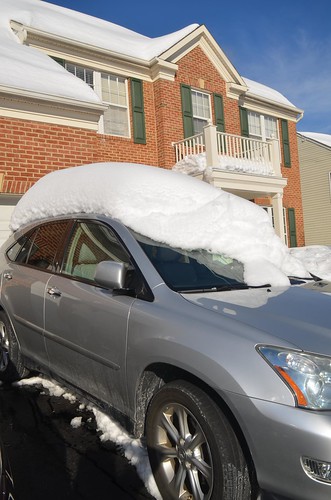
Don't Forget Your Top!  If your car looks like the below photo, please consider using a broom to clear hard-to-reach snow on the roof top!

Conversely, if you see a vehicle with snow or ice on its roof, do not follow too closely in the event the ice/snow comes off of it. The result could be catastrophic.


car with snow on roof

Tuesday, January 26, 2016

Digging Out Your Car? Make Sure You Take Care of This Hidden Danger!

photo of rear of car with tailpipe clear of snow
Prior to starting your vehicle, first make sure that the exhaust pipe is not covered or encased with snow, even if the vehicle is unoccupied and you are just warming it up.

Remember, the snow piled around your car can trap carbon monoxide coming from the exhaust. It can quickly incapacitate you before you realize what's happening. When the tailpipe is blocked, extremely dangerous and potentially deadly carbon monoxide fumes will be forced back into the passenger compartment and could overcome a person in a matter of seconds. 

The very first action you should taking when digging out a vehicle is to clear away the snow from the tailpipe a distance of at least 3 feet and keep checking that it remains clear which you shovel out your car. Never let children sit in an idling car while shoveling. Clear snow from the exhaust pipe and leave the engine off until the car is ready to roll. 


car covered in snow
Car re-covered in snow after plow
County residents who park on streets or in apartment and townhouse complexes need to be especially vigilant. Parking conditions are often changing due to the complexity of plow operations and the potential for obstructions to tailpipes/exhaust systems as snow gets relocated and piled up in many parking lots.  Many times, people are returning to different spaces and parking conditions may have been altered by weather, plows, etc. 

Reminder: Never warm up your car in the garage!

Fire Chief Goldstein Practices What He Has Been Preaching

Fire Chief Scott Goldstein took five minutes of his time in the Lakelands community late this morning to practice what he has been preaching - by clearing snow from around a snow covered fire hydrant.

The photos below are before and after photos of the fire hydrant.  As you can see, the fire hydrant is almost totally hidden by the pile of snow around it.  More than likely, a good amount of the snow was pushed over the hydrant as a result of snow plows doing their job.

As a reminder - please clear snow from around your nearest fire hydrant if you are physically able to do so.

If you need help finding a potentially hidden fire hydrant, you can go HERE to look it up on line.


Chief Goldstein Clears Around a Fire Hydrant

Overcoming Challenges - HVAC Fire S.Glen Road

The below video and photos are from an incident earlier this morning in the 10700 block of S. Glen Rd. MCFRS units arrived on the scene to find a fire involving a propane-fed HVAC unit free-burning on the roof.

Challenges were immediate as firefighters encountered buried fire hydrants and access issues. Undeterred, firefighters advanced hose lines and ladders thru the snow to attack the fire. The fire was quickly extinguished.
HVAC Fire S.Glen Rd

After the Blizzard: 5 Tips to Stay Safe in Your Home This Winter

Fire Chief Goldstein was on FOX5 recently and provided FIVE tips to stay safe in your home this winter.

Monday, January 25, 2016

Check Those Hydrants After the Snow Plow Comes Through

After your streets have been plowed, it is important that you check and make sure the fire hydrants are accessible. Thanks to Mr. Steve Blackistone, who is also a member of the Bethesda Chevy Chase Rescue Squad, for practicing what we all preach and making sure his nearest hydrant was cleared after the plow came through.
Good before (after the plow has come through) and after photos. Thanks Steve!


fire hydrant uncovered by snow
After
fire hydrant covered by snow
Before

Clear Ice and Snow Off Your Cars Before Driving!

Be prepared: clear ice and snow off your car BEFORE you start driving. Snow left on top of the car can slide off and obstruct your vision and create an extremely hazardous situation for other drivers around you.

Below is a car that is ready for the road!

car with snow cleared off

Digging Out Your Car? Make Sure You Take Care of This Hidden Danger!

photo of rear of car with tailpipe clear of snow
Prior to starting your vehicle, first make sure that the exhaust pipe is not covered or encased with snow, even if the vehicle is unoccupied and you are just warming it up.

Remember, the snow piled around your car can trap carbon monoxide coming from the exhaust. It can quickly incapacitate you before you realize what's happening. When the tailpipe is blocked, extremely dangerous and potentially deadly carbon monoxide fumes will be forced back into the passenger compartment and could overcome a person in a matter of seconds. 

The very first action you should taking when digging out a vehicle is to clear away the snow from the tailpipe a distance of at least 3 feet and keep checking that it remains clear which you shovel out your car. Never let children sit in an idling car while shoveling. Clear snow from the exhaust pipe and leave the engine off until the car is ready to roll. 

Reminder: Never warm up your car in the garage!

Beware Snow Piles! Not A Playground For Kids!

The Montgomery County Fire and Rescue Service reminds residents of the dangers present with snow piles. With the recent record-breaking snow storms, roadside, driveway and cul-de-sac snow piles are getting bigger, but should remain off limits to children.

Children like to dig tunnels or build forts in piles of snow created by snow plows, but children risk becoming trapped by collapsing snow forts. Unstable walls and tunnels may collapse, trapping and burying a child inside. The weight of the snow collapsing on top of a child can quickly hinder their breathing, making it difficult to call for help and virtually eliminating their chances of self-rescue. The best place for children to play is under close adult supervision.

Snow Piles

Sunday, January 24, 2016

Stay Warm and Look Cool. Dress for Cold Temperatures!

After a couple of days of being home bound kids, and adults, will want to get out and play in the snow.  Of course, that means it's going to be cold. Frostbite and even hypothermia are potential dangers. Make sure your kids wear the proper clothing to stay warm and safe.

  • Kids should wear sensible winter clothing — hats, gloves or mittens, snow pants, winter jacket, snow boots — that is waterproof and warm, and change into something dry if their clothes get wet.
  • Don't let kids wear scarves or any clothing that can get caught in a sled and pose a risk of strangulation.
  • Make your kids wear helmets, particularly if they're 12 or younger. Helmets designed for winter sports work best, but if you don't have one, make sure they at least wear a bike helmet or something similar.
  • Set reasonable time limits on outdoor play. Call children in periodically to warm up with drinks such as hot chocolate.
  • When possible, avoid taking infants outdoors when it is colder than 40 degrees Fahrenheit. Infants lose body heat quickly.

If a child complains of numbness or pain in the fingers, toes, nose, cheeks or ears while playing in the snow, or if his/her skin is blistered, hard to the touch or glossy, be alerted to the possibility of frostbite and take the
graphic of signs of frostbite
Via the Mayo Clinic
following steps:

  • Take the child indoors.
  • Call a doctor.
  • Tell the child to wiggle the affected body part(s) to increase blood supply to that area.
  • Warm the frozen part(s) against the body. Hold fingers to the chest, for example.
  • Immerse frozen part(s) in warm, not hot, water. Frozen tissue is fragile and can be damaged easily.
  • Avoid warming with high heat from radiators, fireplaces or stoves, and avoid rubbing or breaking blisters.

WHAT IS HYPOTHERMIA?

Hypothermia is the excessive lowering of body temperature. A drop in core temperature below 95 degrees F., causes shivering, confusion, loss of muscle strength, and if not treated and reversed leads to unconsciousness and death.

Safety experts estimate that half of all drowning victims die from the fatal effects of hypothermia and cold water, not the fatal effects from water filled lungs.

Sledding 101 - Avoid Landing in the ER

After any kind of significant snow storm, MCFRS personnel are inevitably called to assist injured sledders. The injuries have ranged from minor to very serious. Please take a moment to review the below tips before you and/or your loved ones go sledding over the next few days.

Choose the Right Sledding Hill

  • When hills get coated with snow, they may all look like great locations for sledding, but be very careful when choosing a location for your kids to sled. Not all hills are safe.
  • Select a hill that is not too steep and has a long flat area at the bottom for your kids to glide to a stop.
  • Avoid hillsides that end near a street or parking lot. Make sure the bottom of the slope is far from streets, traffic and frozen or partially frozen ponds, lakes or creeks.
  • Avoid hillsides that end near ponds, trees, fences, or other hazards.
  • Make sure the hill is free of obstacles such as jumps, bumps, rocks, poles, or trees before your kids   begin sledding.
  • Choose hills that are snowy rather than icy. Icy slopes make for hard landings if kids fall off a sled.

The Sled

  • Use equipment that is sturdy and safely constructed. Avoid equipment with sharp and jagged edges.
  • Look for energy-absorbing pads on sled seats.
  • Examine handholds on sleds to be sure they are secure.
  • Ensure sleds and toboggans have steering devices that work easily and don't jam.
  • Only sled feet first while sitting up. Sledding head first can increase the risk of head injury.
  • Never ride in a sled pulled by a motorized vehicle and always sled during the daytime, when visibility is better.


Saturday, January 23, 2016

Friday, January 22, 2016

Shoveling Can be Dangerous to Your Health

Shoveling snow is a strenuous activity. Make sure you are physically fit enough to shovel snow, and seek help if you aren't.

Sorry son there is not an app for that1. Warm up before any physical activity
2. Keep up with the storm
3. Push don’t lift
4. Dress in layers
5. Wear good boots
6. Stay hydrated

Limit shoveling to only a few minutes at a time, shovel smaller amounts and take frequent breaks. Listen to your body and STOP if you feel pain or experience any warning signs of a heart attack. Symptoms of a heart attack may include dizziness, shortness of breath, chest pain, fainting, nausea as well as shoulder, neck and arm pain. Call 911 immediately if you believe you are having a medical emergency. If using a snow blower, keep hands and feet away from the motor and moving parts.

Even if you're just outside your home, keep a cell phone with you in case of emergency (such as a fall, cardiac emergency, etc.). With windows and doors closed, people inside the home may not be able to hear cries for help.

Slips and falls are winter's most common injuries. Use sand, salt or an ice-melt on walkways. Shovel your sidewalk and walkways. And use patience and caution when walking: take smaller steps and keep your center of gravity over your feet.


Adopt-a-Fire Hydrant and Keep It Clear!

snow covered fire hydrant
Snow covered fire hydrant
MCFRS is asking residents to, if you are safely and physically able to do so, help firefighters and clear snow away from fire hydrants. The expected snow accumulations combined with the after-effects of plowing roads may result in many fire hydrants partially or completely buried in snow – as illustrated by the photo on the right.

Take the time NOW to find, and adopt, the nearest fire hydrant to your home so you will know where to start digging if the hydrant becomes totally covered by snow.

By keeping fire hydrants clear of snow, residents can help firefighters to easily locate hydrants and access water quickly, preserving valuable time to potentially save lives and structures.  Please consider helping a neighbor with a medical condition or who is elderly by shoveling out a hydrant in front of their home. Remember, quick access to fire hydrants benefits everyone.   Below is an example of what a properly cleared of snow fire hydrant should look like.

Thank you for helping keep Montgomery County safe! 

properly cleared fire hydrant

SNOW - Stay off the Roads, Not Out in the Weather

The storm is fast approaching! Please heed the warnings and stay off the roads starting early this afternoon.

Overall, most winter storm deaths result from vehicle or other transportation accidents caused by ice and snow. Residents should avoid driving when conditions include sleet, freezing rain or drizzle, snow, or dense fog. These are serious conditions that are often underestimated, and they make driving – and even walking outside – very hazardous.
It is safer for everyone if you stay put – and not travel during inclement weather – whether you are at home, work or school.

By staying off the roads during the worst of the weather, local departments of transportation are more easily able to access roads that need treatment, snow plows can more freely clear roads and get to areas needing plowing and public safety officials can respond more quickly to residents in need of emergency services.

It may require employees to take a couple of hours of personal leave during the winter, but leaving early enough to avoid bad weather and traffic gridlock caused by slippery road conditions is worth the investment. Thinking strategically about your travel and where you really need to be will require some planning and thought.

“Get Where You Need to be Before the Weather Gets Bad”

Do NOT Travel During Winter Storms

    SNOW - Stay off the roads Not Out in the Weather
  • Curtail “elective” travel; avoid unnecessary travel. If it is not a life safety issue, stay off the roads.
  • If you don’t have to travel… don’t! The safest place during a winter storm is indoors. About 70 percent of deaths related to ice and snow occur in automobiles.
  • Stay at the office an extra hour, or leave early, to avoid travel during a winter storm.
  • If residents stay off the roads during a storm, transportation workers and public safety officials are better able to clear roadways and respond to emergency needs quicker.
Weather Changes Quickly
  • Be prepared for the worst. Be ready to spend an extra hour at the office, or leave an hour or two early, to avoid a more time consuming commute home during the height of a storm.
  • Have an emergency supply kit in your office and car.
Listen to Local Officials
  • If local officials advise residents to stay off the roads – then stay off the roads.
  • Public safety and emergency management officials, along with National Weather Service meteorologists, base travel advisories and guidance on weather forecasts. Heed their advice!
  • Businesses that follow closing/delay policies from local jurisdictions or the federal Office of Personnel Management need to monitor those sources and release employees when advised.
Monitor the Weather
  • Listen to local Radio/TV weather forecasts; monitor social media.
  • Sign up for text alerts from your local government.
  • Sign up for weather alerts from NOAA/National Weather Service, including RSS feeds of your forecast and weather watches/warnings.
  • Purchase a NOAA weather radio for your home and office. NOAA Weather Radio is the prime alerting and critical information delivery system of the National Weather Service (NWS). NOAA Weather Radio broadcasts warnings, watches, forecasts, and other hazard information 24 hours a day.
Know the Emergency Plans for your Children’s School
  • If your child is safe at school, why risk a traffic accident during the worst weather to reach him/her, and then put all of you in danger? Let the school system implement their emergency plan, stay off the road and let transportation crews clear the roadways.

About the National Capital Region (NCR)

The National Capital Region (NCR) is not an operational entity because emergency response is a local function. Because the NCR is a collection of sovereign jurisdictions, including cities, counties, states and the District of Columbia, this website and the efforts of the region's communicators and public information officers will focus on regional collaboration between the region’s homeland security partners to achieve a “safe and secure National Capital Region.”

Thursday, January 21, 2016

MCFRS Storm Update

Assistant Chief Mo Witt, Special Operations Section, provided a live update around 3 PM today highlighting plans that MCFRS will be implementing for the impending snow storm.  Please see the video below.

Beginning tomorrow morning, January 22, at 7 AM the following operational adjustments will occur:

* Medical Ambulance Bus (MAB)726 (Bethesda) & MAB722 (Germantown/Kingsview) will be staffed.
* Additional personnel will be assigned to various emergency response units (including engine, trucks, squads, EMS units, aerial towers) throughout the County.
* Battalion Chief’s will have an assigned driver.
* A 2nd Safety Officer will be on-duty.
* Emergency Communications Center (911 call center) will have additional staff on duty.
* Five Department of Highway Services plows will be deployed at several fire stations, strategically located, with Firefighter’s assigned to each unit.
* Life Safety Task Force (Plow, Pepco, & 2 Sheriffs) at a central location with one Firefighter per unit.
* Light plows/4-wheel drive utility vehicles will be placed in service at eight strategically located fire stations.