Took a good ten minutes or so to clear a snow/ice off of my entire car this morning!
Be prepared: clear ice and snow off your car BEFORE you start driving. Snow left on top of the car can slide off and obstruct your vision and create an extremely hazardous situation for other drivers around you.
Below is a car that is ready for the road!
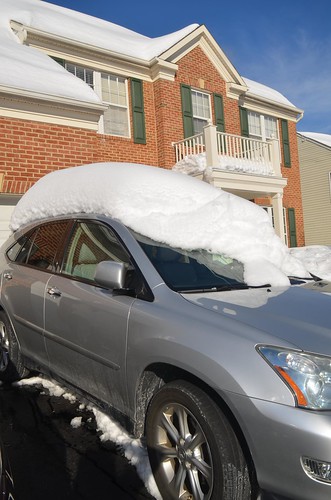
Don't Forget Your Top! If your car looks like the below photo, please consider using a broom to clear hard-to-reach snow on the roof top!
Conversely, if you see a vehicle with snow or ice on its roof, do not follow too closely in the event the ice/snow comes off of it. The result could be catastrophic.
Showing posts with label clearing snow. Show all posts
Tuesday, February 16, 2016
Monday, February 15, 2016
Shoveling Snow: How to Prevent Back Injuries
A timely video from the Washington Post.
Wednesday, January 27, 2016
Clear Ice and Snow Off Your Cars Before Driving! Don't Forget Your Top!
Be prepared: clear ice and snow off your car BEFORE you start driving. Snow left on top of the car can slide off and obstruct your vision and create an extremely hazardous situation for other drivers around you.
Below is a car that is ready for the road!
Don't Forget Your Top! If your car looks like the below photo, please consider using a broom to clear hard-to-reach snow on the roof top!
Conversely, if you see a vehicle with snow or ice on its roof, do not follow too closely in the event the ice/snow comes off of it. The result could be catastrophic.
Below is a car that is ready for the road!
Don't Forget Your Top! If your car looks like the below photo, please consider using a broom to clear hard-to-reach snow on the roof top!
Conversely, if you see a vehicle with snow or ice on its roof, do not follow too closely in the event the ice/snow comes off of it. The result could be catastrophic.
Tuesday, January 26, 2016
Digging Out Your Car? Make Sure You Take Care of This Hidden Danger!
![]() |
| photo of rear of car with tailpipe clear of snow |
Prior
to starting your vehicle, first make sure that the exhaust pipe is not covered
or encased with snow, even if the vehicle is unoccupied and you are just
warming it up.
The very first action you should
taking when digging out a vehicle is to clear away the snow from the tailpipe a
distance of at least 3 feet and keep checking that it remains clear which you
shovel out your car. Never let children sit in an idling car while shoveling.
Clear snow from the exhaust pipe and leave the engine off until the car is
ready to roll.
![]() |
| Car re-covered in snow after plow |
Reminder: Never warm up your car in the garage!
Be visible! Snow Piles Dangerous for Pedestrians and Drivers
Snow piles can make navigating streets and intersections dangerous for pedestrians and drivers. This was highlighted last night when MCFRS personnel responded to a call for a pedestrian struck by a snow plow on Georgia Ave. The pedestrian sustained injuries though, fortunately, not life threatening.
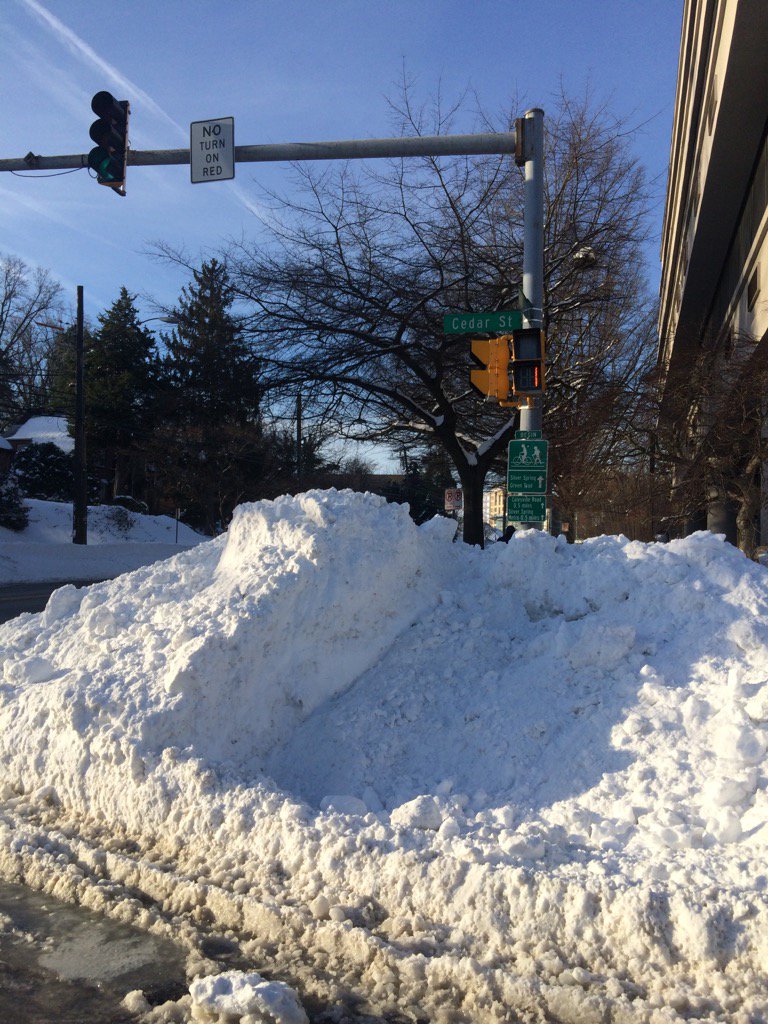
Drivers should take extra care when turning corners with snow piles that may limit visibility. As well, and highlighted in some of the photos below, drivers should take care approaching intersections and attempting turns as the piles of snow can all but eliminate visibility.
Post blizzard conditions can mean increased risk for pedestrians. Hats, hoods, earmuffs and scarves can interfere with the ability to see and hear traffic. Make sure your peripheral vision is clear and pay attention.
Do not be distracted by cell phones. Pedestrians should wear brightly colored clothing so drivers can see you, especially in times of poor visibility, and use reflective clothing or stickers for maximum visibility.
While many sidewalks are still not cleared, we ask all pedestrians to do their best to stay off plowed roadways.
Be SAFE out there!
Drivers should take extra care when turning corners with snow piles that may limit visibility. As well, and highlighted in some of the photos below, drivers should take care approaching intersections and attempting turns as the piles of snow can all but eliminate visibility.
Post blizzard conditions can mean increased risk for pedestrians. Hats, hoods, earmuffs and scarves can interfere with the ability to see and hear traffic. Make sure your peripheral vision is clear and pay attention.
Do not be distracted by cell phones. Pedestrians should wear brightly colored clothing so drivers can see you, especially in times of poor visibility, and use reflective clothing or stickers for maximum visibility.
While many sidewalks are still not cleared, we ask all pedestrians to do their best to stay off plowed roadways.
Be SAFE out there!
Monday, January 25, 2016
Check Those Hydrants After the Snow Plow Comes Through
After your streets have been plowed, it is important that you check and make sure the fire hydrants are accessible. Thanks to Mr. Steve Blackistone, who is also a member of the Bethesda Chevy Chase Rescue Squad, for practicing what we all preach and making sure his nearest hydrant was cleared after the plow came through.
Good before (after the plow has come through) and after photos. Thanks Steve!
Clear Ice and Snow Off Your Cars Before Driving!
Be prepared: clear ice and snow off your car BEFORE you start driving. Snow left on top of the car can slide off and obstruct your vision and create an extremely hazardous situation for other drivers around you.
Below is a car that is ready for the road!
Digging Out Your Car? Make Sure You Take Care of This Hidden Danger!
![]() |
| photo of rear of car with tailpipe clear of snow |
Prior
to starting your vehicle, first make sure that the exhaust pipe is not covered
or encased with snow, even if the vehicle is unoccupied and you are just
warming it up.
The very first action you should
taking when digging out a vehicle is to clear away the snow from the tailpipe a
distance of at least 3 feet and keep checking that it remains clear which you
shovel out your car. Never let children sit in an idling car while shoveling.
Clear snow from the exhaust pipe and leave the engine off until the car is
ready to roll.
Reminder: Never warm up your car in the garage!
Sunday, January 24, 2016
Decks - To Shovel or Not to Shovel?
To shovel or not to shovel? The weight of snow varies with the weather, which can alter its density. Building Codes require decks to support more snow than most roofs. A properly built and maintained deck is not likely to collapse from the weight of the snow.
There are two situations that require shoveling your deck: When you need to create an exit route from your back door and when the snow gets higher than your deck rails.
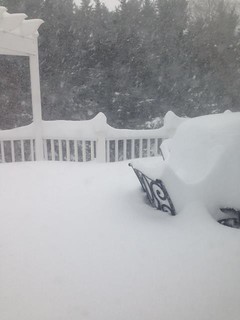
#1 - Rule of Thumb: Most deck rails are about 36” high. Don’t worry until the snow is above the rails (deeper than 3 feet). If you can see the rail tops, you’re probably okay – even with a little rain added in. When snow is deeper than 3 feet, it’s time to reevaluate. When snow is deeper than 3 ½ feet, it’s time to shovel. To avoid damage to your deck, always shovel in a path parallel to the deck boards, not perpendicular and don’t use a shovel with a metal blade or ice pick on your deck. When shoveling, we recommend that you push snow off the deck using a broom, leaf blower or proper shovel that won’t damage your deck. Be especially careful on any deck stairs and railings which are likely to be slick.
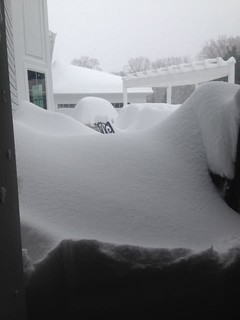
#2 - Clear the snow to provide an exit path from your home. You should always have two separate exit paths from your house for safety. If clearing a second exit path will require you to shovel snow from your deck, all you need to clear is a path 3 feet wide --- no need to shovel the entire deck unless the snow is above the rails (or you just love to shovel). Be careful walking on the deck after you’ve cleared off snow because it is likely to be slick and once the snow is gone – re-inspect your deck for any storm damage.
There are two situations that require shoveling your deck: When you need to create an exit route from your back door and when the snow gets higher than your deck rails.
#1 - Rule of Thumb: Most deck rails are about 36” high. Don’t worry until the snow is above the rails (deeper than 3 feet). If you can see the rail tops, you’re probably okay – even with a little rain added in. When snow is deeper than 3 feet, it’s time to reevaluate. When snow is deeper than 3 ½ feet, it’s time to shovel. To avoid damage to your deck, always shovel in a path parallel to the deck boards, not perpendicular and don’t use a shovel with a metal blade or ice pick on your deck. When shoveling, we recommend that you push snow off the deck using a broom, leaf blower or proper shovel that won’t damage your deck. Be especially careful on any deck stairs and railings which are likely to be slick.
#2 - Clear the snow to provide an exit path from your home. You should always have two separate exit paths from your house for safety. If clearing a second exit path will require you to shovel snow from your deck, all you need to clear is a path 3 feet wide --- no need to shovel the entire deck unless the snow is above the rails (or you just love to shovel). Be careful walking on the deck after you’ve cleared off snow because it is likely to be slick and once the snow is gone – re-inspect your deck for any storm damage.
![]() |
| Example of #1 - snow almost to railings |
![]() |
| An example of #2 - Exit way blocked |
Labels:
clearing snow,
deck safety,
mcfrs,
montgomery county md,
snow on deck
Saturday, January 23, 2016
Shoveling Snow: How to Prevent Back Injuries
A timely video from the Washington Post.
Friday, January 22, 2016
Shoveling Can be Dangerous to Your Health
Shoveling
snow is a strenuous activity. Make sure you are physically fit enough to shovel
snow, and seek help if you aren't.
2. Keep up with the storm
3.
Push don’t lift
4.
Dress in layers
5.
Wear good boots
6.
Stay hydrated
Limit
shoveling to only a few minutes at a time, shovel smaller amounts and take
frequent breaks. Listen to your body and STOP if you feel pain or experience
any warning signs of a heart attack. Symptoms of a heart attack may include
dizziness, shortness of breath, chest pain, fainting, nausea as well as
shoulder, neck and arm pain. Call 911 immediately if you
believe you are having a medical emergency. If using a snow blower, keep hands
and feet away from the motor and moving parts.
Even
if you're just outside your home, keep a cell phone with you in case of
emergency (such as a fall, cardiac emergency, etc.). With windows and doors
closed, people inside the home may not be able to hear cries for help.
Slips
and falls are winter's most common injuries. Use sand, salt or an ice-melt on
walkways. Shovel your sidewalk and walkways. And use patience and caution when
walking: take smaller steps and keep your center of gravity over your feet.
Labels:
blizzard of '16,
clearing snow,
jonas,
moco snow,
Shoveling snow
Thursday, March 5, 2015
Do Not Forget To Clear Snow From Around Fire Hydrants!
Looks like we are going to get a little bit of snow today! Help us to potentially help you by taking time to make sure the closest fire hydrant to your home is accessible.
Please remember to clear away snow from fire hydrants near your home or business. Having hydrants already cleared saves vital minutes and can mean the difference between life and death. Take your time and do not over exert yourself.
Thursday, February 26, 2015
Ice & Cold Weather Safety Tips
Each year, many residents are injured during the winter months as a result of pedestrian accidents and from exposure in cold water incidents. Skaters fall through the ice; boaters and canoeists overturn their crafts and pedestrians are struck walking in roadways because sidewalks
are snow covered.
Here are a few general guidelines for use by winter recreation enthusiasts to lessen their chances for an icy dip or worse. It's impossible to judge the strength of ice by its appearance, thickness, daily temperature, or snow cover alone. Ice strength is also dependent on water depth under the ice, the size of the water and water chemistry, currents, and distribution of the load on the ice.
THE ONLY "SAFE" ICE IS AT A SKATING ARENA!
WHAT DO YOU DO IF SOMEONE FALLS THROUGH THE ICE?
- Act quickly and call 9-1-1 for help immediately. Make sure properly trained and equipped rescue personnel are alerted to respond.
- DO NOT go out onto the ice. Many times would-be rescuers become victims themselves.
- Reach, Throw, or Row. Extend a branch, pole or ladder to the victim. Throw them a buoyant object such as a life ring or float tied to a rope. If a boat is nearby row out to the victim or push it toward them.
HOW COLD IS COLD WATER?
- Any water that is cooler than normal body temperature (98.6 degrees F) is by definition "cold water"
- Cold water drains away body heat 25 to 30 times faster than air!
- The lower the temperature of the water, the faster the onset of hypothermia.
WHAT IS HYPOTHERMIA?
- Hypothermia is the excessive lowering of body temperature. A drop n core temperature below 95 degrees F., causes shivering, confusion, loss of muscle strength, and if not treated and reversed leads to unconsciousness and death.
- Safety experts estimate that half of all drowning victims die from the fatal effects of hypothermia and cold water, not the fatal effects from water filled lungs.
PEDESTRIAN SAFETY
- Slippery driveways and sidewalks can be particularly hazardous in the winter. Keep them well shoveled, and apply materials such as rock salt or sand to improve traction.
- Be especially careful crossing the street and wear appropriate shoes and brightly colored (not white) clothing while walking in snowy conditions.
- Use reflective clothing or stickers for maximum protection, especially at dawn and dusk.
Tuesday, February 17, 2015
Do Not Forget To Clear Snow From Around Fire Hydrants!
Please remember to clear away snow from fire hydrants near your home or business. Having hydrants already cleared saves vital minutes and can mean the difference between life and death. Take your time and do not over exert yourself.
Tuesday, January 27, 2015
Ice & Cold Weather Safety Tips
Each year, many residents are injured during the winter months as a result of pedestrian accidents and from exposure in cold water incidents. Skaters fall through the ice; boaters and canoeists overturn their crafts and pedestrians are struck walking in roadways because sidewalks
are snow covered.
Here are a few general guidelines for use by winter recreation enthusiasts to lessen their chances for an icy dip or worse. It's impossible to judge the strength of ice by its appearance, thickness, daily temperature, or snow cover alone. Ice strength is also dependent on water depth under the ice, the size of the water and water chemistry, currents, and distribution of the load on the ice.
THE ONLY "SAFE" ICE IS AT A SKATING ARENA!
WHAT DO YOU DO IF SOMEONE FALLS THROUGH THE ICE?
- Act quickly and call 9-1-1 for help immediately. Make sure properly trained and equipped rescue personnel are alerted to respond.
- DO NOT go out onto the ice. Many times would-be rescuers become victims themselves.
- Reach, Throw, or Row. Extend a branch, pole or ladder to the victim. Throw them a buoyant object such as a life ring or float tied to a rope. If a boat is nearby row out to the victim or push it toward them.
HOW COLD IS COLD WATER?
- Any water that is cooler than normal body temperature (98.6 degrees F) is by definition "cold water"
- Cold water drains away body heat 25 to 30 times faster than air!
- The lower the temperature of the water, the faster the onset of hypothermia.
WHAT IS HYPOTHERMIA?
- Hypothermia is the excessive lowering of body temperature. A drop n core temperature below 95 degrees F., causes shivering, confusion, loss of muscle strength, and if not treated and reversed leads to unconsciousness and death.
- Safety experts estimate that half of all drowning victims die from the fatal effects of hypothermia and cold water, not the fatal effects from water filled lungs.
PEDESTRIAN SAFETY
- Slippery driveways and sidewalks can be particularly hazardous in the winter. Keep them well shoveled, and apply materials such as rock salt or sand to improve traction.
- Be especially careful crossing the street and wear appropriate shoes and brightly colored (not white) clothing while walking in snowy conditions.
- Use reflective clothing or stickers for maximum protection, especially at dawn and dusk.
Subscribe to:
Posts (Atom)