Showing posts with label Portable Generators. Show all posts

Sunday, July 10, 2016

Portable Generators And Carbon Monoxide Poisoning

graphic highlighting potential dangers using portable generatorsPortable generators can be a tremendous resource to have when power to your home is out. But they can also be dangerous if not used properly.

This past week, four workers were operating a portable generator inside a house in an unventilated area and had to be rushed to area hospitals suffering from Carbon Monoxide (CO) poisoning.

As we all know, Summer brings severe weather that at times will cause power outages. More and more residents are relying on portable generators to provide power to their homes during these times. Please take a moment to review the below safety tips. If you do not have a portable generator but know someone who does, please make sure you share this important information!

1. Make sure your home has a carbon monoxide alarm. As with smoke alarms, install a carbon monoxide alarm on every level of your home, especially near sleeping areas, and keep them at least 15 feet away from fuel-burning appliances.

2. Carbon monoxide alarms are not substitutes for smoke alarms, and vice versa. Combination smoke and carbon monoxide alarms are available.

3. Never use a grill, generator or camping stove inside your home, garage or near a window. The generator should be at least 20 feet clear of any garage, window or vent.

4. Follow the instructions that come with your generator. Locate the unit outdoors and far from doors, windows, and vents that could allow CO to come indoors.
 
4. If you need to warm a vehicle, remove it from the garage immediately after starting it. Don’t leave a car, SUV or motorcycle engine running inside a garage.

5. If using gasoline-powered devices, store gasoline in a locked location where children cannot access it. Keep only small quantities in an approved container that has child safety features.

6. Keep gasoline away from any source of heat, spark or flame. Even common household appliances such as water heaters and clothes dryers can start a fire. Be sure to store your gasoline away from anything that could ignite it.

7. Before refueling the generator, turn it off and let it cool down. Gasoline spilled on hot engine parts could ignite.
graphic highlighting potential dangers of carbon monoxide

Sunday, January 24, 2016

Creating A Safe Space Around The Generator

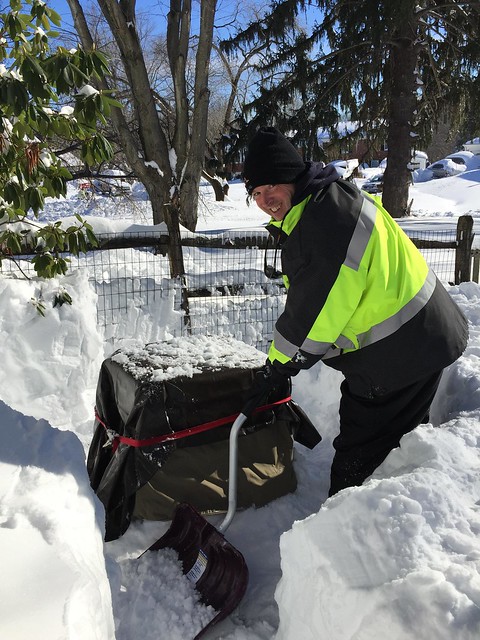
If you have a home portable or stationary generator, you should make sure to dig out and around it to ensure that it properly functions if you need it.  You should try and clear out approximately 3 feet around it.

In the below photo, Fire Chief Scott Goldstein takes a quick break from overseeing MCFRS storm operations to clear out around his home generator in case his family needs it.

Notice also the protective cover that is utilized until such time the generator is needed.

Also, in case you missed the information from yesterday, please review our Safe Use of Portable Generators.

  Fire Chief Clearing Around Generator

Saturday, January 23, 2016

Safe Use of Portable Generators

More and more Montgomery County residents are using portable generators when the power goes out. Across the region and country,Carbon Monoxide (CO) deaths associated with generators have spiked in recent years as generator sales have risen. 


If you have a generator, or know someone who does, please take a moment to read the below tips and pass them along to friends and family who may own one as well.  These tips are courtesy of our partners in safety at the NFPA.
  • Generators should be operated in well ventilated locations outdoors away from all doors, windows and vent openings.
  • Never use a generator in an attached garage, even with the door open.
  • Place generators so that exhaust fumes can’t enter the home through windows, doors or other openings in the building.
  • Make sure to install carbon monoxide (CO) alarms in your home. Follow manufacturer’s instructions for correct placement and mounting height.
  • Turn off generators and let them cool down before refueling. Never refuel a generator while it is running.
  • Store fuel for the generator in a container that is intended for the purpose and is correctly labeled as such. Store the containers outside of living areas.