 |
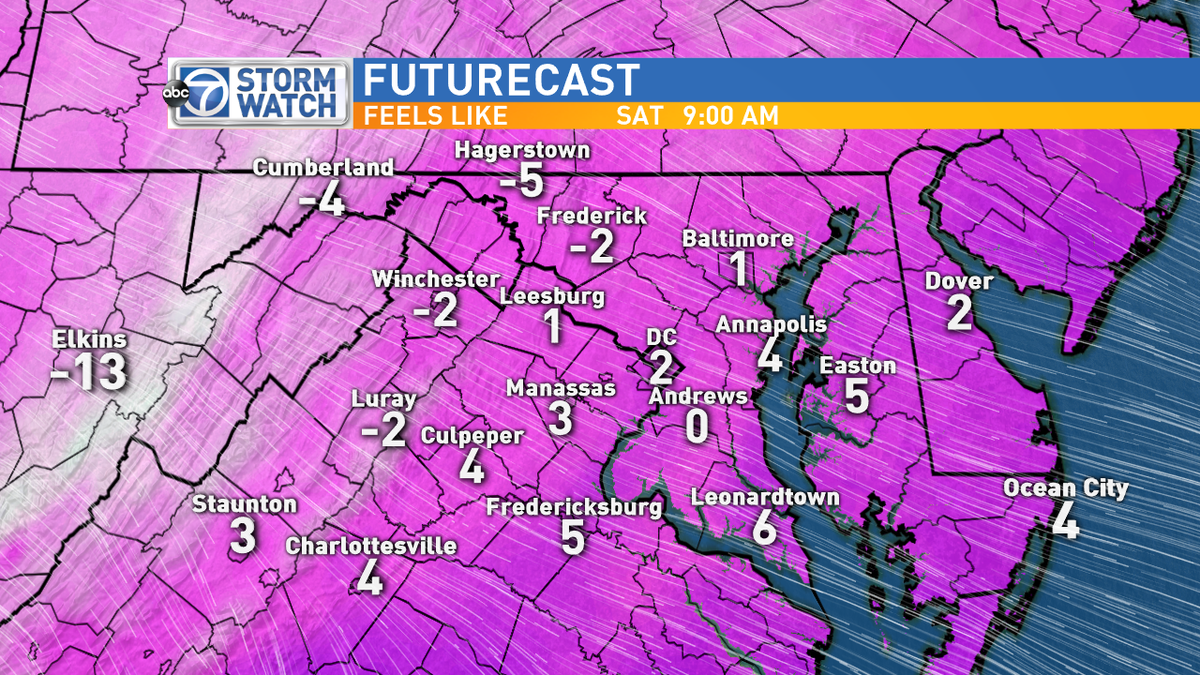
| Via ABC7 Weather - Wind Chills for Saturday |
Carbon Monoxide
In a small space, carbon monoxide can build up and become dangerous quickly. Never warm-up your car in an attached garage or carport and protect yourself from carbon monoxide poisoning by installing a CO detector in your home. Never use grills, generators, camp stoves or similar devices indoors or in your garage.
Space Heater Safety Tips
- All heaters need space. Keep things that can burn, such as paper, bedding or furniture at least 3 feet away from heating equipment.
- Make sure you plug the space heater directly into an outlet - - - not an extension cord.
- Turn off and unplug space heaters when you leave a room or go to sleep.
- Space heaters should always be positioned on a flat floor and not on top of furniture, a table or cabinets.
- Make sure all fuel-burning equipment is vented to the outside to avoid carbon monoxide (CO) poisoning. CO poisoning can cause illness and even death.
- Install and maintain carbon monoxide alarms inside your home to provide early warning of carbon monoxide.
- Use only heating equipment that has the label of a recognized testing laboratory and read all manufacturer instructions.
Winter Driving
- Keep a cold weather kit in your car. Include important safety items such as a fully charged cell phone, a blanket, flashlight, ice scraper, gloves, hat, scarf and a first-aid kit.
- Fill up a gallon size baggie with kitty litter to keep in the car during the winter in case you get stuck in snow or ice.
- Be sure to have the proper amount of antifreeze in your vehicle. Antifreeze works to prevent your engine block from freezing.
- Check your wipers and ensure you have plenty of windshield wiper fluid. Want your wipers to last longer? Don’t turn them on until after they’re cleared of ice and snow.
Pets
Bring your pets indoors during winter weather! Never leave your dog or cat alone in the car during cold weather. A car can act as a refrigerator in the winter holding in the cold and causing an animal to freeze. Additionally, move other animals or livestock to sheltered areas with non-frozen drinking water. Remember, antifreeze is a toxic poison for cats and dogs.
Pedestrian Safety
Slippery driveways and sidewalks can be particularly hazardous in the winter. Keep them well-shoveled and apply materials such as rock salt or sand to improve traction.
Parents
It is a good time to talk to your kids about cold weather safety. Extra care is needed, especially with younger children, to ensure they are prepared for the cold weather in the forecast. Develop an emergency plan and teach children your plan.
Ice Dangers
- Despite the cold temps, there is no such thing as 100 percent safe ice in our region. Remind children to stay away from ponds, lakes and other bodies of water that may appear to be frozen or have a thin coating of ice.
- If you witness someone falling through the ice, the best way to help them is to immediately call 9-1-1 so rescue personnel can quickly be dispatched. Resist the urge to go out on the ice after them or else you could fall through too. Would-be rescuers frequently become victims when they fall through the ice as well.
- Keep an eye on the location where the victim is so you can direct rescuers to that location.
- While waiting for rescue personnel to arrive on the scene, extend or throw a long object to them such as rope, pole, tree limb or even a scarf to help pull them to shore. If using a rope, have the victim tie the rope around them in case they become weakened by the cold and are unable to hold onto the rope. Reassure them that help is on the way and if they are able to self-rescue out of the water take immediate measures to keep them warm to help prevent hypothermia while waiting for rescue personnel to arrive.
Lastly, keep dogs on leashes around frozen bodies of waters. Many dogs are seriously injured or killed after falling through ice.