Showing posts with label fire sprinklers. Show all posts

Friday, June 10, 2016

Fire Sprinklers Keep Fire In Check

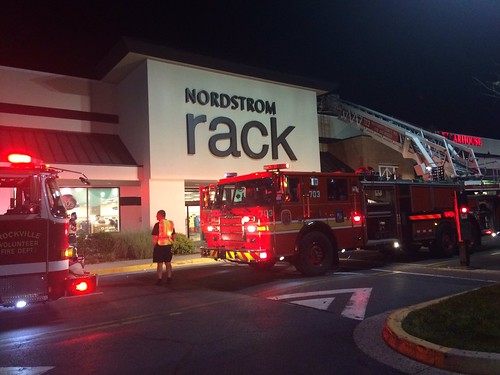
At approximately 8:35 p.m. on Thursday, June 9 MCFRS units were dispatched for an initial report of an auto fire that was changed to a dumpster fire and, finally, was upgraded to a dumpster fire next to the building as units arrived on the scene of 15780 Shady Grove Road. Units from Fire Station #32 arrived on scene and found fire showing from a dumpster attached to the building.

Firefighters from PE732 extinguished the dumpster/compactor fire while other units deployed to the interior of the building to check for extension. Crews gained entry into rear of the store to find an interior fire that was being controlled by the activation of four fire sprinkler heads. There was considerable smoke conditions throughout the building as well.

Three truck companies remained on scene for a total of two hours to assist with smoke removal from the impacted stores. There were approximately 50 firefighters were on scene.

All occupants of the store safely evacuated along with neighboring businesses. There were no injuries and initial damages were estimated to be $5,000. This total is expected to increase after appraisal of inventory and length of store closing. Fire Sprinklers save lives and property.

The cause of the fire is currently under investigation.


Fire Sprinklers Keep Fire In Check

Wednesday, July 10, 2013

Residential Sprinklers Save Lives and Property

By: Battalion Chief Mark Davis
       Battalion One, A-Shift


The presence of automatic fire sprinklers in residential occupancies makes a huge impact on life safety and property conservation. While the 1st Battalion has many unsprinklered residential high rise buildings - it also has a number of newer residential structures outfitted with residential sprinklers.

On Monday, July 1st crews (Co 15, 24, 12, & 16) from the 1st Battalion responded to one of those sprinklered structures for a reported apartment fire. When they arrived on the scene they found a 5-story apartment building that is part of a huge, assisted living complex.  Upon investigation on the third floor, they found a small fire in a study area of one apartment. The fire had been extinguished by ONE residential sprinkler head. No one was home at the time of the fire, so had the apartment not been sprinklered, the fire would have grown quickly in size and would have resulted in a major fire.

The photos below show the limited damage that was done. 


This single, residential sprinkler head (below) flowing just a few gallons a minute did the job of several FD hose lines flowing over 150 gallons per minute each. Why was it so efficient and effective? Because the sprinkler head is a fast-acting head that senses the early development of a fire which allows water to be applied at a much lower rate yet still be effective in controlling or extinguishing the fire. More importantly, it allows the occupants to escape the area before a raging fire can develop. 


When evaluating where to reside - chose the place that provides the better life safety features - choose residential fire sprinklers!

Monday, February 18, 2013

Learn How To Reduce Your Property Tax Bill By 50%

Automatic Fire Sprinklers

The Facts

Home sprinklers are effective in fighting fire
  • Automatic fire sprinklers have been in use in the U.S. since 1874.
  • Fire sprinklers are widely recognized as the single most effective method for fighting the spread of fires in their early stages - before they can cause severe injury to people and damage to property.
  • When one fire sprinkler head goes off to fight a fire the entire sprinkler system does NOT activate. Sprinklers react to temperatures in individual rooms.
  • The chances of a fire sprinkler accidentally going off are extremely remote.
  • Installation of fire sprinklers can provide discounts on insurance premiums.
  • The costs for installing fire sprinkler systems in buildings 6 to 8 stories high ranges from under a dollar to about $2.00 per square foot in most new construction and from about $1.50 to $2.50 per square foot for retrofitting sprinklers in existing buildings.
  • The installation of fire sprinklers in new residential construction is estimated to make up around 1% of the total building cost. (Similar to the cost of new carpet)
  • Over 200 U.S. communities have residential sprinkler laws. Roughly 100 of these communities are in California. In downtown Fresno for example, there has been fire damage of only $42,000 during a 10-year period in which its sprinkler law has been in effect.
  • According to the National Fire Protection Association, property damage in hotel fires was 78% less in structures with sprinklers than it was in structures without sprinklers during the years 1983-87. (Average loss per fire was $2,300 in sprinklered buildings and $10,300 in unsprinklered buildings.)
  • Nearly half of all hotels and motels, according to a 1988 survey by NFPA, have sprinkler systems.
  • NFPA has no record of a fire killing more than two people in a completely sprinklered building where the system was properly operating, except in an explosion or flash fire or where industrial fire brigade members or employees were killed during fire suppression operations.

MYTHS AND FACTS ABOUT AUTOMATIC FIRE SPRINKLERS

Automatic sprinkler systems have enjoyed an enviable record of protecting life and property for over 100 years. Yet, there are still common misunderstandings about the operation and effectiveness of automatic fire sprinkler systems:
Myth 1: "Water damage from a sprinkler system will be more extensive than fire damage."
Fact: Water damage from a home sprinkler system will be much less severe than the damage caused by water from fire-fighting hose lines or smoke and fire damage if the fire goes unabated. Quick response sprinklers release 8-24 gallons of water per minute compared to 50-125 gallons per minute released by a fire hose.
Myth 2: "When a fire occurs, every sprinkler head goes off."
Fact: Sprinkler heads are individually activated by fire. Residential fires are usually controlled with one sprinkler head. 90% of all fires are controlled with six or fewer heads and a study conducted in Australia and New Zealand covering 82 years of automatic sprinkler use found that 82% of the fires which occurred were controlled by two or fewer sprinklers.
Myth 3: "A smoke detector provides enough protection."
Fact: Smoke detectors save lives by providing a warning system but can do nothing to extinguish a growing fire or protect those physically unable to escape on their own, such as the elderly or small children. Too often, battery operated smoke detectors fail to function because the batteries are dead or have been removed. As the percent of homes in America that were "protected" with smoke detectors increased from zero to more than 70%, the number of fire deaths in homes did not significantly decrease.
Myth 4: "Sprinklers are designed to protect property, but are not effective for life safety."
Fact: Sprinklers provide a high level of life safety. Statistics demonstrate that there has never been any multiple loss of life in a fully sprinklered building. Property losses are 85% less in residences with fire sprinklers compared to those without sprinklers. The combination of automatic sprinklers and early warning systems in all buildings and residences could reduce overall injuries, loss of life and property damage by at least 50%.

Download

Monday, February 13, 2012

Learn How To Reduce Your Property Tax Bill By 50%


Automatic Fire Sprinklers

The Facts

Home sprinklers are effective in fighting fire
  • Automatic fire sprinklers have been in use in the U.S. since 1874.
  • Fire sprinklers are widely recognized as the single most effective method for fighting the spread of fires in their early stages - before they can cause severe injury to people and damage to property.
  • When one fire sprinkler head goes off to fight a fire the entire sprinkler system does NOT activate. Sprinklers react to temperatures in individual rooms.
  • The chances of a fire sprinkler accidentally going off are extremely remote.
  • Installation of fire sprinklers can provide discounts on insurance premiums.
  • The costs for installing fire sprinkler systems in buildings 6 to 8 stories high ranges from under a dollar to about $2.00 per square foot in most new construction and from about $1.50 to $2.50 per square foot for retrofitting sprinklers in existing buildings.
  • The installation of fire sprinklers in new residential construction is estimated to make up around 1% of the total building cost. (Similar to the cost of new carpet)
  • Over 200 U.S. communities have residential sprinkler laws. Roughly 100 of these communities are in California. In downtown Fresno for example, there has been fire damage of only $42,000 during a 10-year period in which its sprinkler law has been in effect.
  • According to the National Fire Protection Association, property damage in hotel fires was 78% less in structures with sprinklers than it was in structures without sprinklers during the years 1983-87. (Average loss per fire was $2,300 in sprinklered buildings and $10,300 in unsprinklered buildings.)
  • Nearly half of all hotels and motels, according to a 1988 survey by NFPA, have sprinkler systems.
  • NFPA has no record of a fire killing more than two people in a completely sprinklered building where the system was properly operating, except in an explosion or flash fire or where industrial fire brigade members or employees were killed during fire suppression operations.

MYTHS AND FACTS ABOUT AUTOMATIC FIRE SPRINKLERS

Automatic sprinkler systems have enjoyed an enviable record of protecting life and property for over 100 years. Yet, there are still common misunderstandings about the operation and effectiveness of automatic fire sprinkler systems:
Myth 1: "Water damage from a sprinkler system will be more extensive than fire damage."
Fact: Water damage from a home sprinkler system will be much less severe than the damage caused by water from fire-fighting hose lines or smoke and fire damage if the fire goes unabated. Quick response sprinklers release 8-24 gallons of water per minute compared to 50-125 gallons per minute released by a fire hose.
Myth 2: "When a fire occurs, every sprinkler head goes off."
Fact: Sprinkler heads are individually activated by fire. Residential fires are usually controlled with one sprinkler head. 90% of all fires are controlled with six or fewer heads and a study conducted in Australia and New Zealand covering 82 years of automatic sprinkler use found that 82% of the fires which occurred were controlled by two or fewer sprinklers.
Myth 3: "A smoke detector provides enough protection."
Fact: Smoke detectors save lives by providing a warning system but can do nothing to extinguish a growing fire or protect those physically unable to escape on their own, such as the elderly or small children. Too often, battery operated smoke detectors fail to function because the batteries are dead or have been removed. As the percent of homes in America that were "protected" with smoke detectors increased from zero to more than 70%, the number of fire deaths in homes did not significantly decrease.
Myth 4: "Sprinklers are designed to protect property, but are not effective for life safety."
Fact: Sprinklers provide a high level of life safety. Statistics demonstrate that there has never been any multiple loss of life in a fully sprinklered building. Property losses are 85% less in residences with fire sprinklers compared to those without sprinklers. The combination of automatic sprinklers and early warning systems in all buildings and residences could reduce overall injuries, loss of life and property damage by at least 50%.

Videos

Download

Thursday, August 11, 2011

Learn How To Reduce Your Property Tax Bill By 50%

The good news here is not only is there a tax benefit to doing this but, more importantly, a potential life saving benefit as well.

Residential fire sprinklers save lives! Read on below.

Learn How To Reduce Your Property Tax Bill By 50%

Monday, August 8, 2011

MYTHS AND FACTS ABOUT AUTOMATIC FIRE SPRINKLERS


Automatic sprinkler systems have enjoyed an enviable record of protecting life and property for over 100 years. Yet, there are still common misunderstandings about the operation and effectiveness of automatic fire sprinkler systems:

Myth 1: "Water damage from a sprinkler system will be more extensive than fire damage."

Fact: Water damage from a home sprinkler system will be much less severe than the damage caused by water from fire-fighting hose lines or smoke and fire damage if the fire goes unabated. Quick response sprinklers release 8-24 gallons of water per minute compared to 50-125 gallons per minute released by a fire hose.

Myth 2: "When a fire occurs, every sprinkler head goes off."

Fact: Sprinkler heads are individually activated by fire. Residential fires are usually controlled with one sprinkler head. 90% of all fires are controlled with six or fewer heads and a study conducted in Australia and New Zealand covering 82 years of automatic sprinkler use found that 82% of the fires which occurred were controlled by two or fewer sprinklers.

Myth 3: "A smoke detector provides enough protection."

Fact: Smoke detectors save lives by providing a warning system but can do nothing to extinguish a growing fire or protect those physically unable to escape on their own, such as the elderly or small children. Too often, battery operated smoke detectors fail to function because the batteries are dead or have been removed. As the percent of homes in America that were "protected" with smoke detectors increased from zero to more than 70%, the number of fire deaths in homes did not significantly decrease.

Myth 4: "Sprinklers are designed to protect property, but are not effective for life safety."

Fact: Sprinklers provide a high level of life safety. Statistics demonstrate that there has never been any multiple loss of life in a fully sprinklered building. Property losses are 85% less in residences with fire sprinklers compared to those without sprinklers. The combination of automatic sprinklers and early warning systems in all buildings and residences could reduce overall injuries, loss of life and property damage by at least 50%.

Sources:

• National Fire Protection Association
• Automatic Fire Sprinkler Association

Saturday, July 11, 2009

Automatic Fire Sprinklers Save Again!

Rockville, MD July 11, 2009 - Early this morning at approximately 1:30 AM, units from Montgomery County Fire and Rescue Service were dispatched for a fire in the Shoppers Food Warehouse at 18140 Village Center Drive.

Workers in the store reported seeing and smelling smoke and upon discovering the fire, they promptly exited the building to safety. The automatic fire sprinkler system operated to control the fire and Montgomery County Fire & Rescue units completed the extinguishment.

Chief Fire Marshal Mike Love noted, “This is the second time in less than a week where we have seen evidence showing the value of automatic fire sprinklers in their value to save lives and property. No home or business should be without automatic fire sprinklers.”

Fire Investigators determined that the fire started in a fluorescent light ballast attached to the refrigeration unit (see photo). The store is allowed to reopen although approximately half of it will be closed for a short time. Total damage estimates are still pending.

Wednesday, July 8, 2009

Fire Sprinklers Avert Tragedy At Nursing Home

Rockville, MD, July 8, 2009 - Yesterday morning at approximately 2:30 AM, units from Burtonsville Fire Station 15 were dispatched for an automatic fire alarm at the Arden Court Nursing Home (2500 Block of Musgrove Road). Engine 715 arrived on scene and reported heavy smoke conditions in the building and located an extinguished fire in a resident’s room.

A single automatic fire sprinkler operated to extinguish the fire. The elderly resident was removed from the room by the time the Fire Department arrived and he was transported to the hospital as a precaution for possible smoke inhalation. A picture of his room is on the right.

“There is no doubt in my mind that the action of the automatic sprinkler system averted a major a tragedy this morning,” stated Division Chief Mike Love, Chief Fire Marshal for Montgomery County.

The fire originated at a wire connection within a wall mounted A/C, heat pump unit and extended up the wall and burned a portion of the blinds at the window before the sprinkler activated. The Origin/Cause has been determined as Accidental – Electrical and damage is estimated at $5,000 Structure and $1,000 Contents.

Chief Love also said, “If this had been a non-sprinkled building, damage estimates could have easily been ten times what they were. The fact of the matter is fire sprinklers save lives and reduce property loss.”

County residents, who want to learn about residential fire sprinklers for their own home and how they can reduce their property tax bill by 50%, can go here for more information: Automatic Fire Sprinklers