Showing posts with label kid safety. Show all posts

Monday, February 15, 2016

Sledding 101 - Avoid Landing in the ER

photos of safe sledding hill
Photo of safe sledding hill
After any kind of significant snow storm, MCFRS personnel are inevitably called to assist injured sledders. In the past, injuries have ranged from minor to very serious. Please take a moment to review the below tips before you and/or your loved ones go sledding today.

Choose the Right Sledding Hill
  • When hills get coated with snow, they may all look like great locations for sledding, but be very careful when choosing a location for your kids to sled. Not all hills are safe.
  • Select a hill that is not too steep and has a long flat area at the bottom for your kids to glide to a stop.
  • Avoid hillsides that end near a street or parking lot. Make sure the bottom of the slope is far from streets, traffic and frozen or partially frozen ponds, lakes or creeks.
  • Avoid hillsides that end near ponds, trees, fences, or other hazards.
  • Make sure the hill is free of obstacles such as jumps, bumps, rocks, poles, or trees before your kids   begin sledding.
  • Choose hills that are snowy rather than icy. Icy slopes make for hard landings if kids fall off a sled.
The Sled
  • Use equipment that is sturdy and safely constructed. Avoid equipment with sharp and jagged edges.
  • Look for energy-absorbing pads on sled seats.
  • Examine handholds on sleds to be sure they are secure.
  • Ensure sleds and toboggans have steering devices that work easily and don't jam.
  • Only sled feet first while sitting up. Sledding head first can increase the risk of head injury.
  • Make your kids wear helmets, particularly if they're 12 or younger. Helmets designed for winter sports work best, but if you don't have one, make sure they at least wear a bike helmet or something similar.
  • Never ride in a sled pulled by a motorized vehicle and always sled during the daytime, when visibility is better.


kid on sled
Sledding Feet First!

Monday, January 25, 2016

Beware Snow Piles! Not A Playground For Kids!

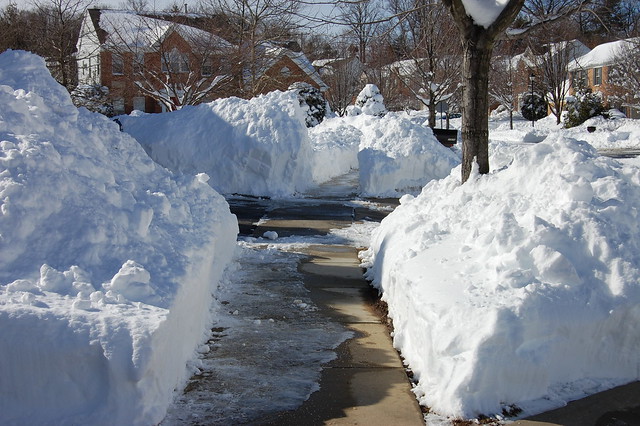
The Montgomery County Fire and Rescue Service reminds residents of the dangers present with snow piles. With the recent record-breaking snow storms, roadside, driveway and cul-de-sac snow piles are getting bigger, but should remain off limits to children.

Children like to dig tunnels or build forts in piles of snow created by snow plows, but children risk becoming trapped by collapsing snow forts. Unstable walls and tunnels may collapse, trapping and burying a child inside. The weight of the snow collapsing on top of a child can quickly hinder their breathing, making it difficult to call for help and virtually eliminating their chances of self-rescue. The best place for children to play is under close adult supervision.

Snow Piles

Saturday, September 26, 2015

Window Safety – Kids Can’t Fly

Windows play a vital role in home safety, serving as a secondary escape route in the event of a fire or other emergency, but they also pose a risk for a fall if safety measures are not followed. Safety tips to help prevent window-related injuries in the home:

  • Never rely on window screens to keep children from falling out of windows. A screen is not a safety device - - it is designed to keep insects out, not to keep children in.

  • Keep furniture such as sofas, beds and dressers away from windows. This will discourage children from climbing near any windows.

  • Keep windows closed and locked when they are not being used.

  • When windows are open for ventilation, take advantage of all safety features. If possible, open windows from the top and not the bottom if you have double-hung windows – the kind that can open down from the top as well as up from the bottom.

  • Install safety devices such as window guards or window stops to help prevent falls.
Window falls can happen quickly and, in some cases, can be deadly. When keeping your kids safe, MCFRS reminds parents that no device can replace active supervision. For more safety tips, visit our website at www.mcfrs.org/mcsafe.

Thursday, August 6, 2015

Heatstroke - How Hot The Inside Of A Car Can Get

In light of our close call yesterday I thought this would be good to re-post from a few weeks ago. BD

An extremely eye opening video from our friends at SafeKids. Please take 53 seconds to watch!

If you ever see a child alone in a car, please call 911. You could save a life!


Wednesday, July 8, 2015

Heatstroke - How Hot The Inside Of A Car Can Get

An extremely eye opening video from our friends at SafeKids. Please take 53 seconds to watch!

If you ever see a child alone in a car, please call 911. You could save a life!


Tuesday, July 15, 2014

Make Sure Your Child Is Prepared For A Fire

Every home should have working smoke alarms and an escape plan in case of a fire. Include all family members in the planning process and make a plan for anyone with special needs or limitations such as a baby or toddler, the elderly or the disabled.

Create a fire escape floor plan:

  • Start by drawing a rectangle on a piece of paper. Draw one for reach room of your home. Then draw in all doors and windows. Your children can use crayons to draw in beds, tables, etc.
  • In one color, draw a line that shows the fastest way out of each room. Then, in another color, draw another line that shows the second fastest way out.
Now that you have your fire escape plan, talk to your family about how they would escape from each room of your house or apartment if there was a fire. The Montgomery County Fire and Rescue Service recommends having home fire drills regularly so everyone knows what to do in an emergency.

Know what to do in case of a fire.

  • Pick a meeting place outside of your home where everyone can gather after they have left the burning building.
  • NEVER use an elevator to escape a fire.
  • Conduct home fire drills and make them realistic by holding your drills in the evening since kids can get disoriented in the dark and fires often happen at night.
  • In case of a fire, get out first then call the fire department with a portable, cell or neighbor's phone from a safe location.
  • Make sure that everyone knows that once you're out, stay out! Never go back inside of a burning building.

Escape Tips:

  • Close doors behind you as you escape to slow the spread of fire and smoke.
  • If you have to escape through smoke, remember that smoke rises. Teach children to "get low and go" if there's smoke. The air will be cleanest and easier to breath near the floor.
  • Test doorknobs and spaces around closed doors with the back of your hand. If the door is warm, try another escape route. If it is cool, open it slowly. Slam the door shut if smoke pours through.

Things to Think About:

  • If you're having a baby-sitter or overnight guests, these people need to learn your household fire escape plan, too. They should be familiar with the sound of the smoke alarm, escape routes and your family's meeting place.
  • Can everyone in your home - including children - unlock and open all doors and windows?
  • You may want to consider supplying upper bedrooms with escape ladders. Show children where the ladders are kept, how to attach them to the window and how to use them. Demonstrate how to back out of the window and go down the ladder feet first. Montgomery County Fire and Rescue recommends practicing from a ground floor window where there is no risk of falling.
  • If you need to descend a ladder to escape, be sure to lower children to the ground before you exit from the window. They may panic in an emergency situation and not follow you if you go first.
  • If your windows have security bars, equip them with quick-release devices, and teach everyone in your household how to use them.
  • Test your smoke alarms once a month.
  • Replace alarm batteries once a year.
  • Smoke alarms don't last forever. Replace alarms that are more than 10 years old, following manufacturer instructions.

Wednesday, September 26, 2012

Learn Your Address - An Activity for Kids!

Houses have numbers instead of names. Firefighters and police use those numbers to find houses in an emergency so they can help you. The number you see on the front of your house is your home's first name. The street name or number is your home's last name. The home's first name and last name together make up your address. This house's first name is: 5677 (first) Piringer Street SW (last).

Instructions

Adobe PDF Download (PDF, 160 Kb) and print this page and have a grown up write your house's name (address) on the lines below. Read it out loud.
House with the number 5677 located on Piringer Street Southwest
First Name (House number) -


Last Name (Street) -


Now copy your address. Color the house above the same colors as your home.


Help us help you - please make sure your house numbers are visible from the street and help your child learn his/her address and phone number. Hang this sheet up near your phone while your child is learning.

Monday, March 19, 2012

Riding a Bike During This Great Weather? Use Your Head and Wear a Helmet!


Kids and Bike Helmets: The Right Fit

Bike helmets are not optional equipment. A helmet is your last line of defense in an accident - never ride without one!
Kids should always wear helmets while biking
Helmets have been shown in studies to reduce the risk of head injury by 85 percent and the risk of brain injury by 90 percent. Nationally, only 15 percent of children bicyclists used bicycle helmets. Here are some points to consider when fitting a bike helmet on a child:
  • The helmet should sit on the child's head so that the front rim is just above the eyebrows. Use the two finger rule - leave about two fingers width between your eyebrows and the front of the helmet. If the helmet rests on the back of the head, the forehead, nose and chin will be exposed.
  • Before buckling the chin strap, have children shake their head from side to side. The helmet should generally stay put. If it moves excessively, it's too big and won't protect the head no matter how tight the chin strap is pulled. The straps should be joined just under each ear at the jawbone.
  • When the chin strap is buckled, children should be able to open their mouth and feel the helmet press firmly against the top of their head.
  • Buy a new helmet. Helmets that have suffered even a single fall or have been exposed to heat for a long time (i.e., kept in the trunk of a car) lose the cohesion that keeps the helmet intact during impact.
  • Don't forget to set an example by wearing a helmet yourself!

Bike Safety and Bike Helmets

Montgomery County requires anyone under age 18 to wear a bicycle helmet when riding or being carried on a bicycle, including a bicycle with training wheels, on a public street, right-of-way, sidewalk or bicycle path in the County. 1
Your child is 14 times more likely to survive a bike crash if he/she is wearing a helmet. Each year in the United States, approximately 250 children die in bicycle-related accidents, and about half a million are injured in bicycling accidents. Although it's estimated that 75% of the serious injuries could have been avoided if a helmet was worn, only about 20% of children in the United States wear a helmet.
How to properly wear a bike helmet

Get the Helmet to Fit Right

Step 1: Make sure the helmet fits firmly.
Helmets are sold with foam pads that differ in thickness to make the helmet fit firmly. Use the foam pads by attaching them to the inside of the helmet until the helmet fits firmly on your child's head. The helmet should not move around when shaken.
Step 2: Make sure the helmet sits level on the child's head.
This means the helmet should cover the top of the forehead, just above the eyebrows. Wearing the helmet too far back is a common mistake. You should be able to place just two fingers between the eyebrows and the front of the helmet. Take off anything that could change the way a helmet fits (baseball caps, big hair clips, headphones, etc.).
Step 3: Position the straps correctly.
All straps should be snug but still comfortable. Fix the side straps so that they fit around your child's ear in a V-shape. Adjust the buckles or slides on the side strap so that they are right under theear. Tighten the chin strap until you can fit just one finger between the strap and your child's chin.
Check the fit of the helmet every time. Use the 2-V-1 finger test. Teach your child to do this test each time he gets ready to ride:
  • Two fingers above the eyebrows
  • V-Shape under each ear
  • One finger under the chin strap
  • Make sure that the helmet has a label to say that it meets safety standards, such as CSA, CPSC, ASTM, or Snell.
After taking a serious hit, helmets lose their capacity to absorb shock. They're designed that way so that the inner foam structure is altered by a very hard blow. If your child ever has a significant fall or hits any surface hard with the helmet, immediately replace the helmet. Don't Negotiate. It is estimated that 75% of bicycle-related deaths among children could be prevented with a bicycle helmet. Wearing one should never be optional for your child.
1 Excerpted from the Montgomery County Code, Sec. 7-2 - Bicycle Helmets